
About Felix Bloch
Lived 1905 – 1983 (aged 77). Felix Bloch was an American and Swiss physicist, university teacher and nuclear physicist, known for Bethe–Bloch formula, Bloch equations and Bloch oscillation.
Education Felix Bloch was born on 23 October 1905 in Zurich, Switzerland, to Jewish parents, Gustav Bloch and Agnes Mayer. Gustav was financially unable to attend university and worked as a wholesale grain dealer in Zurich. Gustav moved to Zurich from Moravia in 1890 to become a Swiss citizen. Their first child was a girl born in 1902, while Felix was born three years later. Bloch became Heisenberg's first graduate student, and gained his PhD in 1928.
Career and research
Bloch remained in European academia, working on superconductivity with Wolfgang Pauli in Zurich; with Hans Kramers and Adriaan Fokker in the Netherlands; with Heisenberg on ferromagnetism, where he developed a description of boundaries between magnetic domains, now known as Bloch walls, and theoretically proposed a concept of spin waves, excitations of magnetic structure; with Niels Bohr in Copenhagen, where he worked on a theoretical description of the stopping of charged particles traveling through matter; and with Enrico Fermi in Rome.
In 1934, the chairman of the Physics Department of Stanford University invited Bloch to join the faculty.
After the war, Bloch concentrated on investigations into nuclear induction and nuclear magnetic resonance, which are the underlying principles of MRI. In 1946, he proposed the Bloch equations, which determine the time evolution of nuclear magnetization. Along with Edward Purcell, Bloch was awarded the Nobel Prize in Physics in 1952 for his work on nuclear magnetic induction.
When CERN was being set up in the early 1950s, its founders were searching for someone of stature and international prestige to head the fledgling international laboratory, and in 1954 Professor Bloch became CERN's first director-general, at the time when construction was getting under way on the present Meyrin site and plans for the first machines were being drawn up. After leaving CERN, Bloch returned to Stanford University, where in 1961 he was made Max Stein Professor of Physics. He retired from Stanford in 1971.
Family On 14 March 1940, Bloch married Lore Clara Misch (1911–1996), a fellow physicist working on X-ray crystallography, whom he had met at an American Physical Society meeting. They had four children, twins George Jacob Bloch and Daniel Arthur Bloch (born 15 January 1941), son Frank Samuel Bloch (born 16 January 1945), and daughter Ruth Hedy Bloch (born 15 September 1949).
Bloch died on 10 September 1983 in Zurich at the age of 77.
Recognition Memberships Year Organization Type 1948 National Academy of Sciences Member 1957 American Academy of Arts and Sciences Member 1964 Royal Netherlands Academy of Arts and Sciences Foreign Member 1965 American Philosophical Society Member
Awards Year Organization Award Citation 1952 Royal Swedish Academy of Sciences Nobel Prize in Physics "For their development of new methods for nuclear magnetic precision measurements and discoveries in connection therewith."
Don’t just read it —
keep it.
Full-length biographies made to live with: read them, listen on the way to work, watch them tonight.
- E-book
- Audio
- Video
Instant download · yours to keep · every purchase keeps this site free
Important facts
more
Bloch wave, Bloch's theorem, Bloch–Grüneisen temperature, Bloch–Siegert shift, Direct energy conversion, Kinoshita–Lee–Nauenberg theorem, Magnon, NMR spectroscopy, Spin wave, Spontaneous magnetization, Tight bindingPeople in Felix Bloch's life
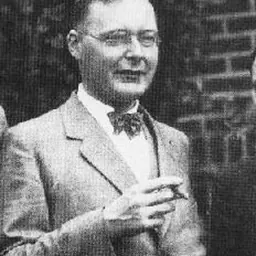
Named in this biography and alive at the same time





Related people
Same field, nearest in time

Contemporaries
People whose lives overlapped Felix Bloch's




Frequently asked questions
Who was Felix Bloch?
Swiss physicist (1905-1983)
When was Felix Bloch born?
Felix Bloch was born on 23 October 1905 in Zurich.
When did Felix Bloch die?
Felix Bloch died on 10 September 1983 in Zurich.
What was Felix Bloch's occupation?
Felix Bloch was a physicist, university teacher and nuclear physicist.
What was Felix Bloch known for?
Felix Bloch was known for Bethe–Bloch formula, Bloch equations, Bloch oscillation, Bloch spectrum, Bloch sphere and Bloch wall.
What nationality was Felix Bloch?
Felix Bloch was American and Swiss.
Sources & further reading
Cite this page
APA: Biography.guide. (2026). Felix Bloch. https://biography.guide/felix-bloch-physicist/
MLA: "Felix Bloch." Biography.guide, https://biography.guide/felix-bloch-physicist/.
Chicago: "Felix Bloch." Biography.guide. https://biography.guide/felix-bloch-physicist/.
Data last updated: 2026-09-20 · Spot an error? Report a correction.
Page generated 2026-09-27 05:32 UTC