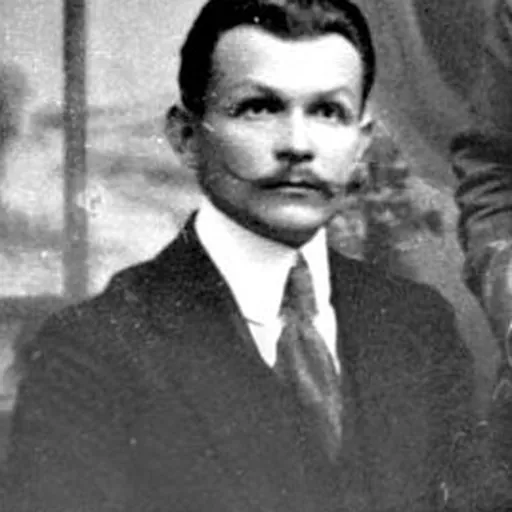
Ramuald Ziamkievič
Belarusian & Polish bibliographer, publicist, historian of Belarusian literature, collector of books and manuscripts, politician (1881 – 1943/44)
About Ramuald Ziamkievič
Lived 1881 – 1944 (aged 62–63). Ramuald Ziamkievič was a Russian and Polish literary scholar, translator, journalist, poet, bibliographer and opinion journalist.
Ramuald Ziamkievič , Romuald Ziemkiewicz (; 7 February 1881 – 1943 or 1944) was a Belarusian and Polish bibliographer, publicist, historian of Belarusian literature, collector of books and manuscripts, and politician. He was a participant in the First All-Belarusian Congress of 1917 and a member of the Rada of the Belarusian Democratic Republic. Ziamkievič is also known for falsifying his biography and stealing valuable archival materials.
Biography
Early life Ziamkievič was born in Warsaw. He is known for falsifying his own biography. He claimed his father's name was Aleksander (hence he is listed as Ramuald Aliaksandravič Ziamkievič in some Belarusian encyclopedias), but in reality, his father was Michał Ziemkiewicz (c. 1829–1888). In 1875, Michał Ziemkiewicz, together with Wiktoryn Noakowski, bought a printing house in Warsaw. After his death, the business was run by his wife, Maria, Romuald's mother. Ziamkievič later claimed his parents were from the Slutsk region, but there is no evidence for this.
He studied at a Warsaw gymnasium, where he became close to bibliophile Zygmunt Wolski. In 1906–1907, he worked at the antiquarian bookshop of Hieronim Wilder in Warsaw. He collaborated with scholars Yefim Karsky and Michał Federowski. According to bibliophile Jan Michalski, Ziemkiewicz was obsessed with collecting books and was once caught stealing from Wilder and Federowski, but was spared punishment in hopes of reform.
After this incident, Ziamkievič moved to Vilnius, where he became involved with the Belarusian national movement. In 1908, he collected folklore in the Braslaw and Barysaw regions. He worked as a tutor in private estates, including Kazimirau near Zembin. He wore the uniform of a student of the Kyiv Polytechnic Institute, although later investigations revealed he had forged his engineering diploma. However, the intelligence service doubted the reliability of his reports.
Anton Luckievich accused Ziamkievič of misappropriating the entire printed archive of the Belarusian Socialist Assembly, which had been entrusted to him in 1913.
Scholarly and research activity Cover of Ziamkievič's book Jan Barščeŭski — The First Belarusian Writer of the 19th Century (1911) From 1909, Ziamkievič published articles in Nasha Niva and other Belarusian publications. He researched Belarusian bibliography, ancient Belarusian literature, Belarusian literature of the 19th century, ethnography, Belarusian folk aesthetics, folklore, and Belarusian art. He prepared and published the first specialized bibliographic guide in the Belarusian language — Belarusian Bibliography (1910). He wrote a number of works on the history of Belarusian literature, writing about Vincent Dunin-Marcinkievič, Jan Barszczewski, Adam Kirkor, Aliaksandr Jelski, Yanka Luchyna, Karuś Kahaniec, Maksim Bahdanovič, and others. He published previously unknown manuscripts of Maksim Bahdanovič (1919), Karuś Kahaniec (1920), Vincent Dunin-Marcinkievič (1923), and Yanka Luchyna (1932).
In 1919, in the magazine Bielaruskaje žyćcio (No. 5), he published for the first time an engraved portrait of Vasil Ciapinski (1576), which he claimed to have found in the library of K. Swiętopełk-Zawadzki in Kroshyn; researchers consider the portrait to be a forgery by Ziamkievič. He assisted Yefim Karsky with materials and information, exchanged scientific information with Aliaksandr Jelski and Aliaksandr Šliubski, and provided his archival findings, manuscripts, and memoirs to the Warsaw Slavist Józef Gołąbek when the latter was working on a monograph about Vincent Dunin-Marcinkievič.
Ziamkievič amassed a unique library on history, linguistics (including all works of Yefim Karsky), literature, and folklore of Belarus, Ukraine, Lithuania, Poland, and other Slavs, as well as a large collection of manuscripts by Belarusian writers. Among the rarities of his library were numerous early printed books, including the Bible of Francysk Skaryna, the Ostrog Bible (1581), the Lexicon of Pamvo Berynda, the Chronicle of Marcin Bielski, Kitabs of the 16th–17th centuries, autographs of Aliaksandr Rypinski, Arciom Viaryha-Dareŭski, Vincent Dunin-Marcinkievič, Yanka Luchyna, Francišak Bahuševič, Jadvihin Š. (the manuscript of his drama The Thief), Yanka Kupala, Yakub Kolas, Maksim Bahdanovič, authors of Nasha Dolya and Nasha Niva, and others. In his works, he cited new information and published unknown manuscripts of Belarusian writers of the 19th and early 20th centuries. Most of his rich collections, as well as part of his own manuscripts (in particular, the manuscript of the book A Short Outline of the History of Belarusian Music), were lost. Individual manuscripts and letters are preserved in archives and libraries in Minsk, Vilnius, Warsaw, and Saint Petersburg.
Literary work
In 1942–1943, under the pseudonym Šeršań (Hornet), he published satirical poems in the Białystok newspaper Novaja daroha. He also wrote poems in Polish. He translated into Belarusian works by the Ukrainian writer Vasyl Stefanyk (published in Nasha Niva) and the Frenchman Alphonse Daudet. Pseudonyms and cryptonyms: Раман Суніца (Raman Sunica); Юры Алелькавіч (Jury Alieĺkavič); Саўка Барывой (Saŭka Baryvoj); Шэршань (Šeršań); Р. Зем. (R. Ziem.); Ром. Зем. (Rom. Ziem.); Р-н Сун. (R-n Sun.); Р. С-ца (R. S-ca).
Don’t just read it —
keep it.
Full-length biographies made to live with: read them, listen on the way to work, watch them tonight.
- E-book
- Audio
- Video
Instant download · yours to keep · every purchase keeps this site free
Important facts
People in Ramuald Ziamkievič's life
Named in this biography and alive at the same time


Related people
Same field, nearest in time



Contemporaries
People whose lives overlapped Ramuald Ziamkievič's





Frequently asked questions
Who was Ramuald Ziamkievič?
Belarusian & Polish bibliographer, publicist, historian of Belarusian literature, collector of books and manuscripts, politician (1881 – 1943/44)
When was Ramuald Ziamkievič born?
Ramuald Ziamkievič was born on 7 February 1881 in Warsaw.
When did Ramuald Ziamkievič die?
Ramuald Ziamkievič died in 1944 in Auschwitz.
What was Ramuald Ziamkievič's occupation?
Ramuald Ziamkievič was a literary scholar, translator, journalist, poet, bibliographer and opinion journalist.
What nationality was Ramuald Ziamkievič?
Ramuald Ziamkievič was Russian and Polish.
Sources & further reading
· Wikipedia: Ramuald Ziamkievič
Cite this page
APA: Biography.guide. (2026). Ramuald Ziamkievič. https://biography.guide/ramuald-ziamkievic/
MLA: "Ramuald Ziamkievič." Biography.guide, https://biography.guide/ramuald-ziamkievic/.
Chicago: "Ramuald Ziamkievič." Biography.guide. https://biography.guide/ramuald-ziamkievic/.
Data last updated: 2026-09-22 · Spot an error? Report a correction.
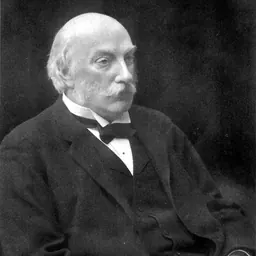
Portrait: Wikimedia Commons · author & licence
Page generated 2026-09-27 05:01 UTC