
About Yanka Kupala
Lived 1882 – 1942 (aged 60). Yanka Kupala was a Russian and Belarusian poet, playwright, translator, writer, journalist and opinion journalist.
Ivan Daminikavich Lutsevich (, ; – 28 June 1942), better known by his pen name Yanka Kupala (Янка Купала), was a Belarusian poet and writer.
Biography Early life
Janka Kupala during his study under professor A. Charniaev in Saint Petersburg, 1909 Kupala was born on July 7, 1882, in Viazynka, a folwark settlement near Maladzyechna. His family had been well-known since the early 17th century, coming from the szlachta, although grown poor so both of his parents had to work as tenant farmers at the folwark. Yanka’s grandfather leased the land from the Radziwiłł family who eventually expelled him from his home. The story later formed the basis of Kupala’s drama ‘’. Young Ivan had to help his father support the family. When his father died in 1902 he became the only provider. He worked a variety of short-term jobs, including as a tutor, a shop assistant, and a record keeper. Later he was hired as a labourer at the local distillery. Despite the hard work he managed to find time for self-education. He wrote almost all books from his father’s library, graduated from the local folk school and successfully qualified as a teacher.
He took part in the 1905 Russian Revolution. Between 1908 and 1909 Ivan lived in Vilnius and worked at the Nasha Niva newspaper. At the time he composed his most famous poem ‘Who goes there?’ that was eventually put into music and became a hymn of Belarusians. who created and became the director of the in Minsk.
Literature career
Kupala's first serious literary attempt was Ziarno, a Polish-language sentimental poem which he completed around 1903–1904 under the pseudonym "K-a." His first Belarusian-language work ("Мая доля") was dated July 15, 1904. Kupala's first published poem, "Мужык" ("Peasant"), was published approximately a year later, appearing in Belarusian in the Russophone Belarusian newspaper Severo-Zapadnyi Krai (Northwestern Krai) on May 11, 1905. A number of subsequent poems by Kupala appeared in the Belarusian-language newspaper Nasha Niva from 1906 to 1907. In Vilnius and St. Petersburg
Kupala moved to Vilnius in 1908, where he continued with his career as a poet. The same year the first published collection of his poems, Жалейка (The Little Flute) brought on the ire of the czarist government, which ordered the book confiscated as an anti-government publication. The order for Kupala's arrest was revoked in 1909, but a second printing was again confiscated, this time by the local authorities in Vilnius. He ceased working for the Nasha Niva in order to avoid ruining the reputation of the newspaper.
Kupala left for Saint Petersburg in 1909. The subsequent year saw the publication of several works, including the poem Адвечная песьня (Eternal Song), which appeared as a book in St. Petersburg in July 1910. Сон на кургане (Dream on a Barrow)– completed in August 1910 –symbolised the poor state of Kupala's Belarusian homeland. Among those influencing Kupala in the 1910s was Maxim Gorky. Kupala left St. Petersburg and returned to Vilnius in 1913, where he started working at Nasha Niva again. He started working in the People’s Commissariat of Education of the BSSR, then headed the library in the "Belarusian hattsy", edited magazines 'Run' (1920) and 'Volny stsyag' (1920–1922).
Legacy
Kupala became recognised as a symbol of the culture of Belarus during the Soviet era. A museum, organized in Minsk through the efforts of his widow in 1945, is the leading literary museum in Belarus. Hrodna State University was named after Yanka Kupala. There is also a park (with a monument to the poet), a theatre and a metro station (Kupalaŭskaja) named after him in Minsk.
A special field in the Belarusian literary studies dedicated to Kupala's legacy is called 'Kupalaznaustva'. It was presented as a gift to the United States in 1973 by the Byelorussian Society for Friendship and Cultural Relations with Foreign Countries. A monument to Kupala is located on a square in the city of Ashdod in Israel. A sculpture to Yanka Kupala is located on a Magtymguly Park in the city of Ashgabat in Turkmenistan.
The biopic Kupala was produced by BelarusFilm in 2020 and dramatizes his life.
Don’t just read it —
keep it.
Full-length biographies made to live with: read them, listen on the way to work, watch them tonight.
- E-book
- Audio
- Video
Instant download · yours to keep · every purchase keeps this site free
Important facts
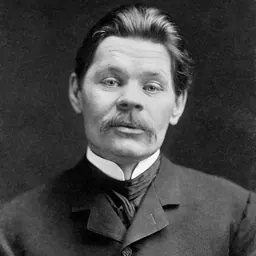
People in Yanka Kupala's life
Named in this biography and alive at the same time
Related people
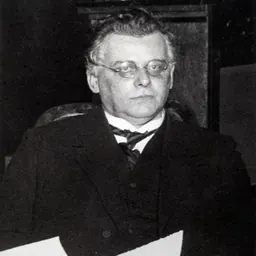
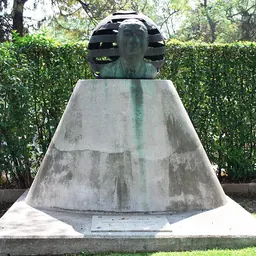
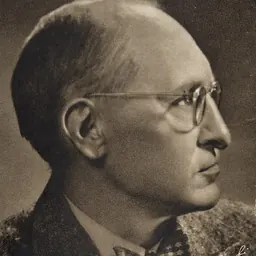
Same field, nearest in time

Contemporaries
People whose lives overlapped Yanka Kupala's


Frequently asked questions
Who was Yanka Kupala?
Belarusian writer (1882–1942)
When was Yanka Kupala born?
Yanka Kupala was born on 25 June 1882 in Viazynka.
When did Yanka Kupala die?
Yanka Kupala died on 28 June 1942 in Moscow.
What was Yanka Kupala's occupation?
Yanka Kupala was a poet, playwright, translator, writer, journalist and opinion journalist.
What nationality was Yanka Kupala?
Yanka Kupala was Russian and Belarusian.
Sources & further reading
Cite this page
APA: Biography.guide. (2026). Yanka Kupala. https://biography.guide/yanka-kupala/
MLA: "Yanka Kupala." Biography.guide, https://biography.guide/yanka-kupala/.
Chicago: "Yanka Kupala." Biography.guide. https://biography.guide/yanka-kupala/.
Data last updated: 2026-09-20 · Spot an error? Report a correction.
Page generated 2026-09-27 05:21 UTC