
About Ram Subhag Singh
Lived 1917 – 1980 (aged 63). Ram Subhag Singh was an Indian politician.
Ram Subhag Singh (7 July 1917 – 16 December 1980) was an Indian politician who was a member of the Indian National Congress. He served as a member of the 3rd and 4th Lok Sabha for Bikramganj and Buxar in the Bihar state of India in 1962 and 1967, respectively. After the split in the Congress party in 1969, he stayed with the Indian National Congress (Organisation). He was first leader of the opposition in the Lok Sabha in 1969. He participated in the Indian independence movement. He was a cabinet minister in the Union Government led by the Congress party.
Early life Singh was born in July 1917 in Bhojpur district of the Bihar State in India. He undertook his primary education at the Government Town School, Ara Bihar, and his secondary education at Kashi Vidyapeeth, Varanasi, Uttar Pradesh. Singh went to the University of Missouri for completing his Ph.D. degree in journalism from the Missouri School of Journalism.
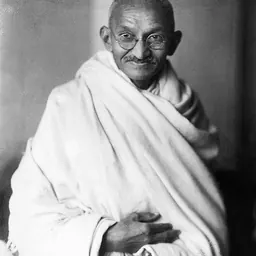
Activism and politics He participated in 1942 Quit India Movement along with Mahatma Gandhi. He was close aide of Jawahar Lal Nehru and he fought Parliamentary Election in 1952 from Sasaram Constituency of Bihar State and elected as Member of Parliament in First Loksabha. In 1957 he again got elected to Parliament from same constituency. In 1962 he won parliamentary seat of Bikramganj constituency in Bihar. In 1967 he fought the general election for the Buxar constituency and was elected to parliament for a 4th time.
Policy initiatives and achievements During his tenure as Minister of Railways from February to November 1969, Ram Subhag Singh proposed and initiated the Rajdhani Express service, India's first high-speed, fully air-conditioned premium train aimed at connecting the national capital to major cities like Kolkata. On February 19, 1969, Singh announced the introduction of the Rajdhani in his railway budget speech, emphasizing faster travel with onboard catering and reduced journey times. The inaugural Howrah Rajdhani Express departed from New Delhi on March 1, 1969, covering the 1,451 km distance to Howrah in approximately 17 hours at an average speed of 85 km/h, marking a significant upgrade in long-distance rail efficiency.
This initiative laid the foundation for subsequent Rajdhani expansions, prioritizing air-conditioned coaches, priority scheduling, and integrated services to enhance passenger comfort and national connectivity, though implementation faced logistical challenges like track upgrades. Earlier, as Minister of State for Food and Agriculture from May 1962 to June 1964, Singh contributed to parliamentary discussions on agricultural expansion, including afforestation targets that achieved 87,072 acres planted in 1961-62 with plans for 101,646 acres the following year, supporting broader food security efforts amid India's post-independence planning. His roles underscored a focus on infrastructural and productive sector reforms, though specific quantifiable outcomes beyond these announcements remain tied to collective governmental efforts.
Positions held Opposition leaders (From right to left) Madhu Limaye, Raj Narayan, George Fernandes, Atal Bihari Vajpayee, Ram Subhag Singh. Member of the Central Legislature for over 22 years consecutively. Member of Parliament, 1948–1952. Provisional Parliament, 1950–1952. Member of Parliament, 1952–1957. Agriculturist and Journalist; President, Shahabad District Canal (Nahar) Kisan Congress, 1952–1955. Member of Parliament, 1957–1962. Secretary, Congress party in Parliament, 1955–1962. Union Minister of State for Food and Agriculture, 1962–1964. Union Minister of Social Security & Cottage Industries, 9 June 1964 – 13 June 1964. Union Minister of State for Railways, 1964–1967. Union Minister of Parliamentary Affairs, 1967–1969. Union Minister of Communications and Information Technology, 1967–1969. Union Minister of Railways, 14 February 1969 – 4 November 1969. He was India's first Leader of Opposition in the Lok Sabha from 1969–1970.
Don’t just read it —
keep it.
Full-length biographies made to live with: read them, listen on the way to work, watch them tonight.
- E-book
- Audio
- Video
Instant download · yours to keep · every purchase keeps this site free
Important facts
People in Ram Subhag Singh's life
Named in this biography and alive at the same time

Related people
Same field, nearest in time






Contemporaries
People whose lives overlapped Ram Subhag Singh's

Frequently asked questions
Who was Ram Subhag Singh?
Member of the 3rd and 4th Lok Sabha (1917–1980)
When was Ram Subhag Singh born?
Ram Subhag Singh was born on 7 July 1917 in Bhojpur district, Bihar, Bihar Province, British Raj, India.
When did Ram Subhag Singh die?
Ram Subhag Singh died on 16 December 1980 in New Delhi.
What was Ram Subhag Singh's occupation?
Ram Subhag Singh was a politician.
What nationality was Ram Subhag Singh?
Ram Subhag Singh was Indian.
Sources & further reading
Cite this page
APA: Biography.guide. (2026). Ram Subhag Singh. https://biography.guide/ram-subhag-singh/
MLA: "Ram Subhag Singh." Biography.guide, https://biography.guide/ram-subhag-singh/.
Chicago: "Ram Subhag Singh." Biography.guide. https://biography.guide/ram-subhag-singh/.
Data last updated: 2026-09-20 · Spot an error? Report a correction.
Page generated 2026-09-27 05:20 UTC