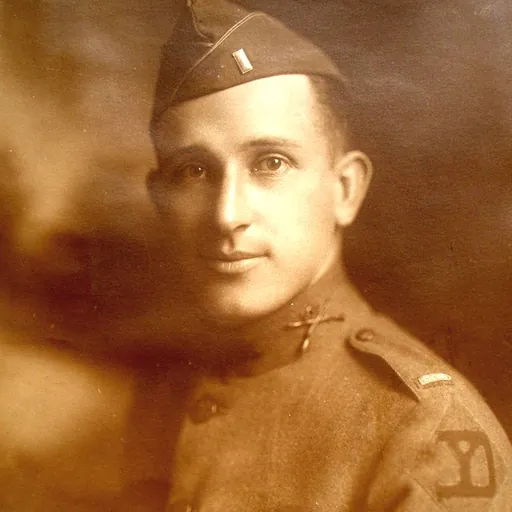
About Ralph Monroe Eaton
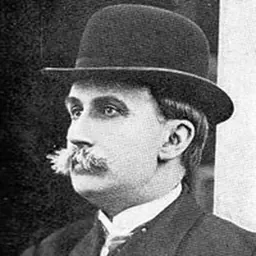
Lived 1892 – 1932 (aged 39). Ralph Monroe Eaton was an American philosopher.
Ralph Monroe Eaton (June 28, 1892 – April 13, 1932) was an American philosopher of Harvard University whose career was cut short at the age of 39. He specialized in the theory of knowledge and logic but later became interested in psychoanalysis. He served in the United States Army during the First World War and wrote an unpublished memoir of his experiences.
Early life and marriage Ralph Monroe Eaton was born on June 28, 1892, in Stockton, California. He was educated at the University of California, Berkeley (Lit. B.A, 1914) and Harvard University (M.A., 1915, Ph.D., April 28, 1917).
After the war, he wrote an unpublished memoir of his experiences, "Backward glances of a demobilized soldier" - a small portion of which were published by the Washington Post, on Nov. 11, 2001.
Academic career Eaton obtained his undergraduate degree the University of California, Berkeley (Lit. B.A, 1914), and his first graduate degree at Harvard University (M.A., 1915). Eaton continued his studies as a Ph.D. candidate in philosophy at Harvard University from 1915 to 1917. He earned his Ph.D. April 28 of 1917. After enlisting in the Army and serving in France, he demobilized at Camp Devens, MA, in 1919. He returned to Harvard as an assistant professor in 1919 and later as an associate professor in February 1930. He stayed at the university until the end of his career. He was also briefly an assistant professor at Radcliffe College. At Harvard, he worked with and was a good friend of professor Alfred North Whitehead.
Eaton's first interests were in the scientific method and logic He became interested in psychoanalysis and the break from his Harvard duties allowed him to translate and write a preface to Secret Ways of the Mind by Wolfgang Müller Kranefeldt, with an introduction by Carl Jung, which was published in early 1932. During this time he worked closely with Jung, spending time with him in Zurich, and allowing Jung to interpret his dreams. It is possible that Eaton may have suffered from Post Traumatic Stress Disorder (PTSD) after his experience in the trenches of World War I.
Death In April 1932, Eaton dismissed a class at Radcliffe due to dizziness. At the insistence of friends, he checked into a hospital for a night, but departed the next morning. A group of colleagues found his body in a forest in West Concord, where he had taken his life.
Selected publications Symbolism and truth: An introduction to the theory of knowledge. Harvard University Press, Cambridge, MA, 1925. Selections from Descartes. Scribner's, 1927. (editor) (The Modern Student's Library) General logic: An Introductory Survey. Scribner's, 1931.
"The Social Unrest of the Soldier," Author(s): Ralph M. Eaton. Reviewed work(s):Source: International Journal of Ethics, Vol. 31, No. 3 (Apr., 1921), pp. 279–288Published by: The University of Chicago PressStable URL: http://www.jstor.org/stable/2377581
"Eaton on the Problem of Negation," Jonathan D, Moreno, George Washington University, Ebsco Publishing, 2003.
"Social Fatalism," Author(s): Ralph M. Eaton. Source: The Philosophical Review, Vol. 30, No. 4 (Jul., 1921), pp. 380–392 Duke University Press, Stable URL: http://www.jstor.org/stable/2179048
"The Logic of Probable Propositions,"Author(s): Ralph M. Eaton. Source: The Journal of Philosophy, Psychology and Scientific Methods, Vol. 17, No. 2 (Jan.15, 1920), pp. 44-51Published by: Journal of Philosophy, Inc.Stable URL: http://www.jstor.org/stable/2939997
"The Meaning of Chance," Author(s): Ralph M. Eaton. Source: The Monist, Vol. 31, No. 2 (APRIL, 1921), pp. 280–296Published by: Hegeler InstituteStable URL: http://www.jstor.org/stable/27900856 .
"The Value of Theories,"Author(s): Ralph M. Eaton. Source: The Journal of Philosophy, Vol. 18, No. 25 (Dec. 8, 1921), pp. 682-690Published by: Journal of Philosophy, Inc.Stable URL: http://www.jstor.org/stable/2939740 .
"What is the Problem of Knowledge?" Author(s): Ralph M. Eaton. Source: The Journal of Philosophy, Vol. 20, No. 7 (Mar. 29, 1923), pp. 178–187Published by: Journal of Philosophy, Inc.Stable URL: http://www.jstor.org/stable/2939834
Don’t just read it —
keep it.
Full-length biographies made to live with: read them, listen on the way to work, watch them tonight.
- E-book
- Audio
- Video
Instant download · yours to keep · every purchase keeps this site free
Important facts
People in Ralph Monroe Eaton's life
Named in this biography and alive at the same time


Related people
Same field, nearest in time




Contemporaries
People whose lives overlapped Ralph Monroe Eaton's

Frequently asked questions
Who was Ralph Monroe Eaton?
(1892-1932) American philosopher
When was Ralph Monroe Eaton born?
Ralph Monroe Eaton was born on 28 June 1892.
When did Ralph Monroe Eaton die?
Ralph Monroe Eaton died on 13 April 1932.
What was Ralph Monroe Eaton's occupation?
Ralph Monroe Eaton was a philosopher.
What nationality was Ralph Monroe Eaton?
Ralph Monroe Eaton was American.
Sources & further reading
· Wikipedia: Ralph Monroe Eaton
Cite this page
APA: Biography.guide. (2026). Ralph Monroe Eaton. https://biography.guide/ralph-monroe-eaton/
MLA: "Ralph Monroe Eaton." Biography.guide, https://biography.guide/ralph-monroe-eaton/.
Chicago: "Ralph Monroe Eaton." Biography.guide. https://biography.guide/ralph-monroe-eaton/.
Data last updated: 2026-09-23 · Spot an error? Report a correction.
Portrait: Wikimedia Commons · author & licence
Page generated 2026-09-27 05:06 UTC