
About Ralph Fasanella
Lived 1914 – 1997 (aged 83). Ralph Fasanella was an American painter and trade unionist.
Ralph Fasanella (September 2, 1914 – December 16, 1997) was an American self-taught painter whose large, detailed works depicted urban working life and critiqued post-World War II America.
Early life Ralph Fasanella was born to Joseph and Ginevra (Spagnoletti), Italian immigrants, in the Bronx on Labor Day in 1914. He was the third of six children. His father delivered ice to local homes. His mother worked in a neighborhood dress shop drilling holes into buttons, and spent her spare time as an anti-fascist activist.
Fasanella spent much of his youth delivering ice with his father from a horse-driven wagon. This experience deeply impressed him. He saw his father as representative of all working men, beaten down day after day and struggling for survival. "Fasanella later said that the compositional density of his pictures was influenced by the experience of helping his father deliver ice, which involved removing all the food from customers' refrigerators and arranging it in neatly ordered stacks."
Fasanella's mother was a literate, sensitive, progressive woman. She instilled in Fasanella a strong sense of social justice and political awareness. Fasanella began accompanying his mother when she worked on anti-fascist and trade union causes. Fasanella also helped his mother publish and distribute a small Italian-language, anti-fascist newspaper to help support the family.
Joseph Fasanella abandoned his family and returned to Italy in the 1920s. This increased the influence Fasanella's mother had over young Ralph, but it also led to some behavioral problems.
Fasanella served two stints in reform schools run by the Catholic Church for truancy and running away from home. He later said he was sexually abused ("used as a girl") by the priests. These experiences instilled a deep dislike for authority and reinforced Fasanella's hatred for anything which broke people's spirits. Fasanella later depicted his experience in reform school in a painting titled Lineup at the Protectory 2 (1961). The melancholy image features rows of boys standing at attention, watched over by scowling, ominous-looking priests. Fasanella quit school after the sixth grade.
During the Great Depression, Fasanella worked as a textile worker in garment factories and as a truck driver. He became a member of United Electrical, Radio and Machine Workers of America (UE) Local 1227 while working as a machinist in Brooklyn. He became strongly aware of the growing economic and social injustice in the U.S., as well as the plight and powerlessness of the working class.
In late 1930s, Ralph Fasanella volunteered to fight in the Abraham Lincoln Brigade, an American paramilitary force fighting to support the Second Spanish Republic against the successful fascist rebellion led by General Francisco Franco.
Union organizing career
After the Spanish Civil War, Fasanella returned to the United States, where he began organizing labor unions.
Fasanella joined the UE staff in 1940. He organized a Western Electric manufacturing plant in Manhattan, a Sperry Gyroscope factory, and a number of other electrical equipment and machine plants in and around New York City. One of his later paintings shows a union organizing committee meeting being held in a UE hall.
It was during a UE organizing drive in 1940 that Fasanella first began to draw.
Fasanella married Matilda Weiss in 1943. The short-lived marriage ended in 1944.
In 1949, Fasanella was the American Labor Party candidate for New York City Council in the 20th district. He came in third place with 9% of the vote.
Painting career In the mid-1940s, Fasanella began to suffer from intense finger pain caused by arthritis. A union co-worker suggested that he take up painting as a way to exercise his fingers and ease the pain.
In 1945, Fasanella persuaded the UE to organize painting classes for its members at a local college. He was one of the first members to sign up for classes.
Fasanella became consumed by art, and left labor union organizing to paint full-time. To pay the bills, he bought a service station and worked there.
Fasanella's painting focused on city life, men and women at work, union meetings, strikes, sit-ins and baseball games. He quickly developed a style which spoke to workers and the poor through the use of familiar details. Fasanella improvised a quasi-surrealist style, depicting interiors and exteriors or past and future simultaneously. He painted canvases as big as 10 feet across because he envisioned his paintings hanging in large union meeting halls.
" 'I always felt embarrassed by the whole thing,' he said, 'but I had to do it.' "
Fasanella's art was highly improvisational. He never planned out works, and rarely revised them. He said of his 1948 painting May Day, it "just came out of my belly. I never planned it. I don't know how I did it."
The New York magazine cover catapulted Fasanella to national fame.
Fasanella was happy with his fame, but dismissed descriptions of his work as primitive. Fasanella said it was not possible to be primitive in a post-industrial society. Critic John Berger agreed, pointing out Fasanella's left-liberal critique of urban living, "the violence of the daily necessity of the streets .. the way that the density of the working population makes itself felt." The work now hangs at the Labor Museum and Learning Center in Flint, Michigan.
In 1995, Fasanella's 1950 painting, Subway Riders, was installed in the Fifth Avenue / 53rd Street subway station.
Fasanella's Family Supper is currently on permanent display in the Great Hall at Ellis Island.
Reputation and death By the end of his life, many of the causes Fasanella fought for no longer enjoyed public favor or had been lost. Fasanella himself lamented the decline in the relevance of his work. "It's over. What I wanted to do was to paint great big canvases about the spirit we used to have in the movement and then go around the country showing them in union halls. When I started these paintings I had no idea that when they were all finished there wouldn't be any union halls in which to show them."
A retrospective at the American Folk Art Museum in 2014 presented critics and the public with an opportunity to reassess Fasanella's art and its place in postwar American culture.
Critical assessment Critics praise Fasanella for utilizing bold images and strong colors: His paintings—bold, colorful, loaded with detail yet unified in composition—speak powerfully of a distinct working-class identity and culture, and of the dignity of labor. They capture the past and express hope for the future.
Fasanella is also cited for being able to create deeply detailed works with highly individualized parts, yet unifying these scenes into a coherent single image. "Typically, his paintings have hundreds, if not thousands, of individually painted people and buildings. But Fasanella's people are never individuals. They're always seen en masse."
Fifth Avenue / 53rd Street subway station, New York City, NY Addison Gallery of American Art, Andover, MA Baseball Hall of Fame, Cooperstown, NY Communications Workers of America Headquarters Building, Washington, D.C. Ellis Island Immigration Museum, Ellis Island, NY Flint Public Library, Flint, MI Heritage State Park Visitors' Center, Lawrence, MA Hirshhorn Museum, Washington, D.C. Labor Museum and Learning Center, Flint, MI Lewiston/Auburn Campus, University of Southern Maine, Lewiston, ME Michigan State University, East Lansing, MI Milwaukee Art Museum, Milwaukee, WI Smithsonian American Art Museum, Washington, D.C. American Folk Art Museum, New York City, NY New Bedford City Hall, New Bedford, MA New York State Historical Association, Fenimore House Museum, Cooperstown, NY Oakland International Airport Terminal Building, Oakland, CA State Administration Building, Providence, RI , Hackensack, NJ (has in its collection 50+ signed Fasanella art prints)
Don’t just read it —
keep it.
Full-length biographies made to live with: read them, listen on the way to work, watch them tonight.
- E-book
- Audio
- Video
Instant download · yours to keep · every purchase keeps this site free
Important facts
People in Ralph Fasanella's life
Named in this biography and alive at the same time
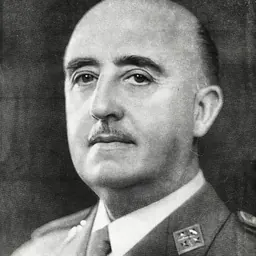

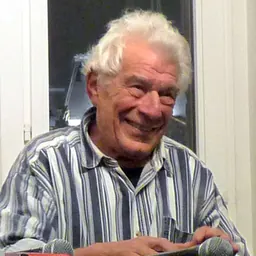
Related people
Same field, nearest in time
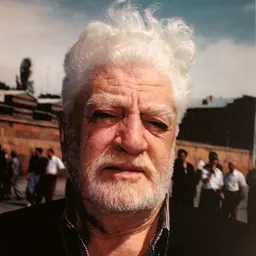

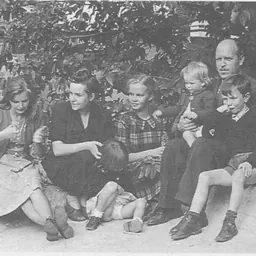
Contemporaries
People whose lives overlapped Ralph Fasanella's


Frequently asked questions
Who was Ralph Fasanella?
American artist (1914-1997)
When was Ralph Fasanella born?
Ralph Fasanella was born on 2 September 1914 in New York City.
When did Ralph Fasanella die?
Ralph Fasanella died on 16 December 1997 in New York City.
What was Ralph Fasanella's occupation?
Ralph Fasanella was a painter and trade unionist.
What nationality was Ralph Fasanella?
Ralph Fasanella was American.
Sources & further reading
Cite this page
APA: Biography.guide. (2026). Ralph Fasanella. https://biography.guide/ralph-fasanella/
MLA: "Ralph Fasanella." Biography.guide, https://biography.guide/ralph-fasanella/.
Chicago: "Ralph Fasanella." Biography.guide. https://biography.guide/ralph-fasanella/.
Data last updated: 2026-09-26 · Spot an error? Report a correction.
Page generated 2026-09-27 05:15 UTC