
About Raden Saleh
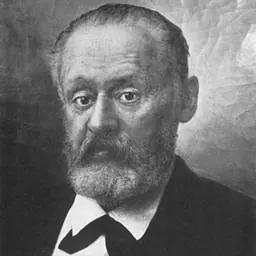
Lived 1811 – 1880 (aged 68–69). Raden Saleh was an Indonesian curator, painter, draftsperson, watercolorist and lithographer.
Raden Saleh Sjarif Boestaman (, EYD: ; , DIN: ; 1811 – 23 April 1880) was a pioneering Romantic painter from the Dutch East Indies of Arab-Javanese ethnicity. He was considered to be the first "modern" artist from Indonesia (then the Dutch East Indies), and his paintings corresponded with nineteenth-century romanticism which was popular in Europe at the time. He also expressed his cultural roots and inventiveness in his work.
Early life Raden Saleh Syarif Bustaman was born in 1811 in the village of Terboyo, near Semarang on the island of Java in the Dutch East Indies (present-day Indonesia). He was born into a noble Hadhrami family; his father was Sayyid Husen bin Alwi bin Awal bin Yahya, whose family had come to Java via Surat in India in the seventeenth century. He was the grandson of Sayyid Abdullah Bustam through his mother, Raden Ayu Sarif Husen bin Alwi bin Awal. Through his sister, Roqayah, Raden Saleh was uncle by marriage to the famous religious leader Habib Ali Kwitang.
Studies in Europe Raden Saleh, c. 1840, credited to Friedrich Carl Albert Schreuel Young Raden Saleh was first taught in Bogor by the Belgian artist A.J. Payen. Payen acknowledged the youth's talent, and persuaded the colonial government of the Netherlands to send Raden Saleh to the Netherlands to study art. He arrived in Europe in 1829 and began to study under Cornelis Kruseman and Andreas Schelfhout.
It was from Kruseman that Raden Saleh studied his skills in portraiture, and later was accepted at various European courts where he was assigned to do portraits. While in Europe, in 1836 Saleh became the first indigenous Indonesian to be initiated into Freemasonry. From 1839, he spent five years at the court of Ernest I, Duke of Saxe-Coburg and Gotha, who became an important patron.
From Schelfhout, Raden Saleh furthered his skills as a landscape painter. Raden Saleh visited several European cities, as well as Algiers. In The Hague, a lion tamer named Henri Martin allowed Raden Saleh to study his lion, and from that his most famous painting of animal fights was created, which subsequently brought fame to the artist. Many of his paintings were exhibited at the Rijksmuseum in Amsterdam. Several of his paintings were destroyed when the Colonial Dutch pavilion in Paris was burnt in 1931.
Return to the Dutch East Indies/Indonesia
Raden Saleh returned to Dutch East Indies in 1852, after living in Europe for 20 years. He worked as conservator for the colonial collection of government art, and acted as court painter to the Governors-General. He also painted portraits of members of the colonial elite – European administrators, the Javanese priyayi or the Peranakan Chinese 'Cabang Atas' – as well as landscapes. Returning to Java, he expressed his uneasiness of living in the colonies, stating that "here, people only talks about coffee and sugar, then sugar and coffee" in one of his letters. His new wife financed the construction of Saleh's landhuis or country house on the private domain (particuliere land) that the couple had acquired, Cikini. however post-mortem examination showed that his circulatory system was disrupted due to a clot near his heart. Saleh was buried two days later in Kampung Empang, Bogor. As reported in the Java-Bode, 28 April 1880, his funeral was "attended by various landheeren [landlords] and Dutch officials, and even by curious students from nearby school." including the Sachsen-Coburg-Gotha, the family of Queen Victoria, and a number of governors-general such as Johannes van den Bosch, Jean Chrétien Baud, and Herman Willem Daendels. In 1883, an exhibition of Raden Saleh's paintings was held in Amsterdam to commemorate the third anniversary of Saleh's death, on the initiative of King Willem III and Ernst of Sachsen-Coburg-Gotha. Among them were the paintings Burning Forest, Buffalo Hunting in Java, and the Capture of Prince Diponegoro.
The Arrest of Pangeran Diponegoro
The Arrest of Pangeran Diponegoro, 1857, Merdeka Palace Museum, Jakarta. Raden Saleh is particularly remembered for his historical painting, The Arrest of Pangeran Diponegoro, This can also be seen it the depiction of Diponegoro's men. Pieneman had never been to the Indies, and so depicted Diponegoro's men in a more Arabic fashion. Saleh's version has a more accurate depiction of native Javanese clothing, with some figures wearing batik and blangkon.
Saleh finished this painting in 1857 and presented it to Willem III of Netherlands in The Hague. It was returned to Indonesia in 1978 as a realization of a cultural agreement between the two countries in 1969, regarding the return of cultural items which were taken, lent, or exchanged to the Dutch in the previous eras. Even though the painting did not fall under any of those categories, because Saleh presented it to the King of the Netherlands and it was never in the possession of Indonesia, it was nevertheless returned as a gift from the Royal Palace of Amsterdam, and is currently displayed at the Merdeka Palace Museum in Jakarta.
In 1953, President Sukarno visited Raden Saleh's tomb. Bung Karno once told Adun that "Raden Saleh was a great Indonesian painter who was widely known in Europe" and assigned the architect Friedrich Silaban to restore his tomb. Behind Raden Saleh's tomb actually lies the tomb of Raden Panoeripan and several of his descendants. It is said that Raden Panoeripan's tomb has been around since the 17th century. Raden Saleh's tomb is currently cared for and guarded by a caretaker who is a direct descendant of Raden Panoeripan.
Works
In popular culture Stealing Raden Saleh (Indonesian: Mencuri Raden Saleh) is a 2022 action thriller film directed by Angga Dwimas Sasongko and written by Sasongko and Husein M. Atmodjo. The film features a group of people who want to plan the theft of Indonesian painter Raden Saleh's masterpiece "The Arrest of Prince Diponegoro"
Don’t just read it —
keep it.
Full-length biographies made to live with: read them, listen on the way to work, watch them tonight.
- E-book
- Audio
- Video
Instant download · yours to keep · every purchase keeps this site free
Important facts
more
Sarief Bastaman Raden Saleh, Bastaman, Radèn Salèh, B. Raden Saleh Marasutan, Salekh Bustaman, Raden Saleh Sarief Bustaman, Radèn Salèh Bastaman, Radeaa Sarief Bastaman Saleh, Saleh Sarief Bastaman, Bustam, Sarief Bastaman, Raden Saleh Syarif Bustaman, Radèn Salèh Bustam, Saleh Syarif Bustaman, Raden Saleh Bastaman, Raden Saleh Bustam, Radin Saleh Ben Jagya, Radeaa SalehPeople in Raden Saleh's life
Named in this biography and alive at the same time
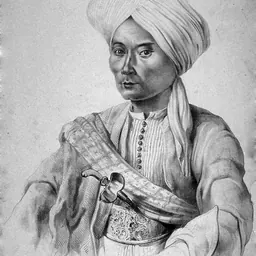

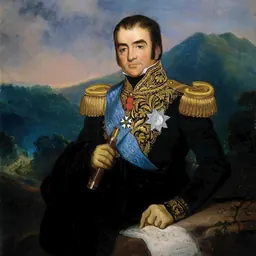


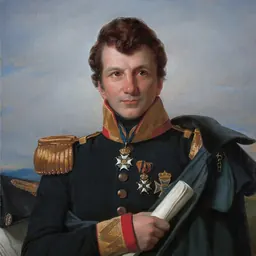
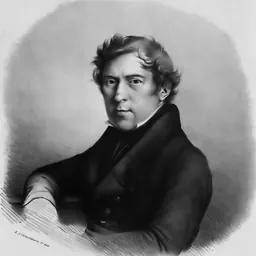
Related people
Same field, nearest in time

Contemporaries
People whose lives overlapped Raden Saleh's




Frequently asked questions
Who was Raden Saleh?
painter from Indonesia (1811-1880)
When was Raden Saleh born?
Raden Saleh was born in 1811 in Semarang.
When did Raden Saleh die?
Raden Saleh died on 23 April 1880 in Bogor.
What was Raden Saleh's occupation?
Raden Saleh was a curator, painter, draftsperson, watercolorist and lithographer.
What nationality was Raden Saleh?
Raden Saleh was Indonesian.
Sources & further reading
Cite this page
APA: Biography.guide. (2026). Raden Saleh. https://biography.guide/raden-saleh/
MLA: "Raden Saleh." Biography.guide, https://biography.guide/raden-saleh/.
Chicago: "Raden Saleh." Biography.guide. https://biography.guide/raden-saleh/.
Data last updated: 2026-09-27 · Spot an error? Report a correction.
Page generated 2026-09-27 05:16 UTC