
Qazi Muhammad
Founder and Supreme Guide of the Republic of Mahabad
About Qazi Muhammad
Lived 1893 – 1947 (aged 53). Qazi Muhammad was a judge, cleric and politician.
Qazi Muhammad (, ; 1 May 1893 – 31 March 1947
Biography Qazi Muhammad was born into a noble Sunni Kurdish family from Mahabad. His father, Sheikh Saeed Qazi, was from the Shamsaddini tribe from Mahabad, and a Naqshbandi sheikh who owned land and played a key role in the religious and political affairs of the region. His father had cooperated with Simko Shikak during his revolt against the Iranian government in the 1920s, and his brother Sadr Qazi was a member of the Iranian parliament.
After finishing his traditional Islamic studies, Qazi Muhammad became a Sharia judge, making him both a spiritual leader and legal authority. Qazi Muhammad later became a member of the Komala Zhian I Kurd, a leading Kurdish organization in Iran at the time supported by the Soviets, in April 1945. Soon after he became its leader. Qazi Muhammad advocated for a Kurdish nationalism that prioritized tradition and accommodated Islamic values. Kurdish Islamic clerics played an important role in the creation, governance, and defense of the Republic of Mahabad.
Unlike other nationalist movements in the Middle East, Qazi Muhammad presented a Kurdish nationalism that respected traditional religious leadership and ensured the participation of Kurdish tribal and religious authorities. However, Qazi Muhammad established a secular republic. He mainly chose secularism to be taken seriously as a political actor, and to prevent the possibility of the Iranian government harming his religious credentials by accusing him of rallying Sunni Muslims for a sectarian conflict against Shia Muslims. Qazi Muhammad had also kept the secularism out of respect for Kurds of other religions.
Another major factor for the secular government of the republic was that Qazi Muhammad did not want to lose Soviet support. He was also the founder of the Democratic Party of Iranian Kurdistan, that was established after the need for a more transparent party was felt by its adherents. (Komeley Jiyanewey Kurd existed prior to that, as a secret organization.) Mustafa Barzani, one of the leaders of the nationalist Kurdish movement in Iraqi Kurdistan, was also the commander of its army along with his brother Ahmed Barzani. His cousin, Muhammad Hussein Saif Qazi, was a minister in his cabinet.
In April 1946, with the support of the Soviets, Muhammad signed a peace treaty with Ja'far Pishevari of the Azerbaijan People's Government in which they exchanged assurances that the Azerbaijani and Kurdish minorities rights in each republic would be preserved. A year later, after the Soviets withdrew from Iran, the socialist Kurdish Republic was removed by Iran's central government. Qazi Muhammad was executed by hanging on 31 March 1947. During his execution, he was relatively calm and recited Islamic prayers.
Family One of his sons, Ali Qazi, was an active member in the Kurdish movement, he died in 2022 and was laid to rest in Kalar, Southern Kurdistan, close to the tomb of his sister Maryam and her husband Serdar Jaff, the famed lion of Kurdistan and his lifetime best friend. One of his daughters, Efat Ghazi, was killed by a letter bomb in Västerås, Sweden, in 1990. The bomb was addressed to her husband, the Kurdish activist Emir Ghazi. Some analysts speculated that the Iranian government might have been involved in the assassination.
Don’t just read it —
keep it.
Full-length biographies made to live with: read them, listen on the way to work, watch them tonight.
- E-book
- Audio
- Video
Instant download · yours to keep · every purchase keeps this site free
Important facts
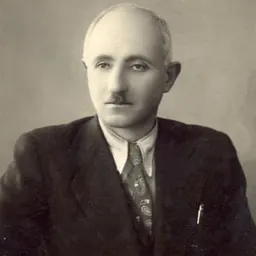
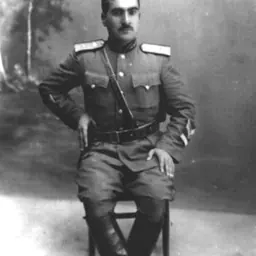
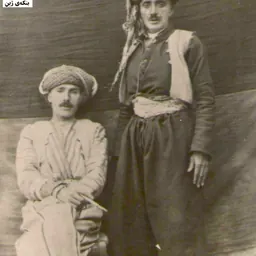
People in Qazi Muhammad's life
Named in this biography and alive at the same time

Related people
Same field, nearest in time



Contemporaries
People whose lives overlapped Qazi Muhammad's


Frequently asked questions
Who was Qazi Muhammad?
Founder and Supreme Guide of the Republic of Mahabad (1893–1947)
When was Qazi Muhammad born?
Qazi Muhammad was born on 1 May 1893 in Mahabad.
When did Qazi Muhammad die?
Qazi Muhammad died on 31 March 1947 in Mahabad.
What was Qazi Muhammad's occupation?
Qazi Muhammad was a judge, cleric and politician.
What nationality was Qazi Muhammad?
Qazi Muhammad's recorded nationality: Pahlavi Iran, Kurds.
Sources & further reading
Cite this page
APA: Biography.guide. (2026). Qazi Muhammad. https://biography.guide/qazi-muhammad/
MLA: "Qazi Muhammad." Biography.guide, https://biography.guide/qazi-muhammad/.
Chicago: "Qazi Muhammad." Biography.guide. https://biography.guide/qazi-muhammad/.
Data last updated: 2026-09-20 · Spot an error? Report a correction.
Page generated 2026-09-27 05:18 UTC