
About Purushottam Das Tandon
Lived 1882 – 1962 (aged 79). Purushottam Das Tandon was an Indian politician and freedom fighter.
Purushottam Das Tandon (; 1 August 1882 – 1 July 1962) was a freedom fighter from Allahabad, Uttar Pradesh, India. He is widely remembered for his opposition to the partition of India, as well as efforts in achieving the Official Language of India status for Hindi. He was awarded the Bharat Ratna, India's highest civilian award, in 1961.
Early life
Purushottam Das Tandon was born in Allahabad in a middle class Khatri family. After obtaining a degree in law and an MA in history, he started practicing in 1906 and joined the bar of Allahabad High Court in 1908 as a junior to Tej Bahadur Sapru. He gave up practice in 1921 to concentrate on public activities. He also worked as a professor of Hindi at Victoria College, Gwalior.
Freedom struggle
He was a member of Indian National Congress since his student days in 1899. In 1906, he represented Allahabad in the All India Congress Committee (AICC). He was associated with the Congress Party committee that studied the Jallianwala Bagh incident in 1919. In the 1920s and 1930s, he was arrested for participating in the non-cooperation movement and Salt Satyagraha respectively. He and Jawaharlal Nehru were among the people arrested even before Mohandas K. Gandhi returned from the Round Table Conference at London in 1931. He was known for his efforts in farmers' movements and he served as the President of Bihar Provincial Kisan Sabha in 1934. He also remained President of Servants of the People Society (Hindi (ISO): Lōka Sēvaka Maṇḍala ), a social service organisation founded by Lala Lajpat Rai, in 1921.
He worked as the Speaker of the Legislative Assembly of the present-day Uttar Pradesh for a period of 13 years, from 31 July 1937 to 10 August 1950. He was elected to the Constituent Assembly of India in 1946.
After independence
He established the Hindu Rakshak Dal in 1947. He tried for the position of the President of the Congress Party unsuccessfully against Pattabhi Sitaramayya in 1948 but contested successfully against Acharya Kriplani in the controversial and difficult 1950 election to head the Nagpur session. He soon resigned from Congress's president post because of differences with Nehru and as Nehru's popularity was needed for winning elections. Nehru, while being the Prime Minister of independent India, also became the president of Congress for 1951 and 1952. He was elected to the Lok Sabha in 1952 and the Rajya Sabha in 1956. He retired from active public life after that due to indifferent health. He was awarded the Bharat Ratna, India's highest civilian award in 1961. Thus, he was strongly opposed to the partition of India.
Advocacy for Hindi Despite Gandhi and other leaders advocating the adoption of Hindustani, a mixture of Hindi and Urdu, as the national language, he insisted on the usage of Devanagari script and the rejection of the Urdu script as well as words with Arabic-Persian roots. This led to him being called a political reactionary by Nehru. His attitude towards the Sanskritisation or making the language more formal was also controversial. His insistence on the usage of numerals of Devanagari script over the international system and his debates in the constituent assembly on adoption of Hindi as the official language irked Dravidian leaders.
Publications He wrote a biography of Jawaharlal Nehru, titled The Unforgettable Nehru, which was published by the National Book Trust India. A collection of his essays were compiled and published under the name, Ṭaṇḍana nibandhāvali.
Anecdotes
A Speaker is supposed to be impartial and hence, speakers generally do not participate in their party meetings. Tandon, however, used to participate actively in his party meetings, as he was clear in his conscience that since he could separate these into different compartments, there should not be any issue. When he was questioned on this stand on the floor of the house, he offered to step down if any of the members of the house lacked confidence in him. No member pressed the issue. As a staunch believer in ahimsa, he started using rubber chappals to avoid usage of leather. Rajarshi Purushottam Das Tandon was at the time a member of parliament. Once, when he went to collect his salary cheque in the Parliament Office, he asked the clerk there to transfer the amount directly to a "Public Service Fund". The officials over there were pleasantly surprised by his generosity. One of his colleagues standing nearby said: "There are hardly four hundred rupees as your allowance for the whole month. And you are donating the entire amount for social service?" Tandon ji humbly replied – "You see, I have seven sons and all are earning sufficiently to raise their families; each one sends me one hundred rupees per month. I spend only about rupees three to four hundred from that and the rest goes to some philanthropic causes. This allowance as a Member-of-Parliament is again extra for some one like me. Why should I save it for myself or my family? It was because of this natural austerity and detachment from selfish possessions that he was called a "Rajarishi". He was fondly called Rajarshi by Mahatma Gandhi.
Don’t just read it —
keep it.
Full-length biographies made to live with: read them, listen on the way to work, watch them tonight.
- E-book
- Audio
- Video
Instant download · yours to keep · every purchase keeps this site free
Important facts
People in Purushottam Das Tandon's life
Named in this biography and alive at the same time


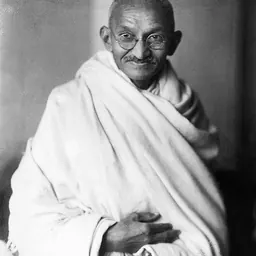
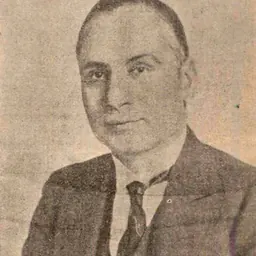
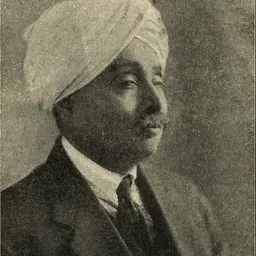
Related people
Same field, nearest in time
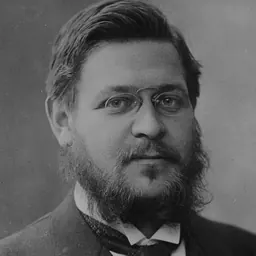



Contemporaries
People whose lives overlapped Purushottam Das Tandon's




Frequently asked questions
Who was Purushottam Das Tandon?
Indian freedom fighter (1882–1962)
When was Purushottam Das Tandon born?
Purushottam Das Tandon was born on 1 August 1882 in Prayagraj.
When did Purushottam Das Tandon die?
Purushottam Das Tandon died on 1 July 1962 in Prayagraj.
What was Purushottam Das Tandon's occupation?
Purushottam Das Tandon was a politician and freedom fighter.
What nationality was Purushottam Das Tandon?
Purushottam Das Tandon was Indian.
Sources & further reading
· Wikipedia: Purushottam Das Tandon
· DBpedia: Purushottam Das Tandon
Cite this page
APA: Biography.guide. (2026). Purushottam Das Tandon. https://biography.guide/purushottam-das-tandon/
MLA: "Purushottam Das Tandon." Biography.guide, https://biography.guide/purushottam-das-tandon/.
Chicago: "Purushottam Das Tandon." Biography.guide. https://biography.guide/purushottam-das-tandon/.
Data last updated: 2026-09-22 · Spot an error? Report a correction.
Page generated 2026-09-27 05:28 UTC