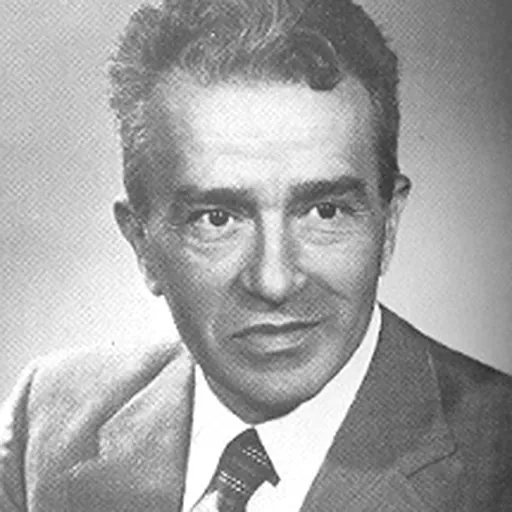
About Pietro Ingrao
Lived 1915 – 2015 (aged 100). Pietro Ingrao was an Italian politician, journalist, civil servant, writer and partisan.
Pietro Ingrao (30 March 1915 – 27 September 2015) was an Italian politician and journalist who participated in the Italian resistance movement. For many years, he was a senior figure in the Italian Communist Party (PCI).
Biography Ingrao was born at Lenola, Lazio, in the province of Latina. As a student, he was a member of GUF (Gruppo Universitario Fascista) and won a "Littoriale" for culture and art. Ingrao joined the PCI in 1940 and took part in the anti-fascist resistance during World War II. After the war, he was an important representative of the left-wing, more explicitly Marxist–Leninist tendency in the party. This led him to frequently express his political differences with Giorgio Amendola, leader of the tendency that was more orientated towards social democracy.
Ingrao was a member of the Italian Parliament continuously from 1950 to 1992. From 1947 to 1957, he was editor-in-chief of the party newspaper L'Unità. The tensions between Ingrao's and Amendola's vision became sharper throughout the first half of the 1960s. According to Lucio Magri, Ingrao was portrayed by his detractors as a utopian dreamer who refused any temporary compromise with the center-left, but incorrectly so. In fact, Ingrao acknowledged the value of reforms on the "road to socialism", but he found the vision of Amendola and Longo to be devoid of a long-term strategic plan. Magri adds that Ingrao's dissent was important "because it meant that a 'non-dogmatic, non-Stalinist' Left was present for the first time within a Communist party".
During the Eleventh Party Congress (1966), Ingrao openly criticized Longo's refusal to allow public debate, which made him popular with a part of the participants. However, it also led to the party leadership demonizing him as a factionalist; Ingrao later recalled that the leading cadres retained a cold posture in their seats and declined to shake his hand afterwards. Mario Alicata denounced Ingrao's statements as harmful to party unity. Magri clarifies that Ingrao's aim was not to challenge democratic centralism (Ingrao himself later voted for the expulsion of the faction around il manifesto ), but to return to democratic centralism as it was originally conceived by Lenin. This vision entailed a more transparent process of argument and a party democracy that was not limited only to occasional congresses.
Ingrao was the first Communist to become president of the Italian Chamber of Deputies, a position he held from 1976 to 1979. After PCI's then-secretary Achille Occhetto, in what was called the Svolta della Bolognina, decided to change the party's name, Ingrao became his main internal opponent. In the PCI's 20th Congress of 1991, he opposed the dissolution of the Communist Party proposed by Occhetto (with the support of Massimo D'Alema, Walter Veltroni, and Piero Fassino) and presented the so-called NO motion. Despite losing the congress, Ingrao remained for a certain period in the new Democratic Party of the Left (PDS)at the head of the internal left wing, which included, among others: Luciana Castellina, Fausto Bertinotti, Chiara Ingrao, Gloria Buffo, Giacomo Princigalli, Alba Sasso, Pietro Folena, Giorgio Mele and Vincenzo Vita. After the 2004 European Parliament election in Italy, he abandoned the PDS and adhered as an independent to the more hardline successor to the old PCI, the Communist Refoundation Party.
Ingrao wrote a number of poems and political essays. His most important work is Appuntamenti di fine secolo ("Rendez-Vous at the End of the Century"), which was published in 1995 in collaboration with Rossana Rossanda. He was an atheist. He married , who died in 2003. Ingrao died on 27 September 2015, at the age of 100.
Electoral history ElectionHouseConstituencyPartyVotesResult 1948 Chamber of Deputies Rome–Viterbo–Latina–Frosinone PCI 26,801 Not elected 1953 Chamber of Deputies Rome–Viterbo–Latina–Frosinone PCI 20,457 Elected 1958 Chamber of Deputies Rome–Viterbo–Latina–Frosinone PCI 33,820 Elected 1963 Chamber of Deputies Perugia–Terni–Rieti PCI 48,423 Elected 1968 Chamber of Deputies Perugia–Terni–Rieti PCI 42,441 Elected 1972 Chamber of Deputies Bologna–Ferrara–Ravenna–Forlì PCI 48,718 Elected 1976 Chamber of Deputies Rome–Viterbo–Latina–Frosinone PCI 62,623 Elected 1979 Chamber of Deputies Rome–Viterbo–Latina–Frosinone PCI 53,369 Elected 1983 Chamber of Deputies Perugia–Terni–Rieti PCI 57,148 Elected 1987 Chamber of Deputies Perugia–Terni–Rieti PCI 57,220 Elected
Don’t just read it —
keep it.
Full-length biographies made to live with: read them, listen on the way to work, watch them tonight.
- E-book
- Audio
- Video
Instant download · yours to keep · every purchase keeps this site free
Important facts
Family & relationships
People in Pietro Ingrao's life
Named in this biography and alive at the same time
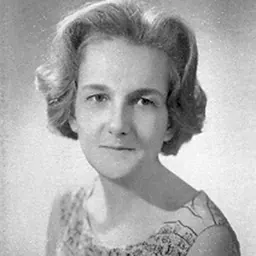

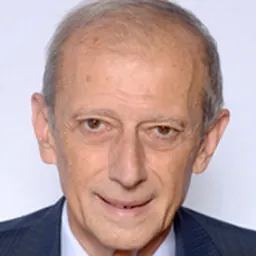

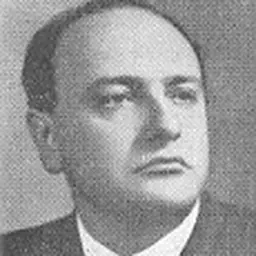

Related people
Same field, nearest in time





Contemporaries
People whose lives overlapped Pietro Ingrao's



Frequently asked questions
Who was Pietro Ingrao?
Italian politician (1915-2015)
When was Pietro Ingrao born?
Pietro Ingrao was born on 30 March 1915 in Lenola.
When did Pietro Ingrao die?
Pietro Ingrao died on 27 September 2015 in Rome.
What was Pietro Ingrao's occupation?
Pietro Ingrao was a politician, journalist, civil servant, writer and partisan.
What nationality was Pietro Ingrao?
Pietro Ingrao was Italian.
Sources & further reading
Cite this page
APA: Biography.guide. (2026). Pietro Ingrao. https://biography.guide/pietro-ingrao/
MLA: "Pietro Ingrao." Biography.guide, https://biography.guide/pietro-ingrao/.
Chicago: "Pietro Ingrao." Biography.guide. https://biography.guide/pietro-ingrao/.
Data last updated: 2026-09-23 · Spot an error? Report a correction.
Portrait: Wikimedia Commons · author & licence
Page generated 2026-09-27 05:07 UTC