
About Pieter Keuneman
Lived 1917 – 1997 (aged 79). Pieter Keuneman was a Sri Lankan politician.
Pieter Gerald Bartholomeusz Keuneman (3 October 1917 – 3 January 1997) was a Sri Lankan politician and a Marxist. He was the Cabinet Minister of Housing and Local Government, a prominent Member of Parliament and a leading figure in the Communist Party of Sri Lanka (CPSL).
Early life and education Pieter Keuneman came from a Dutch Burgher family. He was born to Hon. Justice Arthur Eric Keuneman, a distinguished judge of the Supreme Court, and Majorie Eleanor Schokman, daughter of a wealthy medical doctor from Kandy, George Peter Schokman, M.B., C.M. (Aber.), Provincial Surgeon, Ceylon Medical Department.
Keuneman was educated at the Royal College, Colombo where he was the head of the junior cadet platoon, prefect, captain of the debating team and president of the literary association. He won college colours at rugger and won the Dornhorst Memorial Prize and the Shakespeare prize. He went on to Pembroke College, Cambridge, in 1935 where he became a communist, President of the Cambridge Union and editor of the student magazine Granta. He gained a BA Tripos in History, Sociology and English Literature and joined the Gray's Inn to study law, leaving without taking his bar examinations. Later he gained a MA from Cambridge.
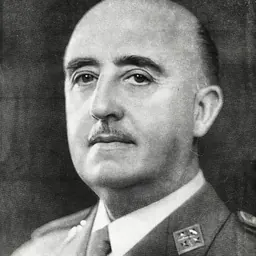
While at Cambridge he worked briefly for the Daily Express, before leaving for Spain to fight against Francisco Franco in the Spanish Civil War. At Cambridge he met his first wife, Hedi Stadlen, who became one of the leading European Radicals in Sri Lanka.
Political career On returning to Ceylon he worked as a features editor at Lake House. He was an architect of the United Socialist Party which was formed in 1940. He was its secretary and after it was proscribed by Admiral Geoffrey Layton, the Communist Party of Ceylon was formed at 'Cotta' Road in 1943. He became a member of the National Congress in 1945. During the 1940s he was the Secretary of the Communist Party and launched the journal Forward of which he was the editor in 1944. Even though he contested and lost elections for the Colombo Municipal Council in 1943, he won the Kotahena ward in 1947 holding it until 1959. In that capacity he agitated for better housing, eradication of slums and shanties in the Colombo city and saw to the setting up of libraries and dispensaries.
He contested the first parliamentary elections in 1947 from the Colombo Central constituency and was returned as the third member of parliament obtaining 15,435 votes. On his proposal in June 1948 for a Bribery Commission, the first Bribery and Corruption Commission was formed chaired by his father Justice A.E. Keuneman. In the 1952 elections, he was elected as the first MP for Colombo Central electorate defeating the labour party leader A.E. Goonesinghe and retained his seat in the 1956, 1960 and 1970 elections. He was very critical of the 1962 coup d'état attempt and the 1971 JVP Insurrection.
In 1970, in the government of Sirimavo Bandaranaike, he held the portfolio of Housing and Construction as a Cabinet Minister. The establishment of the State Engineering Corporation and many housing schemes was his brainchild. He introduced a controversial floor area limit of 300 square metres on all new private houses. However he lost his seat in the 1977 election and retired from politics.
Family He married his first wife Hedi Stadlen after graduating from Cambridge. In 1945, Hedi returned to Europe to meet her mother. In London in 1946 she met an old friend from Vienna, Peter Stadlen a distinguished concert pianist. She chose not to return to Ceylon, divorced Pieter and subsequently married Stadlen. In 1952, Keuneman married his second wife Maud Rogerson, a communist activist. His third wife was Ouida Keuneman, with whom he lived out his days.
Don’t just read it —
keep it.
Full-length biographies made to live with: read them, listen on the way to work, watch them tonight.
- E-book
- Audio
- Video
Instant download · yours to keep · every purchase keeps this site free
Important facts
People in Pieter Keuneman's life
Named in this biography and alive at the same time




Related people
Same field, nearest in time




Contemporaries
People whose lives overlapped Pieter Keuneman's


Frequently asked questions
Who was Pieter Keuneman?
Member of the Sri Lanka Parliament (1917-1997)
When was Pieter Keuneman born?
Pieter Keuneman was born on 3 October 1917 in Colombo.
When did Pieter Keuneman die?
Pieter Keuneman died on 3 January 1997 in Colombo.
What was Pieter Keuneman's occupation?
Pieter Keuneman was a politician.
What nationality was Pieter Keuneman?
Pieter Keuneman was Sri Lankan.
Sources & further reading
Cite this page
APA: Biography.guide. (2026). Pieter Keuneman. https://biography.guide/pieter-keuneman/
MLA: "Pieter Keuneman." Biography.guide, https://biography.guide/pieter-keuneman/.
Chicago: "Pieter Keuneman." Biography.guide. https://biography.guide/pieter-keuneman/.
Data last updated: 2026-09-20 · Spot an error? Report a correction.
Page generated 2026-09-27 05:09 UTC