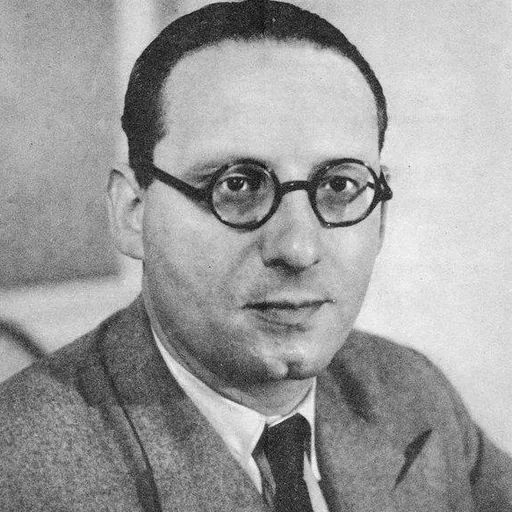
Pierre Pucheu
French businessman, politician, Nazi collaborator and war criminal
About Pierre Pucheu
Lived 1899 – 1944 (aged 44). Pierre Pucheu was a French politician, businessperson, industrialist, collaborator with Nazi Germany and war criminal.
Pierre Firmin Pucheu (27 June 1899 – 20 March 1944) was a French industrialist, fascist and member of the Vichy government. After his marriage, he became the son-in-law of the Belgian architect Paul Saintenoy. He was tried and executed for treason in March 1944.
Early years The son of a tailor from southwest France, Pucheu was born in Beaumont-sur-Oise and won a scholarship to the École Normale Supérieure in Paris, where he was a contemporary of both Robert Brasillach and Jean-Paul Sartre. Initially intending to follow the path of a writer himself, he became enamoured of capitalism in Paris and determined instead to enter the business world. He was ultimately drawn to the steel industry and eventually came to head up one of the largest monopolies, the Cartel d'Acier.
Initially showing little real interest in politics, his interest was sparked by the 6 February 1934 crisis and he became associated first with the Croix-de-Feu and then with Jacques Doriot's Parti Populaire Français before splitting from the latter group in 1938 over Doriot's financial links with Nazi Germany and Fascist Italy. In particular Pucheu was opposed to the Munich Agreement, which he felt punished Czechoslovakia. This was in part motivated by Pucheu's business interests, which included close links to Škoda Works, a company threatened by German expansion. Pucheu's support for the PPF had been motivated by what he saw as the growth of communism and the desire for a rightist party to oppose that whilst his departure from the group (along with that of other industrialists whom he had encouraged to support them) saw the PPF decline sharply due a significant drop in funding.
Vichy After the occupation his political profile rose as he was pushed by industrialist allies in charge of Le Temps who ensured that he was given the position of Minister of Industrial Production in 1941, before being promoted to Minister of the Interior later that same year. He was also responsible for setting up the SPAC anti-communist police force, the anti-Masonic Service for Secret Societies, and the Amicales de France, which served as the propaganda arm of Vichy.
According to Joseph Barthélemy, Pucheu, who had a violent hatred of communists and Jews, was a confirmed Nazi. In government Pucheu has been characterised, along with the likes of Jean Bichelonne, Jacques Barnaud and François Lehideux, as a technocrat who helped to ensure that the Vichy regime was able to take on the administrative functions of a government.
After Vichy Deprived of his position, Pucheu moved, just after the allied landings in North Africa, to Spain, and at the invitation of General Giraud, who promised him safe passage. The French army and administration in North Africa under Giraud had reentered the war against the Axis without renouncing Pétain or the Vichy National Revolution; expecting to be called up to duty as a reserve military officer, Pucheu went to Casablanca, Morocco in May 1943.
Trial and execution By then, however, General Charles de Gaulle was the dominant influence in North Africa, not Giraud. Despite the safe passage offer, Pucheu was arrested and charged with treason and making illegal arrests, and was transferred to Algiers in October 1943. He was tried in March 1944, convicted, and sentenced to death. Despite a request for clemency by General Giraud, de Gaulle refused to intervene, although personally regretting the political necessity of Pucheu's execution, and expressing admiration for the way in which he had conducted himself during the trial. Pucheu was the first person tried under the French Committee of National Liberation's September 1943 edict charging all Vichy ministers with treason; it is said that de Gaulle had ensured that he faced the death penalty in order to undermine any further collaboration in France. On 20 March 1944, Pucheu was executed by firing squad. He met his death with great courage, shaking hands with the firing squad, and giving the order to fire himself.
Don’t just read it —
keep it.
Full-length biographies made to live with: read them, listen on the way to work, watch them tonight.
- E-book
- Audio
- Video
Instant download · yours to keep · every purchase keeps this site free
Important facts
People in Pierre Pucheu's life
Named in this biography and alive at the same time



Related people
Same field, nearest in time





Contemporaries
People whose lives overlapped Pierre Pucheu's


Frequently asked questions
Who was Pierre Pucheu?
French businessman, politician, Nazi collaborator and war criminal (1899–1944)
When was Pierre Pucheu born?
Pierre Pucheu was born on 20 June 1899 in Beaumont-sur-Oise.
When did Pierre Pucheu die?
Pierre Pucheu died on 20 March 1944 in Algiers, Hussein Dey.
What was Pierre Pucheu's occupation?
Pierre Pucheu was a politician, businessperson, industrialist, collaborator with Nazi Germany and war criminal.
What nationality was Pierre Pucheu?
Pierre Pucheu was French.
Sources & further reading
Cite this page
APA: Biography.guide. (2026). Pierre Pucheu. https://biography.guide/pierre-pucheu/
MLA: "Pierre Pucheu." Biography.guide, https://biography.guide/pierre-pucheu/.
Chicago: "Pierre Pucheu." Biography.guide. https://biography.guide/pierre-pucheu/.
Data last updated: 2026-09-21 · Spot an error? Report a correction.
Portrait: Wikimedia Commons · author & licence
Page generated 2026-09-27 04:59 UTC