
Jean Bichelonne
Government minister of the Vichy government
About Jean Bichelonne
Lived 1904 – 1944 (aged 39). Jean Bichelonne was a French engineer, board member and politician.
Jean Bichelonne (24 December 1904 – 22 December 1944) was a French businessman and member of the Vichy government that governed France during World War II following the occupation of France by Nazi Germany.
Early life Jean Bichelonne was born on December 24, 1904, in Bordeaux. He graduated from the École Polytechnique.
In 1937, he became member of the cabinet of the minister for public works, Henri Queuille. In 1939, he became chief of staff to Raoul Dautry, then Defence Minister. He was a member of the French delegation in the armistice commission (the Armistice of 22 June 1940 was a de facto surrender).
Following the establishment of Vichy, Bichelonne was, in September 1940, appointed head of the Office central de repartition des produits industriels, a body that determined how raw materials would be proportioned between the newly established corporatist bodies in charge of each industrial sector. Along with the likes of Jacques Barnaud, François Lehideux and Pierre Pucheu, Bichelonne was a member of a group of technocrats who held important positions in the early days of the Vichy regime. Like Pucheu he was devotee of Saint-Simonianism, the belief in industrialisation as the motor of progress in society, a belief that was not shared by the rural traditionalist Philippe Pétain.
In the government of Pierre Laval the Ministry of Industry was headed by Jean Bichelonne with Henri Lafond as General Secretary for Energy and René Norguet (1888–1968) as General Secretary for Industrial Production. Lafond's Energy secretariat included sections for mines, steel, gas/electricity and fuel. As Minister of Industrial Production, Bichelonne faced the problem of demands for slave labour from the Nazi Labour Deployment Minister Fritz Sauckel, and the impact it was having on French industry. He managed to overcome this difficulty by securing an agreement with Albert Speer in September 1943 to the effect that the entire French industrial sector would be Sperrbetrieben, making it effectively off limits to Sauckel.
Bichelonne was one of the cabinet members taken under SS guard from Vichy to Belfort on the night of 17–18 August 1944 as the Nazis desperately sought to maintain the collaborationist government by any means necessary. Moved to the Sigmaringen enclave, Bichelonne fell ill and was sent to the SS hospital at Hohenlychen. These rumors are made reference to by Albert Speer in his book titled Inside The Third Reich whereby Speer was hospitalized and later on diagnosed with a pulmonary embolism. Coincidentally, the same doctor who would treat Bichelonne treated Speer and happened to maintain a close friendship with Heinrich Himmler.
Don’t just read it —
keep it.
Full-length biographies made to live with: read them, listen on the way to work, watch them tonight.
- E-book
- Audio
- Video
Instant download · yours to keep · every purchase keeps this site free
Important facts
People in Jean Bichelonne's life
Named in this biography and alive at the same time


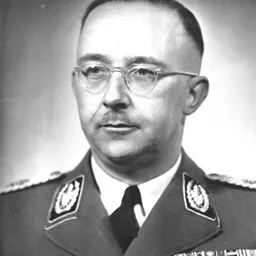


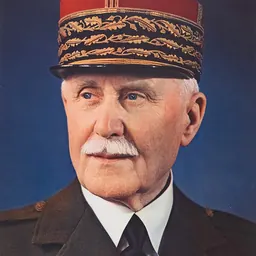

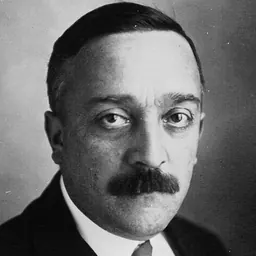
Related people
Same field, nearest in time


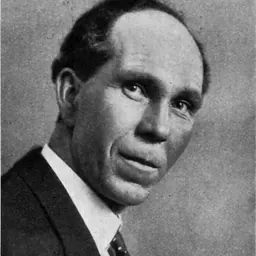


Contemporaries
People whose lives overlapped Jean Bichelonne's


Frequently asked questions
Who was Jean Bichelonne?
Government minister of the Vichy government (1904-1944)
When was Jean Bichelonne born?
Jean Bichelonne was born on 24 December 1904 in Bordeaux.
When did Jean Bichelonne die?
Jean Bichelonne died on 22 December 1944 in Hohenlychen Sanatorium.
What was Jean Bichelonne's occupation?
Jean Bichelonne was an engineer, board member and politician.
What nationality was Jean Bichelonne?
Jean Bichelonne was French.
Sources & further reading
Cite this page
APA: Biography.guide. (2026). Jean Bichelonne. https://biography.guide/jean-bichelonne/
MLA: "Jean Bichelonne." Biography.guide, https://biography.guide/jean-bichelonne/.
Chicago: "Jean Bichelonne." Biography.guide. https://biography.guide/jean-bichelonne/.
Data last updated: 2026-09-22 · Spot an error? Report a correction.
Page generated 2026-09-27 05:33 UTC