
About Philip Rieff
Lived 1922 – 2006 (aged 83). Philip Rieff was an American writer and sociologist.
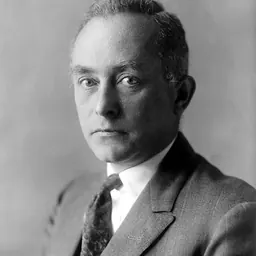
Philip Rieff (December 15, 1922 – July 1, 2006) was an American sociologist and cultural critic, best known for his early-career work on Sigmund Freud and later criticisms of modern culture. He taught sociology at the University of Pennsylvania from 1961 until 1992 after briefer positions at the University of Chicago, Brandeis University, and the University of California, Berkeley. He was the author of a number of books on Sigmund Freud and his legacy, including Freud: The Mind of the Moralist and The Triumph of the Therapeutic: Uses of Faith after Freud (1966).
As a graduate instructor at the University of Chicago, he married his undergraduate student Susan Sontag after 10 days of courtship in 1950. The marriage lasted eight years. Sontag and Rieff had a son together, David Rieff, a writer and the editor of his mother's personal journals.
Early life and education Philip Rieff was born on December 15, 1922 in Chicago, Illinois, the son of Lithuanian Jewish refugees. He attended the University of Chicago for both undergraduate and graduate study, earning a BA in 1946, an MA in 1947, and a PhD in political science in 1954. He first intended to be a sportswriter, specifically a baseball journalist, and his studies were interrupted for service in the US Army Air Force, where he was an attaché to an Air Force general.
Career Rieff taught at the University of Chicago until moving to Boston to teach at Brandeis University in 1952, then to the University of California, Berkeley in 1959 after a one-year fellowship at Stanford University. He settled for the remainder of his career at the University of Pennsylvania in 1961. There, he became University Professor of Sociology and then the named chair the Benjamin Franklin Professor; he retired emeritus in 1992. He was awarded a Guggenheim Fellowship in 1969.
Rieff's early career was defined by his analyses and critiques of Sigmund Freud and psychoanalysis, particularly the books Freud: The Mind of the Moralist in 1959 and The Triumph of the Therapeutic: Uses of Faith After Freud in 1966. In addition to these, in the same period he edited a ten-volume edition of Freud's collected works that was published by Collier Books in 1963.
Freud was immediately well-received. Harvard psychologist Henry Murray's review in the American Sociological Review declared it "remarkably subtle and substantial" and the "product of profound analytic thought," while Berkeley sociologist and psychoanalyst Neil Smelser recalled "the work seemed to be on everybody's lips, and was generally believed to be the best and most important critical reading of Freud yet." Rieff's moralistic interpretation of Freud was contrasted with psychoanalysts's scientific interpretations, Lionel Trilling's tragic interpretation, and Herbert Marcuse and Norman O. Brown's radical political interpretations. As the title suggested, Rieff viewed Freud as first of all a moralist, but an ironic moralist of an unusual kind facing a crisis of prior moral cultures: facing the impossibility of maintaining substantive, positive moral communities on past bases of faith in religious or scientific grounding. Rieff credited Freud with developing a new, faithless therapeutic mentality to meet this crisis, one that recast questions of good and evil into questions of healthy and sick.
The Triumph of the Therapeutic continued Rieff's exploration of therapeutic mentalities and morality, focusing critically on three claimed moral successors and critics of Freud: Carl Jung, Wilhelm Reich, and D. H. Lawrence. In contrast to Freud's faithless moralism, Rieff presented each of these successors as would-be creators of new faiths and new communities of moral commitment to those new faiths – but also as failures in their attempts.
Near the end of his life in 2003, Rieff's work was the topic of a special issue of the Journal of Classical Sociology: vol. 3 no. 3, "The significance of Philip Rieff."
Personal life and death As a graduate instructor at the University of Chicago, Rieff met Susan Sontag as a seventeen-year-old undergraduate auditing one of his classes, and they married after a 10-day romance in 1950. She later wrote of him that "he was the first person with whom she could ever really talk." Sontag and Rieff had a son together born 1952, David Rieff, a writer and the editor of his mother's personal journals. The marriage lasted eight years until divorce in 1959, after a year in which Rieff had taken a fellowship at Stanford University while Sontag had traveled to Paris.
In 1963, Rieff married Alison Douglas Knox (1933–2011), an Oxford graduate and professor of philosophy and later a lawyer (JD 1977), and they remained married for over forty years until his death.
Rieff died of heart failure on July 1, 2006 in Philadelphia, Pennsylvania. His wife Alison survived him; she died December 12, 2011. Rieff's correspondence is held at the University of Pennsylvania's Kislak Center for Special Collections.
Selected works
Articles
Books Freud: The Mind of the Moralist. Viking, 1959. Third edition: University of Chicago Press, 1979. Collected Papers of Sigmund Freud (ed.). Translated by C. J. M. Hubback. Collier Books, 1963. The Triumph of the Therapeutic. Harper & Row, 1966. 40th Anniversary edition: ISI Books, 2006. (edited) On Intellectuals: Theoretical Studies, Case Studies. Doubleday, 1969. Fellow Teachers. Harper & Row, 1973. The Feeling Intellect. University of Chicago Press, 1990. Sacred Order/Social Order Trilogy, in 3 volumes: My Life Among the Deathworks. University of Virginia Press, 2006. The Crisis of the Officer Class. University of Virginia Press, 2008. The Jew of Culture. University of Virginia Press, 2008. Charisma. Pantheon, 2007. Vintage paperback edition: Vintage, 2008.
Don’t just read it —
keep it.
Full-length biographies made to live with: read them, listen on the way to work, watch them tonight.
- E-book
- Audio
- Video
Instant download · yours to keep · every purchase keeps this site free
Important facts
People in Philip Rieff's life
Named in this biography and alive at the same time






Related people
Same field, nearest in time


Contemporaries
People whose lives overlapped Philip Rieff's




Frequently asked questions
Who was Philip Rieff?
American sociologist (1922–2006)
When was Philip Rieff born?
Philip Rieff was born on 15 December 1922 in Chicago.
When did Philip Rieff die?
Philip Rieff died on 1 July 2006 in Philadelphia.
What was Philip Rieff's occupation?
Philip Rieff was a writer and sociologist.
What nationality was Philip Rieff?
Philip Rieff was American.
Sources & further reading
Cite this page
APA: Biography.guide. (2026). Philip Rieff. https://biography.guide/philip-rieff/
MLA: "Philip Rieff." Biography.guide, https://biography.guide/philip-rieff/.
Chicago: "Philip Rieff." Biography.guide. https://biography.guide/philip-rieff/.
Data last updated: 2026-09-20 · Spot an error? Report a correction.
Page generated 2026-09-27 05:29 UTC