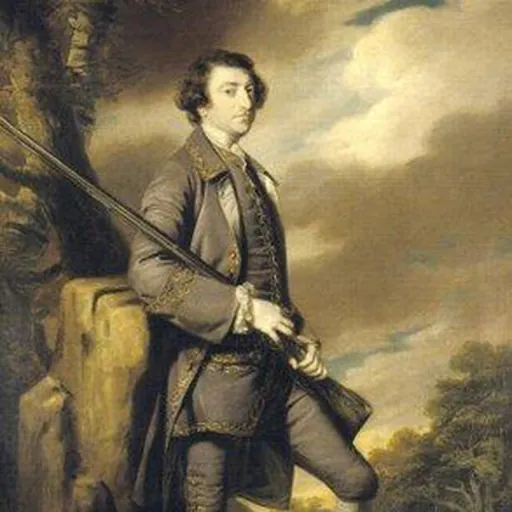
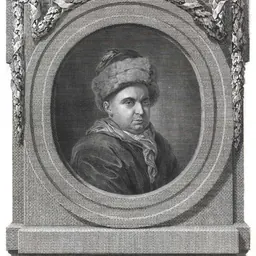
Philip Eyre Gell
Lead-mining magnate from Derbyshire;
About Philip Eyre Gell
Lived 1723 – 1795 (aged 71–72). Philip Eyre Gell was a land owner.
Sir Joshua Reynolds's Portrait of Philip Gell, full-length, in a purple embroidered French frock suit, holding a gun, a spaniel at his feet, in a landscape (94 x 58 in. / 238.7 x 147.3 cm) Philip Eyre Gell (1723 – 1795) was an English landowner. He was born at Hopton Hall in Hopton, Derbyshire.
Gell was the son of Isabella, co-heir to the Jessop family of Broom Hall, Sheffield, and John Eyre, and grandson of Catherine Gell of Hopton Hall. Philip's father assumed the surname Gell after inheriting the Gell family fortune in 1732, via his mother Catherine Gell, daughter of Sir John Gell, 2nd Baronet, and sister of 3rd baronet, Sir Philip Gell who had died in 1719 without a direct heir. When John Eyre died in 1739, the Hopton Hall estate, and Gell name, passed to son Philip Eyre, as eldest of seven children, which also included his brother Admiral John Gell.
The family's fortune was founded on the local lead industry, through ownership of the lead tithes in the mines of Bakewell, Hope and Tideswell. Gell is known for building the road between his lead-mining interests at Hopton and a new smelter at Cromford, naming the route Via Gellia as a nod to his family's unfounded claim of descent from the Romans. He was High Sheriff of Derbyshire in 1755.
Personal life Philip Gell was educated at Pembroke College, Cambridge, to which he was admitted in 1741. He went on the Grand Tour to Italy in 1744 and remained there until 1747, visiting Padua, Venice, Naples and Rome. In Venice he is recorded as having attended a dinner given by Lord Holderness for the Society of Dilettanti, on 12 February 1745. He was probably the English traveller identified as “Mr Jell” who arrived in Naples in November 1746. In January 1747, while in Rome, he was probably the “M. Geill anglois” who commissioned two paintings from the French landscape painter Claude-Joseph Vernet. After his return he became a member of the Society of Dilettanti in 1748.
Gell almost certainly knew Kitty Fisher, who had a reputation as a renowned courtesan. In January 1759, his friend Thomas Bowlby wrote to him: ‘You must come to town to see Kitty Fisher, the most pretty, extravagant, wicked little whore that ever flourished. You may have seen her but she was nothing till this winter.’ By 1758 Fisher was fast becoming the biggest celebrity across the land. Gell and Fisher were both painted by Sir Joshua Reynolds; their sittings overlapped in the early 1760s. Reynolds painted Fisher on multiple occasions beginning in April 1759, with further sittings recorded in 1761 (including eight days in August), 1762, 1764 and 1766. Gell’s full-length portrait was already under way by May 1761 (when “Mr. Gell” is entered in Reynolds’s pocket book); the 1763 pocket book is missing, but final payment of eighty guineas is recorded in June of that year, and the work is generally dated to about 1763. thumb Dorothy Gell (1758-1808) by Joseph Wright of DerbyGell was married relatively late, when aged 50, to the poet Dorothy Milnes (daughter and co-heir of William Milnes of Aldercar Park), in 1774, with her parents' consent as she was 16. Dorothy Gell had her portrait painted by her distant relation Joseph Wright of Derby and was part of ‘Wright’s set’. Another of Wright’s sitters, Edward Becher Leacroft, dedicated a collection of poetry to Wright’s group, including Dorothy Gell.
When Philip Eyre Gell died in 1795 he left the Hopton estate to eldest son Philip Gell MP (1775–1842). His second son was renowned antiquarian Sir William Gell.
Don’t just read it —
keep it.
Full-length biographies made to live with: read them, listen on the way to work, watch them tonight.
- E-book
- Audio
- Video
Instant download · yours to keep · every purchase keeps this site free
Important facts
People in Philip Eyre Gell's life
Named in this biography and alive at the same time

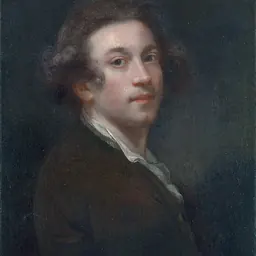

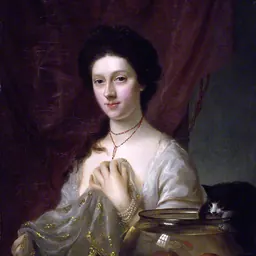

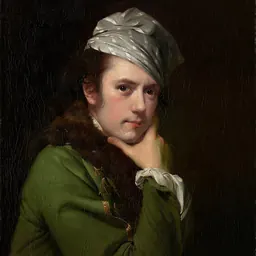
Related people
Same field, nearest in time


Contemporaries
People whose lives overlapped Philip Eyre Gell's


Frequently asked questions
Who was Philip Eyre Gell?
lead-mining magnate from Derbyshire; (1723-1795)
When was Philip Eyre Gell born?
Philip Eyre Gell was born in 1723.
When did Philip Eyre Gell die?
Philip Eyre Gell died in 1795.
What was Philip Eyre Gell's occupation?
Philip Eyre Gell was a land owner.
Sources & further reading
Cite this page
APA: Biography.guide. (2026). Philip Eyre Gell. https://biography.guide/philip-eyre-gell/
MLA: "Philip Eyre Gell." Biography.guide, https://biography.guide/philip-eyre-gell/.
Chicago: "Philip Eyre Gell." Biography.guide. https://biography.guide/philip-eyre-gell/.
Data last updated: 2026-09-21 · Spot an error? Report a correction.
Portrait: Wikimedia Commons · author & licence
Page generated 2026-09-27 04:59 UTC