
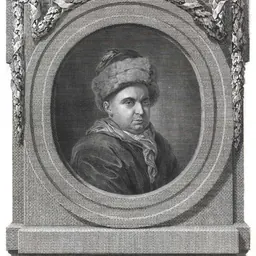
Valentine Morris
West Indies merchant and Governor of Saint Vincent
About Valentine Morris
Lived 1727 – 1789 (aged 61). Valentine Morris was a British land owner, businessperson and official, known for Piercefield House and Saint Vincent (island).
Valentine Morris (27 October 1727 – 26 August 1789) was a British landowner and colonial administrator who served as the governor of Saint Vincent from 1772 to 1779. He was also responsible for developing the picturesque woodland walks at Piercefield House in the Wye Valley, which Morris owned.
Life
Born in Antigua, in the West Indies, Valentine Morris was the son of Colonel Valentine Morris (c. 1678–1743), a sugar plantation owner and merchant who claimed descent from the Walter family of Monmouthshire and who, in 1740, bought Piercefield House near Chepstow.
On his father's death, the younger Valentine Morris, who was then attending school in London, inherited Piercefield. In 1748 he married Mary Mordaunt, a niece of the third Earl of Peterborough, and began living at Piercefield with his family in 1753. Morris added to the magnificent splendour of the estate and its setting, by landscaping the parkland, with the help of Richard Owen Cambridge, in the fashionable style of Capability Brown. At a time when tourism in the Wye valley was starting to become popular, Piercefield was developed into a park of national reputation, as one of the earliest examples of Picturesque landscaping.
Morris was strongly in favour of road improvement, and promoted the first Turnpike Bill in Monmouthshire, enacted in 1755 (28 Geo. 2. c. 31). He gave evidence to the House of Commons that there were no roads in Monmouthshire and, when asked how people travelled, replied: "We travel in ditches."
However, Morris' personal generosity and his gambling, business and political dealings took him into financial difficulty. In 1771, Thomas Morgan, MP for Monmouthshire and a member of the powerful Morgan family of Tredegar House, died, and Morris resolved to stand in the by-election against Thomas' brother, John. A contested election was highly unusual at the time, and the Morgans attacked Morris as an outsider, a Creole, and a slave owner.
By now reduced to poverty, he returned to London. His wife had attempted suicide and been confined to a madhouse. He was imprisoned for debt, surrendered his estates in the West Indies, and had to sell Piercefield in 1784.
Don’t just read it —
keep it.
Full-length biographies made to live with: read them, listen on the way to work, watch them tonight.
- E-book
- Audio
- Video
Instant download · yours to keep · every purchase keeps this site free
Important facts
People in Valentine Morris's life
Named in this biography and alive at the same time


Related people
Same field, nearest in time


Contemporaries
People whose lives overlapped Valentine Morris's



Frequently asked questions
Who was Valentine Morris?
West Indies merchant and Governor of Saint Vincent (1727–1789)
When was Valentine Morris born?
Valentine Morris was born on 27 October 1727 in Antigua.
When did Valentine Morris die?
Valentine Morris died on 26 August 1789 in Bloomsbury.
What was Valentine Morris's occupation?
Valentine Morris was a land owner, businessperson and official.
What was Valentine Morris known for?
Valentine Morris was known for Piercefield House and Saint Vincent (island).
What nationality was Valentine Morris?
Valentine Morris was British.
Sources & further reading
Cite this page
APA: Biography.guide. (2026). Valentine Morris. https://biography.guide/valentine-morris/
MLA: "Valentine Morris." Biography.guide, https://biography.guide/valentine-morris/.
Chicago: "Valentine Morris." Biography.guide. https://biography.guide/valentine-morris/.
Data last updated: 2026-09-22 · Spot an error? Report a correction.
Page generated 2026-09-27 05:32 UTC