
Petar Živković
Prime Minister of Yugoslavia
About Petar Živković
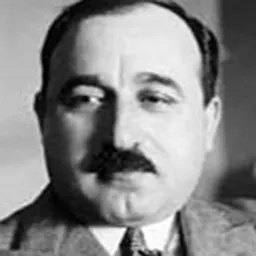
Lived 1879 – 1947 (aged 68). Petar Živković was a Yugoslav and Serbian politician, military personnel and military officer.
Petar Živković (; 1 January 1879 – 3 February 1947) was a Serbian military officer and political figure in Yugoslavia. He was Prime Minister of the Kingdom of Yugoslavia from 7 January 1929 until 4 April 1932.
Life
Petar Živković was born in Negotin, Principality of Serbia (present-day Bor District, Serbia) in 1879. He finished secondary school in Zajecar and the Military Academy in Belgrade. A soldier at the Serbian court, he helped overthrow the Obrenović dynasty with the assassination of King Alexander I of Serbia (11 June), which was orchestrated by Colonel Dragutin Dimitrijević, the founder and leading member of the secret nationalist organization Black Hand. Živković later founded the secret organization White Hand in 1912, which served to counter the power of the Black Hand.
In 1921, King Alexander I of Yugoslavia appointed Živković commander of the Royal Guard, but he was briefly demoted due to accusations by a young guardsman that he tried to seduce him. In 1929 he was appointed prime minister as part of the 6 January Dictatorship. General Živković was Bogoljub Jevtić's brother-in-law, the closest adviser to the head of State.
Živković held the office as a member of the Yugoslav Radical Peasants' Democracy (JRSD), which became the only legal party in Yugoslavia, following electoral reforms. As a prime minister he did not enjoy high regard by either the military or among other politicians not only due to his widely rumoured homosexuality. He resigned as prime minister in 1932, and shortly thereafter founded the Yugoslav National Party (JNS), becoming its president in 1936.
Following Alexander I assassination in 1934, His cousin Pavle Karađorđević took office as regent for the 11-year-old Petar II. Upon the signing of the Tripartite Pact on 27 March 1941, Živković left Yugoslavia ahead of the Nazi invasion. He became part of the Yugoslav government in exile.
The grave of Petar Živković in the cimetière parisien de Thiais. In 1946, he was tried in absentia in the Federal People's Republic of Yugoslavia at the Trial of Mihailović et al. and sentenced to death by the communist authorities. He was forced into exile, leaving for Italy and eventually settling in France, dying in Paris in February 1947, aged 68.
In popular culture
Živković is portrayed by Nebojša Dugalić in the Serbian television series Balkan Shadows.
Don’t just read it —
keep it.
Full-length biographies made to live with: read them, listen on the way to work, watch them tonight.
- E-book
- Audio
- Video
Instant download · yours to keep · every purchase keeps this site free
Important facts
People in Petar Živković's life
Named in this biography and alive at the same time

Related people
Same field, nearest in time





Contemporaries
People whose lives overlapped Petar Živković's


Frequently asked questions
Who was Petar Živković?
Prime Minister of Yugoslavia (1879-1947)
When was Petar Živković born?
Petar Živković was born on 1 January 1879 in Negotin.
When did Petar Živković die?
Petar Živković died on 3 February 1947 in Paris.
What was Petar Živković's occupation?
Petar Živković was a politician, military personnel and military officer.
What nationality was Petar Živković?
Petar Živković was Yugoslav and Serbian.
Sources & further reading
Cite this page
APA: Biography.guide. (2026). Petar Živković. https://biography.guide/petar-zivkovic/
MLA: "Petar Živković." Biography.guide, https://biography.guide/petar-zivkovic/.
Chicago: "Petar Živković." Biography.guide. https://biography.guide/petar-zivkovic/.
Data last updated: 2026-09-20 · Spot an error? Report a correction.
Page generated 2026-09-27 05:23 UTC