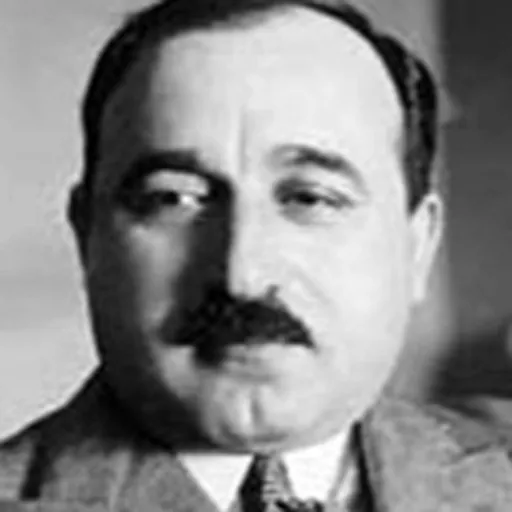
About Bogoljub Jevtić
Lived 1886 – 1960 (aged 73). Bogoljub Jevtić was a Serbian diplomat and politician.
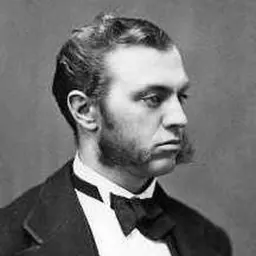
Bogoljub Jevtić (Serbian Cyrillic: Богољуб Јевтић; 24 December 1886 – 7 June 1960) was a Serbian diplomat and politician in the Kingdom of Yugoslavia.
He was plenipotentiary minister of Yugoslavia in Albania, Austria and Hungary. After the assassination of King Alexander I of Yugoslavia, on 22 December 1934 he was appointed prime minister of Yugoslavia, holding this position until 24 June 1935.
Early life and career Jevtić was born in 1886 in Kragujevac, where he completed his elementary and high school education. He enrolled at the University of Belgrade and became a doctor of laws in 1911. He studied economics at the University of Zurich and, continued in the Handelshochschule in Berlin, where he took his second doctor's degree.
When World War I intervened, military service took precedence over diplomatic service. Jevtić, an infantry captain, joined the action. Prince Regent Alexander Karadjordjević (later to become Alexander I of Yugoslavia) was informed of his bravery. In 1917, summoned from the front, he returned to diplomacy as an attaché in the Serbian Legation at Stockholm.
King Alexander needed a conscientious minister in court and a reliable adviser. Jevtić won his trust on 25 January 1929, becoming Minister of Court, a position he held until 1932 in addition to regular duties; Acting Assistant Minister for Foreign Affairs from 3 February 1929 to 29 October 1930 and Minister for Foreign Affairs from 2 July 1932 to 20 December 1934.
Prime minister Prince Paul of Yugoslavia took Alexander's place instead of Alexander's son Peter, who was then a minor. Paul named Jevtić as prime minister and put Jevtić's brother-in-law Petar Živković in charge of the armed forces. Jevtić had to adapt himself to the result of the Geneva inquiry into Alexander's assassination although it tarnished his popularity at home and his career. However, Jevtić accepted the resolution in the interests of peace.
The assassination had been plotted by the Croat extremist Ante Pavelić and by Ivan Mihailov, the Bulgarian head of the IMRO (Internal Macedonian Revolutionary Organisation). The Yugoslav government's anger was directed towards the Italians and Hungarians for harbouring the Ustaša, but it was not to be a lasting anger because of the actions of both the Italians and Hungarians in the following months and years.
The expected reaction to the death of the unifying leader of Yugoslavia could have resulted in social disorder and political unrest. However, the initial reaction to the assassination in political and social terms was positive; Serbs and Croats both expressed their grief.
Don’t just read it —
keep it.
Full-length biographies made to live with: read them, listen on the way to work, watch them tonight.
- E-book
- Audio
- Video
Instant download · yours to keep · every purchase keeps this site free
Important facts
People in Bogoljub Jevtić's life
Named in this biography and alive at the same time


Related people
Same field, nearest in time

Contemporaries
People whose lives overlapped Bogoljub Jevtić's





Frequently asked questions
Who was Bogoljub Jevtić?
Prime Minister of Yugoslavia (1886–1960)
When was Bogoljub Jevtić born?
Bogoljub Jevtić was born on 24 December 1886 in Kragujevac.
When did Bogoljub Jevtić die?
Bogoljub Jevtić died on 7 June 1960 in Paris.
What was Bogoljub Jevtić's occupation?
Bogoljub Jevtić was a diplomat and politician.
What nationality was Bogoljub Jevtić?
Bogoljub Jevtić was Serbian.
Sources & further reading
Cite this page
APA: Biography.guide. (2026). Bogoljub Jevtić. https://biography.guide/bogoljub-jevtic/
MLA: "Bogoljub Jevtić." Biography.guide, https://biography.guide/bogoljub-jevtic/.
Chicago: "Bogoljub Jevtić." Biography.guide. https://biography.guide/bogoljub-jevtic/.
Data last updated: 2026-09-20 · Spot an error? Report a correction.
Page generated 2026-09-27 05:10 UTC