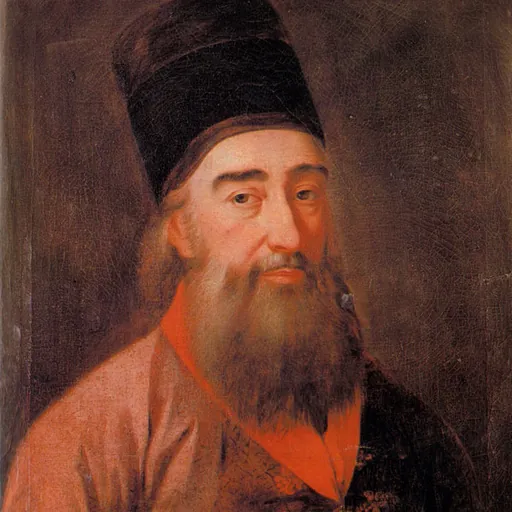
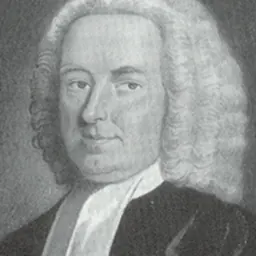
Pavle Nenadović
Serbian Orthodox Archbishop of Karlovci, from 1749 to 1768
About Pavle Nenadović
Lived 1703 – 1768 (aged 65). Pavle Nenadović was an eastern Orthodox priest and metropolitan.
Pavle Nenadović (, ; 1703–1768) was the Serbian Orthodox Archbishop and Metropolitan of Karlovci from 1749 to 1768.
Biography Pavle Nenadović was born on 14 January 1703 in Budim, Hungary. At the age of eighteen, he was employed as a clerk in the Budim Magistrates Office. He became a Serbian Orthodox cleric in 1726, after which he took monastic vows in the Rakovac Monastery. In 1737, Serbian Patriarch Arsenije IV appointed Pavle as his general exarch, and in 1742 the patriarch appointed him as the bishop of the Eparchy of upper Karlovac.
Arsenije IV also commissioned Pavle Nenadović, a cleric who was by then well known as a poet, to compose a heraldic handbook, Stemmatographia (meaning "the drawing of ancestry" in Greek). This heraldic album was modelled after a book of the same title on Slavonic heraldic bearings, engraved in 1701 by Croatian poet Pavao Ritter Vitezović (who modelled his Stemmatographia after an older version of Slavic heraldry composed by Mavro Orbini). Arsenije IV's Stemmatographia was perceived by some as an illustrated political programme that was supposed to act both as a verification of the Serbian historical past and as a clear geopolitical statement of the lands belonging to the Serbs in the Balkans. His intention, however, was educational, and for this work he hired three people: Hristofor Žefarović, originally from Dojran, as an artist; German-born Thomas Mesmer as an engraver; and clergyman Pavle Nenadović as a poet.
In 1748, Pavle Nenadović was elected Bishop of Arad, but shortly after the death of metropolitan Isaija Antonović he was chosen to succeed him as new metropolitan of Karlovci in 1749. He worked on the promotion of culture and education of the Serbs in the Habsburg monarchy. A result of his work was a significant increase of interest in science and literature among the Serbs. Metropolitan Pavle fought against the conversion of Serbs in Croatia and Romanians in Transilvania into Uniates. He died on 15 August 1768.
After the suppression of the Serbian Patriarchate of Peć in 1766, his Metropolitanate of Karlovci became an autocephalous Serbian Orthodox Church continuator.
Works Orḟodok͡sos omologіę. (Орѳодоѯос омологіѧ.) (1758). Srēmski Karlovt͡si. Orḟodok͡sos omologіę. (Орѳодоѯос омологіѧ.) (1763). Vēnēt͡siјa: shtampariјa Dimitriјa Tēodosiјa.
Legacy He is included in The 100 most prominent Serbs.
Don’t just read it —
keep it.
Full-length biographies made to live with: read them, listen on the way to work, watch them tonight.
- E-book
- Audio
- Video
Instant download · yours to keep · every purchase keeps this site free
Important facts
People in Pavle Nenadović's life
Named in this biography and alive at the same time


Related people
Same field, nearest in time


Contemporaries
People whose lives overlapped Pavle Nenadović's



Frequently asked questions
Who was Pavle Nenadović?
Serbian Orthodox Archbishop of Karlovci, from 1749 to 1768
When was Pavle Nenadović born?
Pavle Nenadović was born on 14 January 1703 in Buda.
When did Pavle Nenadović die?
Pavle Nenadović died on 15 August 1768 in Sremski Karlovci.
What was Pavle Nenadović's occupation?
Pavle Nenadović was an eastern Orthodox priest and metropolitan.
Sources & further reading
Cite this page
APA: Biography.guide. (2026). Pavle Nenadović. https://biography.guide/pavle-nenadovic/
MLA: "Pavle Nenadović." Biography.guide, https://biography.guide/pavle-nenadovic/.
Chicago: "Pavle Nenadović." Biography.guide. https://biography.guide/pavle-nenadovic/.
Data last updated: 2026-09-22 · Spot an error? Report a correction.
Portrait: Wikimedia Commons · author & licence
Page generated 2026-09-27 05:03 UTC