
Pavao Ritter Vitezović
Croatian writer, historian, linguist, cartographer and publisher
About Pavao Ritter Vitezović
Lived 1652 – 1713 (aged 61). Pavao Ritter Vitezović was a writer, heraldist, cartographer, lexicographer, polymath and poet.
Pavao Ritter Vitezović (; 7 January 1652 – 20 January 1713) was a Habsburg-Croatian polymath, variously described as a historian, linguist, publisher, poet, political theorist, diplomat, printmaker, draughtsman, cartographer, writer and printer.
Biography Early life Pavao Ritter Vitezović was born as Pavao Ritter in Senj, the son of a frontier soldier. His father, Antun Ritter, was a descendant of an ethnic German immigrant from Alsace, while his mother, Dorotea Lučkinić, was a native Senj woman.
He finished six grades of the Jesuit-run gymnasium in Zagreb before moving to Rome, where he stayed at the Illyrian College and met the renowned Dalmatian historian Ivan Lučić. He then moved to the castle of Bogenšperk near the town of Litija in Carniola (now in Slovenia), where natural historian Johann Weikhard von Valvasor influenced him to study his national history and geography. There he also learned German and the skills of printing and etching.
Early writings Kronika aliti spomen vsega svijeta vikov (1696, Zagreb) is the only Croatian-language history book published in the 17th century. In 1677 he wrote a treatise on the Gusić clan, published in 1681, the same year he wrote a number of poems for Father Aleksandar Mikulić, a Zagreb canon. As he developed a reputation of a learned man, his native town of Senj elected him as their representative in the various parliaments in Sopron, Požun and Vienna. On 19 April 1683, due to the efforts of Ritter Vitezović, the Austrian Imperial chancellary proclaimed a charter granting the town of Senj their ancient rights, protecting them from the local military commander captain Herberstein who had terrorised the citizens at the time.
Because of the Ottoman wars he was enlisted and stationed in the Međimurje tabor (garrison) under ban Nicholas Erdödy. In 1683, when the Great Turkish War started, he participated in the capture of the forts of Lendava and Szigetvar. After the war, ban Erdödy employed him as an officer of his court, where he also met Adam Zrinski, the son of Nikola Zrinski. He was initially named the podžupan of Lika a purely honourable title with no actual significance.
Then Croatian Parliament named him as their representative in the Imperial commission for the delimitation with Venice and Turkey, but despite his contribution, the borderlines were drawn against Croatian interests, which greatly frustrated Ritter Vitezović. During his work at the royal and imperial diets in Vienna and Bratislava, Vitezović met many dignitaries from Croatia, and at one point wished to return home to live in Zagreb.
Later years Sometime in the early 1690s, he returned to Croatia, where he found out that there was a printing house in the Bishop's Palace in the city of Zagreb, acquired in 1663, but long since abandoned. He asked his long-time friend Aleksandar Mikulić, who had by that time been named Bishop, to let him put it to use. He was soon in business, printing calendars and leaflets, and he appealed to the Croatian Parliament to give that printing house an official capacity. On 11 November 1694, the Parliament did indeed appoint him as the manager of the facility. He then proceeded to move it from the Vlaška street to his house on Grič, and then travelled to Vienna, where he bought a new printing press and everything else necessary for the printing of books. He named the new printing office the "Museum" (like Valvasor before him), and printed the first books in Latin and in Croatian.
The printing house was in operation between 1695 and 1706, and his best known work Croatia Rediviva ("Croatia Revived") was printed there in 1700. On 14 June 1706, the press was largely destroyed in a great fire, and Vitezović's wife died two years later, rendering him entirely distraught. These were typically cities and places of Croatia and Carniola, which according to Vjekoslav Klaić, he "visited carrying a sketchbook, drew them, transcribing them later onto copper plates".
Poetry He wrote his poems both in Latin and Croatian. His first major poetical work Odiljenje sigetsko (The Separation of Siget) was first published in 1679, in Linz. The third edition of the work was later self-published in Zagreb in 1695. It is variously described as an epic poem centered on the aforementioned siege (similar to Vazetje Sigeta Grada) or a lyrical commentary of Petar Zrinski's Adrianskoga mora Sirena (Siren of the Adriatic Sea), all written in doubly rhymed dodecasyllable, typical rhyming scheme in Croatia at the time. framed as a pseudo-autobiography, and an allegory to the baroque Stabat Mater topos. It is centered on first-person narration by a personified Croatia (presented as mother-homeland), which tells its tale as a personal history of suffering with detailed psychosomatic manifestations. This was followed by a vernacular poem Senjčica (1704), which demonstrates Vitezović was primarily motivated by patriotism, making him a precursor of such Croatian poets of the 19th century. He wrote another similar work, Novljančica, which was lost.
Overall reception to Vitezović's poetry has been mixed. While the historian Violeta Moretti praised his epistolaries as "mainly rich, well formed and fluent", she criticized his other Latin poems as being elusive in their meaning. Conversely, regarded his work Odiljenje sigetsko as lacking great poetic invention, instead treating its value primarily in historiographical terms. This interpretation was criticized by literary historian and writer Pavao Pavličić, stating Vitezović had excellent knowledge of language and skill in versification, managing to create great and inventive poetry in certain places within the work. Pavličić claimed this negative view stemmed from misinterpretation of Vitezović's intentions, which is not to create an epic, but a lyrical collection intended to expand the existing aspects of the Siege of Siget.
Legacy
Literary historians such as Branko Vodnik, Mihovil Kombol regard him as a major figure of his age, particularly important for his ideas, using his vast energy and considerable talent to produce more works than perhaps all other individuals combined within Croatia proper during the 18th century. They also describe him as the most visionary and complete Croatian author of his time. In his literary works, he was traditional and innovative on one hand drawing parallels with Ignjat Đurđević, and on the other strove to bring his books to the masses and those less educated, which brought him closer to the Age of Enlightenment. He wrote his works in Latin and Croatian, covering a great variety of genres and themes, which included his many interests in historiography, heraldry, poetry, copper engraving, publishing and printing monthly periodicals, proverbs, puzzles, poetics, linguistics and geography. He was the first ideologist of Croatian nation who proclaimed that all Slavs are Croats. His works were used to legitimize the expansionism of the Habsburg Empire in southeastern Europe by asserting its historical rights to claim Illyria. "Illyria" as Slavic territory projected by Vitezović would eventually incorporate not only most of southeastern Europe but also Hungary. Vitezović defined Croatian territory, as including, besides Illyria and all Slavic-populated territory, the territory between the Adriatic, Black and Baltic seas. Ferdo Šišić consequently regarded "Croatia Rediviva" as a "Bible of Croat national policy in the 19th century", inspiring such individuals as Ljudevit Gaj, Eugen Kvaternik and Ante Starčević.
His heraldic works influenced Balkan nationalistic iconography of the 19th century in Serbia, Bulgaria and Romania. He also wrote the first history of the Serbs, which remains in manuscript. He skillfully fabricated numerous genealogies and forged most of the Trophaeum nobilissimae domus Estorasianae (a genealogical treatise ordered by Pál Esterházy).
Written works
In Latin: Apographum ex Joanne Lucio (1681) Novus Skenderbeg (1682) Nova Musa (1683) Anagrammaton liber primus (1687) Croatia Rediviva (Revived Croatia , or Croatia Reborn, 1700) Stemmatografia sive armorum Illyricorum delineatio, descriptio et restitutio (1701; Zagreb, 1702) Plorantis Croatiae saecula duo (Two Centuries of Croatia in Mourning, 1703) Bossna captiva (Bosnia in Captivity, 1712)
In Croatian: Odiljenje sigetsko (1684) Priričnik aliti razliko mudrosti cvitje (1703) Senjčica (1704) Kronika aliti spomen vsega svieta vikov (1696) Lado horvacki iliti Sibila (1701 ?) Zoroašt hervacki, later Misečnik hervacki (periodical, 1695–1705) Unpublished (in manuscript): Banologia Indigetes Illyricani sive Vitae Sanctorum Illyrici (about 1706), a hagiography of 120 Illyrian saints Opuscula varia ad historiam illyricam spectantia (manuscript) Sive de banatu Croatiae Serbia illustrata Lexicon Latino-illyricum
Don’t just read it —
keep it.
Full-length biographies made to live with: read them, listen on the way to work, watch them tonight.
- E-book
- Audio
- Video
Instant download · yours to keep · every purchase keeps this site free
Important facts
People in Pavao Ritter Vitezović's life
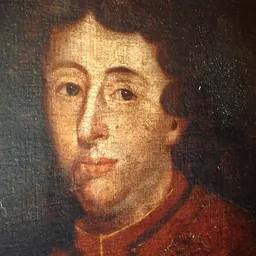
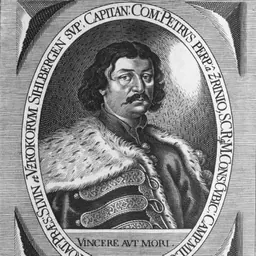
Named in this biography and alive at the same time

Related people
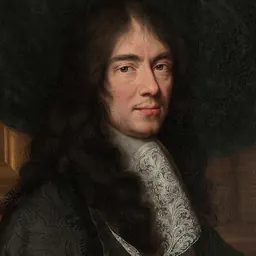
Same field, nearest in time



Contemporaries
People whose lives overlapped Pavao Ritter Vitezović's




Frequently asked questions
Who was Pavao Ritter Vitezović?
Croatian writer, historian, linguist, cartographer and publisher (1652-1713)
When was Pavao Ritter Vitezović born?
Pavao Ritter Vitezović was born on 12 January 1652 in Senj.
When did Pavao Ritter Vitezović die?
Pavao Ritter Vitezović died on 20 January 1713 in Vienna.
What was Pavao Ritter Vitezović's occupation?
Pavao Ritter Vitezović was a writer, heraldist, cartographer, lexicographer, polymath and poet.
Sources & further reading
· Wikipedia: Pavao Ritter Vitezović
· DBpedia: Pavao Ritter Vitezović
Cite this page
APA: Biography.guide. (2026). Pavao Ritter Vitezović. https://biography.guide/pavao-ritter-vitezovic/
MLA: "Pavao Ritter Vitezović." Biography.guide, https://biography.guide/pavao-ritter-vitezovic/.
Chicago: "Pavao Ritter Vitezović." Biography.guide. https://biography.guide/pavao-ritter-vitezovic/.
Data last updated: 2026-09-20 · Spot an error? Report a correction.
Page generated 2026-09-27 05:19 UTC