
About Pavel Vranický
Lived 1756 – 1808 (aged 51). Pavel Vranický was an Austrian conductor, composer, bandleader and violinist.
Paul Wranitzky (; 30 December 1756 – 29 September 1808) was a Moravian classical composer. His half brother, Antonín, was also a composer.
Life Wranitzky was born in Neureisch (Nová Říše) in Moravia, today Czech Republic. He studied at the Faculty of Theology of University of Olomouc and later a theological seminary in Vienna. At age 20, like so many other Czech composers of that period, he moved to Vienna to seek out opportunities within the Austrian imperial capital.
From 1790, he conducted both royal theater orchestras. He was highly respected by Mozart, Haydn and Beethoven; the latter two preferred him as conductor of their new works (although Beethoven's First Symphony premiere was conducted neither by Beethoven himself, nor by Wranitzky but by Giacomo Conti). Wranitzky was a prolific composer. His output comprises ten operas, 44 symphonies, at least 56 string quartets (some sources give a number as high as 73) and a large amount of other orchestral and chamber music. His opera, Oberon – The Fairy King from 1789 was a favorite in this genre and inspired Emanuel Schikaneder to write the libretto of The Magic Flute for Mozart in 1791; in the mid-1790s, Goethe sought to collaborate with Wranitzky on a sequel to the Mozart opera. Today, Wranitzky is attributed as being one of three possible composers said to have composed the Austrian national anthem (the identity of the actual composer of which is not definitively known).
In 1797, four years after the execution of Louis XVI, Wranitzky wrote Grand Characteristic Symphony for the Peace with the French Republic, which includes the "Funeral March on the Execution of Louis XVI".
Wranitzky died in Vienna on 29 September 1808. Beethoven wrote Variations on a Russian Dance (WoO 71), based on a theme in Wranitzky's ballet .
Views of later scholars Although some scholars believe that he studied with Haydn, there is no proof of this. However, it is certain that he studied Haydn's string quartets and was influenced by them. As with Haydn, Wranitzky's quartet writing went through many stages of development beginning with the pre-classical and evolving to the finished sonata form of late Viennese classicism. The majority of his quartets are in three movements; many share qualities of the Parisian , with virtuoso writing in all four parts. In these works, he explored the emerging Romantic style with (for the time) daring harmonic progressions, theatrical gestures and virtuoso display.
Based on the ten Wranitzky quartets he has studied, music historian and Anton Reicha scholar Ron Drummond writes, "I can safely and with absolute confidence say that Wranitzky's achievement as a composer of string quartets is a greater achievement, overall, than Mozart's. Lest that statement be misunderstood, let me clarify: it's simply that Wranitzky's output dwarfs Mozart's, and the quality of each man's (mature) productions is so superb that Wranitzky wins by sheer numbers."
Writing about Wranitzky's music in the last part of the 19th century, the Belgian critic and musicologist François-Joseph Fétis recalled, "The music of Wranitzky was in fashion when it was new because of his natural melodies and brilliant style. He treats the orchestra well, especially in symphonies. I recall that, in my youth, his works held up very well in comparison with those of Haydn. Their premature abandonment of today has been for me a source of astonishment."
Works
Stage works
Operas (Johann Baptist von Alxinger, Vienna, 1795) (1795) (s.a.)
Operettas (Joachim Perinet, Vienna, 1794)
Singspiele (libretto by Friederike S. Seyler, extensively revised by Karl Ludwig Giesecke. Vienna, 1789) (Vienna, 1791) (J. Korompay, Vienna, 1792) (Vienna, 1793) (S.F. Künster, 1793) (August von Kotzebue, Vienna, 1799) (Warsaw, 1808)
Other types of opera works quadro musicale romantico: (August von Kotzebue, Vienna, 1799) Liedspiel: (Friedrich Treitschke, Vienna, 1804) divertissement: (Schönbrunn, 1804); (Vienna, 1804) travestimenti-melologhi: Medea; Macbeth
Ballets (Vienna, 1794) (Vienna, 1795) (Vienna, 1796) (Vienna, 1797) (1797) (Vienna, 1810) (ca. 1800) (Vienna, 1801) (Vienna, 1804) (Vienna, 1805) (Vienna, 1806)
Theatre music (August von Kotzebue, Vienna, 1795) (August Wilhelm Iffland)
Other works 1 cantata 56 symphonies: 29 published symphonies, 27 symphonies in manuscripts 3 piano sonatas 1 Missa
Concertos Violin Concerto in C Violin Concerto in D Violin Concerto in F Violin Concerto in G Cello Concerto in C, Op. 27 Flute Concerto in D, Op. 24/Op. 1 Oboe Concerto in G Concertante for Flute and Oboe in C, Op. 39 Concertino for Oboe and Cello in D (lost) Concerto for Two Flutes in G (lost)
Other orchestra works Overture, Divertimenti, Tafelmusik, dances
Chamber Music String Trio in G Major, Op. 3 No. 3 (recorded by The Vivaldi Project on MSR Classics 1623) Quartets, quintets, etc.
Don’t just read it —
keep it.
Full-length biographies made to live with: read them, listen on the way to work, watch them tonight.
- E-book
- Audio
- Video
Instant download · yours to keep · every purchase keeps this site free
Important facts
People in Pavel Vranický's life
Named in this biography and alive at the same time

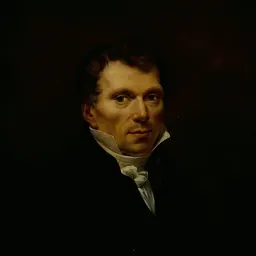


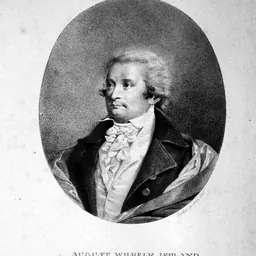
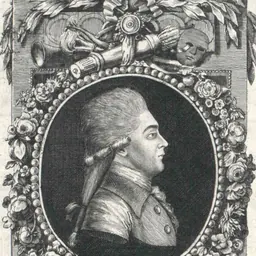

Related people
Same field, nearest in time
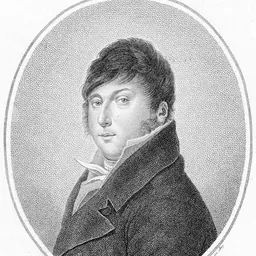

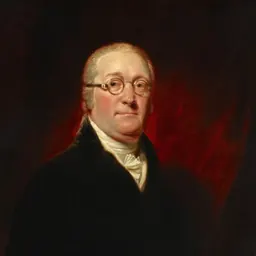
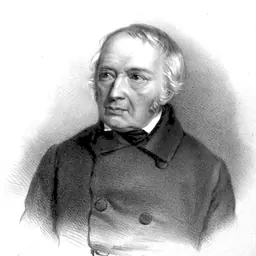
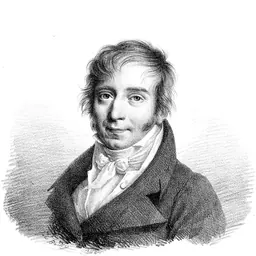
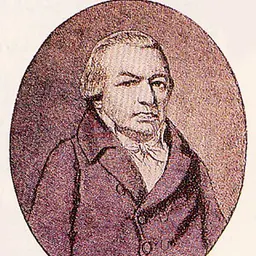
Contemporaries
People whose lives overlapped Pavel Vranický's




Frequently asked questions
Who was Pavel Vranický?
Czech violinist and composer
When was Pavel Vranický born?
Pavel Vranický was born on 30 December 1756 in Nová Říše.
When did Pavel Vranický die?
Pavel Vranický died on 29 September 1808 in Vienna.
What was Pavel Vranický's occupation?
Pavel Vranický was a conductor, composer, bandleader and violinist.
What nationality was Pavel Vranický?
Pavel Vranický was Austrian.
Sources & further reading
Cite this page
APA: Biography.guide. (2026). Pavel Vranický. https://biography.guide/pavel-vranicky/
MLA: "Pavel Vranický." Biography.guide, https://biography.guide/pavel-vranicky/.
Chicago: "Pavel Vranický." Biography.guide. https://biography.guide/pavel-vranicky/.
Data last updated: 2026-09-20 · Spot an error? Report a correction.
Page generated 2026-09-27 05:17 UTC