
Karl Ludwig Giesecke
German actor, explorer, mineralogist
About Karl Ludwig Giesecke
Lived 1761 – 1833 (aged 71). Karl Ludwig Giesecke was a German botanist, librettist, university teacher, poet lawyer, stage actor and geologist.
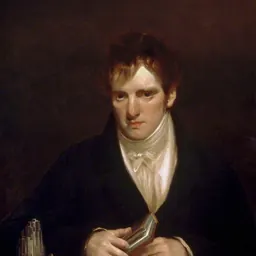
Portrait of Carl Ludwig Giesecke by Sir Henry Raeburn, ca. 1813 Carl Ludwig Giesecke FRSE (6 April 1761 in Augsburg – 5 March 1833 in Dublin) was a German actor, librettist, polar explorer and mineralogist. In his youth he was called Johann Georg Metzler; in his later career in Ireland he was Sir Charles Lewis Giesecke. Late in his life he claimed to friends to have been, in his youth, the librettist of Mozart’s famous opera The Magic Flute.
Early life
His father was Johann Georg Metzler, a Protestant who worked as a tailor in Augsburg. His mother was named Sibylla Magdalena Götz. He attended the Gymnasium in Augsburg, and did well academically, as is known from the surviving remarks of his schoolmaster recommending him for university study. the letter established Giesecke's relationship with the Augsburg Metzlers. Whittaker suggests that he chose "Giesecke" (also spelled "Gieseke") in admiration of the poet .
His career in the theater
In 1784, he left the university to become an itinerant player, and worked in various theaters over a period of six years. In 1789, he became employed in the Theater auf der Wieden in Vienna, then under the direction of Johann Friedel. His value to the Schikaneder company was more as a stage manager and especially as a writer and poet.
Giesecke achieved an early success with his adapted version of Sophie Seyler's Hüon und Amande, based on an earlier work by Christoph Martin Wieland and set to music by Paul Wranitzky. This was the first opera performed by Schikaneder's troupe at their new theater, and established a tradition within the company of fairy-tale operas that was to culminate two years later in Mozart's celebrated opera The Magic Flute. Oberon is similar to The Magic Flute in its plot and characters, and a number of the singers who participated in Oberon took similar roles in the later opera.
In later work, Giesecke translated the Italian libretti of Mozart's operas Le nozze di Figaro (1793) and Così fan tutte (1794) into German. In total he was to write libretti for more than fifteen operas by various composers between 1789 and 1800; see listing below.
As an actor, Giesecke is remembered for having been in the cast for the premiere (30 September 1791) of The Magic Flute. He played the mostly speaking role of the First Slave. Later in life, he was said to have claimed to be the author of the opera's libretto, which is usually attributed to Emanuel Schikaneder; see discussion below.
During his Vienna years, Giesecke became a Freemason, joining "Zur gekrönten Hoffnung", the same lodge as Mozart. to have been the librettist for the "Freimaurerkantate" Laut verkünde unsre Freude, KV 623 (1791), a work written for and performed at a Masonic celebration just as Mozart's final illness was setting in (see Death of Mozart). The head of Giesecke's lodge was Ignaz von Born, a distinguished scientist who specializations included mineralogy. Other eminent mineralogists were also members of the lodge and Giesecke's membership evidently rekindled his interest in the subject.
As mineralogist
The departure from Vienna coincided with a major career shift: Giesecke abandoned the theater and switched to mineralogy and mineral trading. In 1801, he studied for some time with Abraham Gottlob Werner at the Bergakademie in Freiberg. Later, under the title of Royal Prussian Mine Counsellor (Königlicher Preussischer Bergrat), he conducted surveys in Sweden from 1803 until 1804 and in Norway in 1805. Eventually he settled in Copenhagen, where he worked as a mineral dealer, collector, and tutor. and learned to travel in the umiak, the vessel used by the Eskimo women. However, it met with many difficulties, including the harsh Greenland winters and illness. Many of Giesecke's troubles resulted from the Napoleonic Wars, which reached their climax during his stay. Back home in Copenhagen, Giesecke's existing collections were destroyed when the British fleet bombarded the city. In 1806, Giesecke shipped a large collection of materials aboard the Danish ship Freuhlin, headed for Copenhagen.
Another consequence of the war was that Giesecke's stay in Greenland, originally planned for only two years,
The loss of the 1806 shipment was perhaps a blessing in disguise since it ultimately enhanced Giesecke's reputation in Britain. The collection was examined by the mineralogist Robert Jameson, who, unaware of its provenance, concluded it was worthless. Ninian Imrie and Thomas Allan suspected that a white mineral in the collection was the rare cryolite and bought the lot. However, it was only when Morten Wormskjold was detained in Edinburgh on his way to Greenland in 1812 that he could identify the collector as Giesecke and the provenance as Greenland. Another mineral in the collection was later named allanite after Thomas Allan. Thus the value of the collection was ultimately recognized prior to Giesecke's return to Europe.
Researches in Greenland other than in mineralogy
Giesecke's travels up and down the coast of Greenland proved important from the perspective of geography. On his return he was consulted by mariners such as John Franklin and William Scoresby, who played a role in the eventual discovery of the Northwest Passage, the famously elusive sea route around the northern edge of North America.
He also collected botanical specimens. These included some bryophyte species growing on rocks. Giesecke collected specimens of the Greenlandic bellflower, which he found deviated much from the European forms, and sent them to the botanist Lorenz Chrysanth von Vest. The latter established a new species and named it Campanula gieseckiana to the honour of Giesecke. The new species was formally published by Roemer and Schultes in the 16th edition of Linnaeus' Systema Vegetabilium.
Lastly, Giesecke contributed to the ethnography and human history of Greenland through his observations of the Eskimos and of the extinct Viking settlements there.
A number of places in Greenland are named for him, e.g. Giesecke Dal on Disko Island, Giesecke Isfjord near Upernavik and lake Gieseckes Sø close to Kangerlussuaq.
Professor in Dublin
On his return from Greenland Giesecke was lacking not only European clothing but also money and a source of income. But his scientific accomplishments were to produce a major shift in his fortunes. Thomas Allan had already recognized the importance of Giesecke's collections, and he invited Giesecke to stay with him in his home in a fashionable district of Edinburgh. It was at this time that Giesecke's portrait (shown above) was painted by the famous portraitist Henry Raeburn. After a few weeks, Allan encouraged Giesecke to apply for a new Professorship of Mineralogy in the Royal Dublin Society. Despite serious competition, Giesecke won the appointment and took up the position in 1813.
At the outset of his appointment he knew no English, but his gift for languages enabled him to make up for this lack through quick study; he eventually published extensively in English. Giesecke continued reporting his earlier investigations and other writings. In the same year 1814 he was admitted to the Order of the Dannebrog by King Frederick VI of Denmark; henceforth in Ireland he styled himself "Sir Charles Lewis Giesecke," so indicating the Danish honour, and using the English versions of German "Carl" and "Ludwig". While there he fell ill, and "his life was despaired of" (Berry).
Elsewhere Cornet wrote: And above all the truly German Magic Flute by Schikaneder and Giesecke, a member of the chorus who made the plan of the plot, the division of the scenes and the well known simple ('naïve') rhymes for him.
Subsequent scholarship has involved extensive disagreement about whether to believe Cornet, ranging from wholehearted endorsement of his report to utter rejection of it accompanied by aspersions on Giesecke's character. Certainly Mozart's own testimony does not support the Giesecke theory; in the catalogue that Mozart kept of his own works he entered The Magic Flute as "A German opera in two acts. By Emanuel Schikaneder." However, there is also a reasonable possibility that Giesecke was an unacknowledged collaborator with Schikaneder; the troupe frequently practiced coauthorship as a means of speeding the creation of new works.
Giesecke returned to Dublin in the late summer of 1819 The RDS museum in Leinster House closed for two weeks as a mark of respect.
Giesecke never married and apparently left no children.
(1789) Oberon, König der Elfen (Singspiel), Paul Wranitzky (an adapted version or plagiarism of Hüon und Amande by Sophie Seyler) (1791) Die Wiener Zeitung (Singspiel), Franz Xaver Gerl and Benedikt Schack (1792) Das Schlaraffenland (Singspiel), Gerl and Schack (1794) Der travestirte Hamlet (play), Vincenc Tuček (1795) Idris und Zenide, Franz Xaver Süssmayr (1796) Die zwölf schlafenden Jungfrauen ("The Twelve Sleeping Maids", play with songs), Matthäus Stegmayer (1796) Uriels Glöcklein, Stegmayer (1796) Die Belagerung von Cythère ("The Siege of Cythera"), translation of Cythère assiégée by Christoph Willibald Gluck, with additions by Franz Anton Hoffmeister (1798) Amadis, der fahrende Ritter von Gallien, G. Stenzerl (1798) Agnes Bernauerin (burlesque), Ignaz von Seyfried (1799) Die Pfaueninsel ("The island of peacocks"), Seyfried and Stegmayer (1799) Der travestierte Aeneas (farce), Seyfried and Stegmayer (1800) Aeneas in der Hölle (travesty), Stegmayer (1801) Die Sonnenjungfrau (travesty), Seyfried and Stegmayer
Scientific
(1819) On the temporary residences of the Greenlanders during the winter season and on the population of north and south Greenland. Edinburgh: A. Constable. (1822) On Cryolite; a Fragment of a Journal. Edinburgh Philosophical Journal 6: 141–4. (1823) On the mineralogy of Disco Island. Transactions of the Royal Society of Edinburgh, 9: 263–272. (1824) On the Norwegian settlements on the eastern coast of Greenland, or Osterbygd, and their situation. Transactions of the Royal Irish Academy 14: 47–56. (1826) Account of a mineralogical excursion to the county of Donegal. Dublin: Royal Dublin Society. (1828) Second account of a mineralogical excursion to the counties of Donegal, Mayo, and Galway. Dublin: Royal Dublin Society. (1829) Account of a mineralogical excursion to the county of Antrim. Dublin: Royal Dublin Society. (1832) A descriptive catalogue of a new collection of materials in the museum of Royal Dublin Society. To which is added an Irish mineralogy. Dublin: Royal Dublin Society. (1861) Catalogue of a geological and geographical collection of minerals from the arctic regions from Cape Farewell to Baffin's Bay, lat. 59⁰ 14ʹ N., to 76⁰ 32ʹ N.. Dublin : McGlashan & Gill. (1878) Gieseckes Mineralogiske rejse i Grønland, ved F. Johnstrup. Med et tillæg om de grønlandske stednavnes retskrivning og etymologi af H. Rink. Edition: Hermed 3 kaart. Kjøbenhavn : B. Lunos bogtrykkerei. (1910) Bericht einer mineralogischen Reise in Groenland. ("Report on a mineralogical journey in Greenland") Meddelelser om Grønland 35: 1–478.
Don’t just read it —
keep it.
Full-length biographies made to live with: read them, listen on the way to work, watch them tonight.
- E-book
- Audio
- Video
Instant download · yours to keep · every purchase keeps this site free
Important facts
People in Karl Ludwig Giesecke's life
Named in this biography and alive at the same time


Related people
Same field, nearest in time




Contemporaries
People whose lives overlapped Karl Ludwig Giesecke's




Frequently asked questions
Who was Karl Ludwig Giesecke?
German actor, explorer, mineralogist (1761-1833)
When was Karl Ludwig Giesecke born?
Karl Ludwig Giesecke was born on 6 April 1761 in Augsburg.
When did Karl Ludwig Giesecke die?
Karl Ludwig Giesecke died on 5 March 1833 in Dublin.
What was Karl Ludwig Giesecke's occupation?
Karl Ludwig Giesecke was a botanist, librettist, university teacher, poet lawyer, stage actor and geologist.
What nationality was Karl Ludwig Giesecke?
Karl Ludwig Giesecke was German.
Sources & further reading
· Wikipedia: Karl Ludwig Giesecke
· DBpedia: Karl Ludwig Giesecke
Cite this page
APA: Biography.guide. (2026). Karl Ludwig Giesecke. https://biography.guide/karl-ludwig-giesecke/
MLA: "Karl Ludwig Giesecke." Biography.guide, https://biography.guide/karl-ludwig-giesecke/.
Chicago: "Karl Ludwig Giesecke." Biography.guide. https://biography.guide/karl-ludwig-giesecke/.
Data last updated: 2026-09-20 · Spot an error? Report a correction.
Page generated 2026-09-27 05:32 UTC