
About Paul Wiens
Lived 1922 – 1982 (aged 59–60). Paul Wiens was a German screenwriter, translator, writer, librettist and lyricist.
Paul Wiens (17 August 1922 – 6 April 1982) was a German poet, translator and author of radio plays and screenplays in the German Democratic Republic.
Life Wiens was born in Königsberg to a Jewish mother. However, he spent his childhood in Berlin until his mother emigrated to Switzerland in 1933 after the "Machtergreifung" by the National Socialists. After passing his school-leaving exams, he took up philosophy studies in Geneva and Lausanne. In 1943, Wiens was arrested in Vienna for Wehrkraftzersetzung and imprisoned in St. Pölten and in (1938-1954 Vienna, otherwise Lower Austria) until the end of the war.
After the end of the Second World War, he returned to Berlin in 1947 via Weimar, where he worked as an editor and translation editor at Aufbau-Verlag until 1950. Along the way, he published his first poems and youth songs (Begeistert von Berlin, 1952). From 1952 onwards, he was a freelance writer and wrote mainly poetry and texts for mass songs. Wiens also wrote screenplays, for example for Frank Vogel's film (1962), which justifies the Berlin Wall, and for Konrad Wolf's Sonnensucher (1958). The film deals with the production battles in the uranium mining of Soviet-German Joint Stock Company Wismut and, because of its thematic connection to the production of nuclear weapons, was not premiered until 1972 due to a veto by the Soviet Union at the time. Furthermore, he translated works by Pablo Neruda, Vladimir Mayakovsky, Nazim Hikmet and others into German. Wiens was co-editor of the poetry series "Antwortet uns" (Answer us) and editor-in-chief of the influential literary magazine Sinn und Form in 1982 until his death in Berlin at the age of 59.
Wiens was temporarily vice-president of the Cultural Association of the GDR and from 1961 to 1969 chairman of the Berlin district association of the writers' association of the GDR. In 1964, he became a member of the German P.E.N. Centre East and was a member of its executive committee from 1980.
Wiens was buried in the artists' section of Berlin's Zentralfriedhof Friedrichsfelde. His estate is in the literary archive of the Academy of Arts, Berlin.
Wiens' daughter Maja Wiens from his first marriage to Erika Lautenschlager (1921-1989) is also a writer (novel Traumgrenzen, Berlin: Neues Leben 1983 / screenplay Versteckte Fallen DEFA 1991).
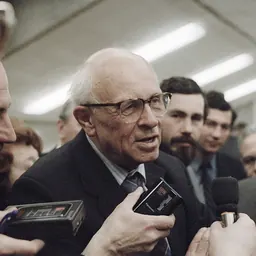
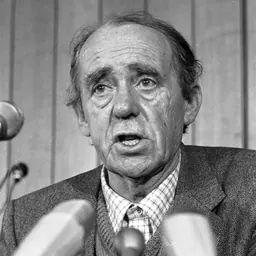
Collaborator with the State Security In the 1960s, Wiens worked as a "social informant" with the Stasi. At the end of the 1960s, he interrupted this activity for a few years because of "ideological stomach ache", then continued it from 1972 until his death as an unofficial collaborator. He also repeatedly worked for the Soviet KGB. Wiens "handed over private letters addressed to him, provided detailed denunciatory information on writers from East and West and reported on international writers' meetings in the Soviet Union, Hungary and Yugoslavia", according to Joachim Walther in his standard work Sicherungsbereich Literatur. He provided reports on his GDR colleagues Jurek Becker, Wolf Biermann, Franz Fühmann, Stefan Heym, Sarah Kirsch, Heiner Müller, Ulrich Plenzdorf and Erwin Strittmatter, among others, the Western writers Heinrich Böll, Günter Grass, and Andrei Sakharov, as well as his third wife, the writer Irmtraud Morgner, who divorced him in 1977. He received several state awards for his informer activities.
Filmography 1953: Das kleine und das große Glück 1955: Einmal ist keinmal 1956: Genesung 1958: Meister Zacharias und seine acht goldenen Zeiger 1958: Das Lied der Matrosen 1960: Leute mit Flügeln 1961: 1962: 1972: Sonnensucher 1978: Matrosen in Berlin (Liedtexte)
Radio play 1978: Isaak Babel: Maria (as narrator) – director: Joachim Staritz (radio play – Rundfunk der DDR)
Awards 1952: 1959: Nationalpreis der DDR 1962: Heinrich-Heine-Preis des Ministeriums für Kultur der DDR 1973: Verdienstmedaille der NVA in Bronze 1974: Verdienstmedaille der NVA in Silber 1976: Johannes-R.-Becher-Medaille 1973: Verdienstmedaille der NVA in Gold 1977: Vaterländischer Verdienstorden in Bronze 1979: Vaterländischer Verdienstorden in Gold 1980: Medal Brotherhood in Arms in Bronze
Don’t just read it —
keep it.
Full-length biographies made to live with: read them, listen on the way to work, watch them tonight.
- E-book
- Audio
- Video
Instant download · yours to keep · every purchase keeps this site free
Important facts
People in Paul Wiens's life
Named in this biography and alive at the same time



Related people
Same field, nearest in time

Contemporaries
People whose lives overlapped Paul Wiens's




Frequently asked questions
Who was Paul Wiens?
German screenwriter and author (1922-1982)
When was Paul Wiens born?
Paul Wiens was born in 1922 in Königsberg.
When did Paul Wiens die?
Paul Wiens died in 1982 in East Berlin.
What was Paul Wiens's occupation?
Paul Wiens was a screenwriter, translator, writer, librettist and lyricist.
What nationality was Paul Wiens?
Paul Wiens was German.
Sources & further reading
Cite this page
APA: Biography.guide. (2026). Paul Wiens. https://biography.guide/paul-wiens/
MLA: "Paul Wiens." Biography.guide, https://biography.guide/paul-wiens/.
Chicago: "Paul Wiens." Biography.guide. https://biography.guide/paul-wiens/.
Data last updated: 2026-09-20 · Spot an error? Report a correction.
Page generated 2026-09-27 05:25 UTC