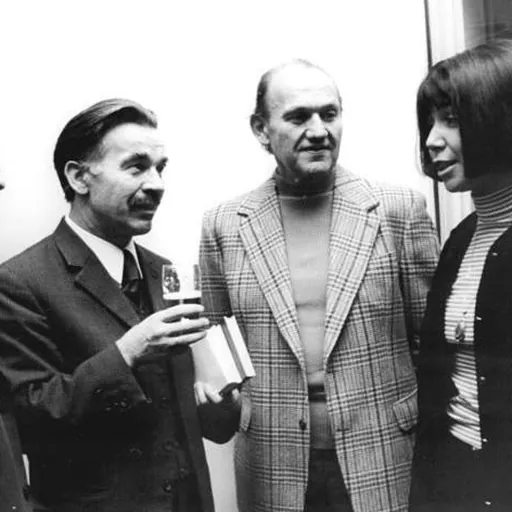
About Irmtraud Morgner
Lived 1933 – 1990 (aged 56). Irmtraud Morgner was a German writer, journalist and germanist.
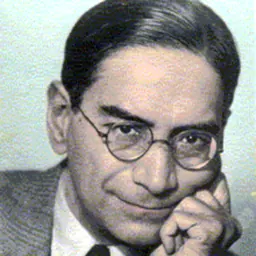
Irmtraud Morgner (22 August 19336 May 1990) was a German writer, best known for works of magical realism concerned predominantly with the role of gender in East German society.
Life Irmtraud Morgner was born in 1933 in Chemnitz, the daughter of a railroad engineer. She took her Abitur in 1952, before studying Germanistik (German studies) and Literary studies at Leipzig until 1956. She worked for the magazine neue deutsche literatur (New German Literature, a journal noted for a degree of confrontation with East German cultural policy) until 1958, after which she lived as a freelance author.
Morgner's first marriage was to Joachim Schreck, later an editor at the publishers Aufbau-Verlag. She gave birth to a son in 1967. Morgner and Schreck were divorced in 1970. She was married again in 1972, to Paul Wiens, a fellow poet and author. Wiens, like many thousands in East German, was an 'unofficial employee' of the Stasi and informed on Morgner throughout their marriage. They divorced in 1977.
She contributed the piece "Witch Vilmma's invention of speech-swallowing" to the 1984 anthology Sisterhood Is Global: The International Women's Movement Anthology, edited by Robin Morgan.
Morgner was diagnosed with cancer in 1987. She underwent several operations during the late 1980s, but died in May 1990.
Work
After producing a number of relatively conventional socialist realist works, she gained a greater degree of notability and success in 1968 with the novel Hochzeit in Konstantinopel (Wedding in Constantinople). This work, a blend of realism and fantasy exploring feminist themes, was a fresh development in East German literature. While her work as a whole is generally argued to be predominantly concerned with gender, Morgner also touches upon other issues in East German society. She clearly satirises the stultifying effect of censorship on literature under the regime, censorship that she herself often fell foul of. Whilst winning notable awards in East Germany, she was nevertheless subject to surveillance herself, and her works to heavy editing and often rejection.
Her magnum opus may be considered Leben und Abenteuer der Trobadora Beatriz nach Zeugnissen ihrer Spielfrau Laura (The Life and Adventures of Trobadora Beatrice as Chronicled by Her Minstrel Laura). A 'novel in thirteen books and seven intermezzos', it may be considered an epistolary novel as it includes (other than straight narrative) love poetry, morse code, exchanges of correspondence and transcripts. The 'intermezzos' were created from Rumba auf einen Herbst (Rumba for Autumn), a novel previously rejected by the censors in 1965. Together with its sequel Amanda. Ein Hexenroman (Amanda. A Witch's Tale), Leben und Abenteuer der Trobadora Beatriz… was to form a trilogy centred on 'Laura (Amanda) Salman'.
In her final years, cancer somewhat impaired her productivity, and she never completed the 'Salman trilogy'. Fragments of the third novel were later published posthumously as Das heroische Testament (The Heroic Testament).
Works Das Signal steht auf Fahrt. Berlin, 1959 Ein Haus am Rand der Stadt. Berlin, 1962 Hochzeit in Konstantinopel. Berlin, 1968 Gauklerlegende. Berlin, 1970 Die wundersamen Reisen Gustavs des Weltfahrers. Berlin, 1972 Leben und Abenteuer der Trobadora Beatriz nach Zeugnissen ihrer Spielfrau Laura. Berlin, 1974 The Life and Adventures of Trobadora Beatrice as Chronicled by Her Minstrel Laura (translated by Jeanette Clausen). University of Nebraska Press, 2000 Geschlechtertausch (with Sarah Kirsch und Christa Wolf). Darmstadt, 1980 Amanda. Ein Hexenroman (Amanda. A Witch's Tale). Berlin, 1983 Die Hexe im Landhaus (with Erica Pedretti). Zürich, 1984 Der Schöne und das Biest. Leipzig, 1991 Rumba auf einen Herbst. Hamburg, 1992 Das heroische Testament (The Heroic Testament). München, 1998 Erzählungen. Berlin, 2006
Don’t just read it —
keep it.
Full-length biographies made to live with: read them, listen on the way to work, watch them tonight.
- E-book
- Audio
- Video
Instant download · yours to keep · every purchase keeps this site free
Important facts
Family & relationships
People in Irmtraud Morgner's life
Named in this biography and alive at the same time


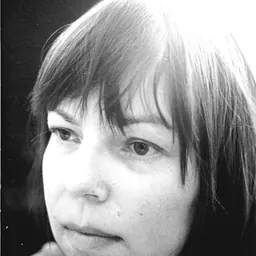

Related people
Same field, nearest in time

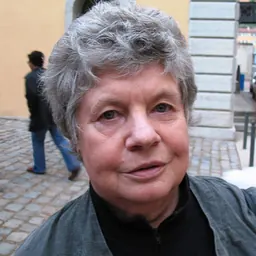


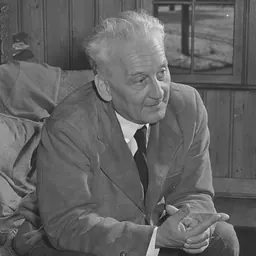
Contemporaries
People whose lives overlapped Irmtraud Morgner's



Frequently asked questions
Who was Irmtraud Morgner?
German writer (1933–1990)
When was Irmtraud Morgner born?
Irmtraud Morgner was born on 22 August 1933 in Chemnitz.
When did Irmtraud Morgner die?
Irmtraud Morgner died on 6 May 1990 in Berlin.
What was Irmtraud Morgner's occupation?
Irmtraud Morgner was a writer, journalist and germanist.
What nationality was Irmtraud Morgner?
Irmtraud Morgner was German.
Sources & further reading
Cite this page
APA: Biography.guide. (2026). Irmtraud Morgner. https://biography.guide/irmtraud-morgner/
MLA: "Irmtraud Morgner." Biography.guide, https://biography.guide/irmtraud-morgner/.
Chicago: "Irmtraud Morgner." Biography.guide. https://biography.guide/irmtraud-morgner/.
Data last updated: 2026-09-22 · Spot an error? Report a correction.
Portrait: Wikimedia Commons · author & licence
Page generated 2026-09-27 05:02 UTC