
About Paul Topinard
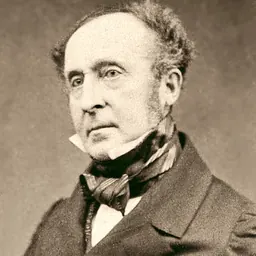
Lived 1830 – 1911 (aged 81). Paul Topinard was a French anthropologist and physician.
Paul Topinard (4 November 1830, L'Isle-Adam Parmain, Val-d'Oise – 20 December 1911, 6th arrondissement of Paris) was a French physician and anthropologist who was a student of Paul Broca and whose views influenced the methodology adopted by Herbert Hope Risley in his ethnographic surveys of the people of India. He became director of the École d'Anthropologie and secretary-general of the Société d'Anthropologie de Paris, both in succession to Broca. He was elected as a member to the American Philosophical Society in 1886.
Biography
Paul Topinard's specialization was physical anthropology. His opinions were polygenist but he was less rigid than Broca. He nonetheless frequently referred to Broca as his "master", and according to John Carson was "committed to the superiority of white male Europeans". Patrick Brantlinger says that
In a manner similar to Samuel George Morton, the anthropologist of the United States, Topinard conducted experiments intended to test theories that cranial capacity was a marker of ethnicity, with European capacities being the largest and Australian Aborigines the smallest. He calculated the capacity of various skulls by pouring substances into them and then noting the volume consumed, on the assumption that a larger space for a brain equated to a more developed intellect. He also believed that such measurements could be tracked through the evolution of the human species and that a larger cranial capacity was therefore related to a greater degree of civilisation. Charles Loring Brace has recently studied skulls used originally by Topinard in his experiments and believes that there is a fundamental flaw in the theory because the Congolese and West African examples represented people who were physically much smaller overall.
The nasal index: a method of classifying ethnicity based on the ratio of the breadth of a nose to its height, Developed by Topinard. "Narrow" noses (Types 1–5) indicate European origin; "medium" noses (Type 6) are the "yellow races"; and "broad" are either African (Type 7) or Melanesian and Australian aboriginal (Type 8).
By 1891 Topinard was questioning the assumptions used to assess relative racial worth in his earlier works. He noted in his L'Homme dans la nature
Publications Quelques aperçus sur la chirurgie anglaise (1860)
L'Homme dans la nature (1891) Science et foi. L'anthropologie et la science sociale (1900)
Don’t just read it —
keep it.
Full-length biographies made to live with: read them, listen on the way to work, watch them tonight.
- E-book
- Audio
- Video
Instant download · yours to keep · every purchase keeps this site free
Important facts
People in Paul Topinard's life
Named in this biography and alive at the same time



Related people
Same field, nearest in time
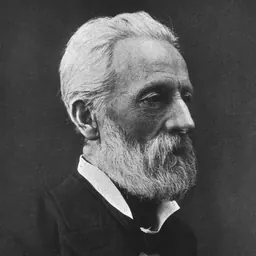

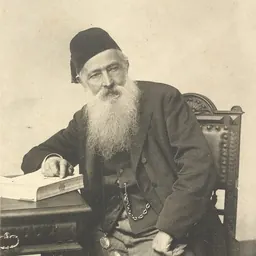
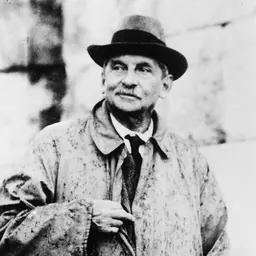


Contemporaries
People whose lives overlapped Paul Topinard's
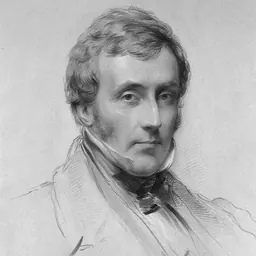



Frequently asked questions
Who was Paul Topinard?
French physician and anthropologist (1830-1911)
When was Paul Topinard born?
Paul Topinard was born on 4 November 1830 in Jouy-le-Comte.
When did Paul Topinard die?
Paul Topinard died on 20 December 1911 in rue d'Assas.
What was Paul Topinard's occupation?
Paul Topinard was an anthropologist and physician.
What nationality was Paul Topinard?
Paul Topinard was French.
Sources & further reading
Cite this page
APA: Biography.guide. (2026). Paul Topinard. https://biography.guide/paul-topinard/
MLA: "Paul Topinard." Biography.guide, https://biography.guide/paul-topinard/.
Chicago: "Paul Topinard." Biography.guide. https://biography.guide/paul-topinard/.
Data last updated: 2026-09-26 · Spot an error? Report a correction.
Page generated 2026-09-27 05:16 UTC