
About Paul Sweezy
Lived 1910 – 2004 (aged 93). Paul Sweezy was an American economist.
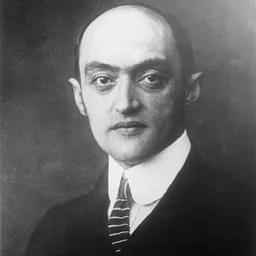
Paul Marlor Sweezy (April 10, 1910 – February 27, 2004) was an American Marxist economist, political activist, publisher, and a founding editor of the long-running socialist magazine Monthly Review. He is best remembered for his contributions to economic theory as one of the leading Marxian economists of the second half of the 20th century.
Biography
Early years and education Paul Sweezy was born on April 10, 1910, in New York City, the youngest of three sons of Everett B. Sweezy, a vice-president of First National Bank of New York. His mother, Caroline Wilson Sweezy, was a graduate of Goucher College in Baltimore. During his studies, Sweezy became like a son to the Austrian-born economist Joseph Schumpeter, although on an intellectual level, their views were diametrically opposed. Later, as colleagues, their debates on the "Laws of Capitalism" were of legendary status for a generation of Harvard economists.
While at Harvard, Sweezy founded the academic journal The Review of Economic Studies and published essays on imperfect competition, the role of expectations in the determination of supply and demand, and the problem of economic stagnation. a book which summarized the labor theory of value of Marx and his followers. The book was the first in English to deal thoroughly with such questions as the transformation problem.
Sweezy worked for several New Deal agencies analyzing the concentration of economic power and the dynamics of monopoly and competition. This research included the influential study for the National Resources Committee, "Interest Groups in the American Economy" which identified the eight most powerful financial-industrial alliances in US business.
From 1942 to 1945, Sweezy worked for the research and analysis division of the Office of Strategic Services. Sweezy was sent to London, where his work for the Office of Strategic Services (OSS) required his monitoring British economic policy for the US government.
Monthly Review rapidly expanded into the production of books and pamphlets through its publishing arm, Monthly Review Press.
Over the years, Monthly Review published articles by a diverse array of voices, including material by Albert Einstein, W. E. B. Du Bois, Jean-Paul Sartre, Che Guevara and Joan Robinson.
Activism In 1954, New Hampshire Attorney General Louis C. Wyman subpoenaed Sweezy and made inquiries into the contents of a guest lecture at the University of New Hampshire and his political beliefs and associations, demanding to know the names of his political associates. Sweezy refused to comply, citing his First Amendment right of freedom of expression. He was cited for contempt of court and briefly imprisoned, but the US Supreme Court overturned the conviction in a landmark case for academic freedom, in Sweezy v. New Hampshire.
Sweezy was active in a wide range of progressive causes, including the Emergency Civil Liberties Committee, the National Lawyers Guild, the National Council of Arts, Sciences and Professions, and the Fair Play for Cuba Committee. He was the chairman of the Committee in Defense of Carl Marzani and was particularly active fighting against the prosecution of members of the Communist Party under the Smith Act.
His step-son is the film producer and political activist Jeff Dowd, who was put on trial for protesting the Vietnam War as part of the Seattle Liberation Front and later achieved fame as the inspiration for the main character in The Big Lebowski (1998).
Death and legacy Paul Sweezy died on February 27, 2004, at the age of 93.
Sweezy was lauded by economist and public intellectual John Kenneth Galbraith as "the most noted American Marxist scholar" of the late 20th Century. He was also called "the best that Exeter and Harvard can produce" and regarded as "among the most promising economists of his generation" by Nobel Prize-winning economist Paul Samuelson.
Relevance in 2008 Financial Crash and subsequent years of global economic turmoil Sweezy and Baran's Monopoly Capital once again came into fashion as a guideline for the 2008 financial troubles as surplus productivity was malinvested into the financial sector and financialization of western companies over productive benefits of industry. Post 2008, consolidating corporate powers with aid from United States government policies continue to roll surpluses of productivity into militaristic ventures across the world in order to monopolize more industries such as media, banking, real estate, pharmaceutical, and technology to control pricing across commodities and services and labor.
Sweezy maintained that under monopoly capitalism, the restricting of new investments and declining real wage growth would put pressure on effective demand.
Works Monopoly and Competition in the English Coal Trade, 1550–1850. Westport, CT: Greenwood Press, 1972. The Theory of Capitalist Development. London: D. Dobson, 1946. Socialism. New York: McGraw-Hill Company, 1949. The Present as History: Reviews on Capitalism and Socialism. (1953, 1962). Modern Capitalism and Other Essays. New York: Monthly Review Press, 1972. The Transition from Feudalism to Capitalism. London: New Left Books, 1976. Post-Revolutionary Society: Essays. New York: Monthly Review Press, 1980. Four lectures on Marxism. (New York: Monthly Review Press, 1981). "The Limits of Imperialism." In Chilcote, Ronald H. (ed.) Imperialism: Theoretical Directions. New York: Humanity Books, 2000.
With Leo Huberman F.O. Matthiessen, 1902–1950. New York: S.N., 1950. Cuba: Anatomy of a Revolution. New York: Monthly Review Press, 1960. Regis Debray and Latin American Revolution. New York: Monthly Review Press, 1968. Socialism in Cuba. New York: Monthly Review Press, 1969. The Communist Manifesto after 100 Years: New translation by Paul M. Sweezy of Karl Marx's "The Communist Manifesto" and Friedrich Engels' "Principles of Communism." New York: Modern Reader, 1964. Vietnam: The Endless War: From Monthly Review, 1954–1970. New York: Monthly Review Press, 1970.
With Harry Magdoff The Dynamics of US Capitalism: Corporate Structure, Inflation, Credit, Gold, and the Dollar. New York: Monthly Review Press, 1972. Revolution and Counter-Revolution in Chile. New York: Monthly Review Press, 1974. The End of Prosperity. New York: Monthly Review Press, 1977. The Deepening Crisis of US Capitalism. New York: Monthly Review Press, 1981. Stagnation and the Financial Explosion. New York: Monthly Review Press, 1987. The Irreversible Crisis: Five Essays. New York: Monthly Review Press, 1988.
With others An Economic Program for American Democracy. With Richard V. Gilbert, George H. Hildebrand, Arthur W. Stuart, Maxine Yaple Sweezy, Lorie Tarshis, and John D. Wilson. New York: The Vanguard Press, 1938. Monopoly Capital: An Essay on the American Economic and Social Order. With Paul A. Baran. New York: Monthly Review Press, 1966. On the Transition to Socialism. With Charles Bettelheim. New York: Monthly Review Press, 1971.
Don’t just read it —
keep it.
Full-length biographies made to live with: read them, listen on the way to work, watch them tonight.
- E-book
- Audio
- Video
Instant download · yours to keep · every purchase keeps this site free
Important facts
People in Paul Sweezy's life
Named in this biography and alive at the same time




Related people
Same field, nearest in time





Contemporaries
People whose lives overlapped Paul Sweezy's






Frequently asked questions
Who was Paul Sweezy?
American economist (1910–2004)
When was Paul Sweezy born?
Paul Sweezy was born on 10 April 1910 in New York City.
When did Paul Sweezy die?
Paul Sweezy died on 27 February 2004 in Larchmont.
What was Paul Sweezy's occupation?
Paul Sweezy was an economist.
What nationality was Paul Sweezy?
Paul Sweezy was American.
Sources & further reading
Cite this page
APA: Biography.guide. (2026). Paul Sweezy. https://biography.guide/paul-sweezy/
MLA: "Paul Sweezy." Biography.guide, https://biography.guide/paul-sweezy/.
Chicago: "Paul Sweezy." Biography.guide. https://biography.guide/paul-sweezy/.
Data last updated: 2026-09-25 · Spot an error? Report a correction.
Page generated 2026-09-27 05:12 UTC