
About Paul Philidor
Lived 1701 – 1829. Paul Philidor was a magician and magic (illusion), known for Phantasmagoria.
An illustration of a performance by Phylidor, from a 1791 handbill. Phylidor (died 7 March 1829), also spelled "Phylidoor" or "Philidor", also known as "Paul Filidort" and probably the same as Paul de Philipsthal, was a magician and a pioneer of phantasmagoria shows.
Biography Phylidor's origins are unclear, as is his exact identity. It is believed that he took his name from François-André Danican Philidor and he was even thought to be the nephew of this French composer and chess master of the famous Philidor family. He was also claimed to be from the neighboring County of Flanders. Phylidor reportedly spoke French when he was in Berlin. He was thought to be German when he came to Paris in 1792.
From 1785 to 1800 Phylidor traveled through Europe as a showman. He also at least occasionally traded in "physical instruments", and taught some of his tricks to paying customers.
In handbills, newspaper advertisements and announcements, Phylidor sometimes claimed the praise of the royalty of several European courts. From Catherine the Great and her court members he reportedly received 1.000 rubels, a gold tobacco box and a brilliant ring as appreciation for his performance of physics experiments in January 1787. He claimed to have gotten praise of the Dresden court for his new show in 1789.
Although perceived as a charlatan and a very mediocre magician by enlightened Berliners in 1789, in the eyes of others he gained the reputation of an extraordinary man with special powers. He reportedly helped a lady who came to him for advice about the theft of clothes from her house: Phylidor said he would make the thief very unhappy for the rest of his life, if the clothes were not returned the next day. On Phylidor's request she told this to all her servants and the next morning the clothes were back in place. Phylidor also made a barber believe that he had removed his own head to shave himself, by posing with a fake head made out of wax.
From around December 1798 to 1800, Phylidor collaborated on his shows with a business partner, who was also advertised to be a physicist. Demmenie replied in the newspapers by calling Phylidor an alien libeller and claiming that the used machinery had been known to physicists for a hundred years, and shown by others in the region for the past six years.
Paul de Philipsthal
Phylidor was very likely the same person as Paul de Philipsthal who lived in the U.K. and first performed Phantasmagoria shows in October 1801.
Paul de Philipsthal and his wife Mary had a son called Albert Augustus and a daughter called Paulina Theresa, both baptized in St Luke's Church, Chelsea on 13 August 1819. A benefit exhibition for the widow and children of Philipsthal's "Royal Mechanical & Optical Museum" was shown in the Wakefield Theatre.
Influences Much of Phylidor's early shows and stage persona was based on the works of famous magician Joseph Pinetti. Phylidor usually presented himself as a physicist in his advertisements.
Phylidor referenced Johann Georg Schröpfer and Cagliostro in several advertisements. Soon after Schröpfer's death there was a boom of publications either attacking or defending his supposed supernatural abilities, expanding Schröpfer's fame across Europe. Several publications included explanations of techniques he might have used to conjure apparitions, which inspired several people to try to recreate Schrepfer's séances. into a show that could more easily be seen by large audiences.
Over the years his performances were advertised to include magic, pyrotechnics, physics experiments, hydraulics, hydrostatics magnetic-mechanical experiments, mechanical pieces of art (including life-size mechanical figures), optical illusions / optical art (including apparitions of ghosts and absent persons) and catoptrics.
Dutch Republic (December 1785 to March 1786) Phylidor's first known performances were advertised by "Charles Phyllidoor, professor in de physique en Mathematique" to take place at six in the evenings of 27, 29, and 31 December 1785 and 2 January 1786 at De Schuttershof in Middelburg. He promised different tricks for each evening and presented his show as "Zwarte Konst" (Black Art) in one of his newspaper advertisements.
A few months later "De heer Phylidoor, professor in de Physique en Mathemathique" arrived in Groningen and advertised two "Representations der Zwarte Konst" to take place in the local Concert Zaal at six in the evenings of 22 and 23 March. "Moved by the lively appreciation and polite manner of several distinguished gentlemen who engaged him" he would be back on 28 and 30 March for other "amusing experiments", including a trick which involved shooting away a ring that would be returned by Phyllidoor's dove and made to be found inside an orange. Spectators were requested to bring oranges for this purpose.
Berlin (8 February to 30 March 1789)
Magic shows Arriving from Russia, Phylidor first performed in Berlin on 8 February. The flyer promised "sehenswürdige Magische oder sogenannte Schwarzkunst nachahmende Kunststücke" (great magic tricks that imitate the so-called "black arts"). It would, among other surprises, include the following highlights: Theophrastus Paracelsus; a golden head that made lifelike movement and could answer all questions with certain signs a magic crystal column, circa 2 feet high, from which certain things would jump up on command of the audience der Großsultan; an Ottoman figure that on Phylidor's command would curtsy to the audience and answer questions by movements of his head, understanding questions in German as well as in French a Dutch windmill, with a new sympathetic invention causing its sails to stop and turn according to one's wishes a clock on a crystal column, which would tell whatever time desired by the audience, without anyone touching it from a distance and without touching it, Phylidor would take the life of a bird that was being held by someone in the audience and then resurrect it a magnetic staff would make a round object move around and on command of the audience dance a waltz in the air
When his "Expériences physiques de St. Philidor" or "magical experiments" of the following weeks were perceived as mediocre magic tricks and raised little applause, Phylidor decided to try something else.
The very solemn performance would start with the sound of thunder that would grow louder and louder, accompanied by hail and wind. Lights would extinguish themselves one by one and flames would rise from the lamps before being extinguished and rendering the room in total darkness. Then ghosts of all sizes and shapes would fly around in a circle. After a very fierce storm, a summoned lifelike ghost of a person known to the audience would eventually rise from the floor to slowly sink back into the abyss in the ground.
Ghosts would appear in various ways; one would suddenly be there, another would slowly shape itself from a grey cloud and yet another would approach from far away and come so close that one could touch it. Some apparitions would take a few steps closer to the audience before disappearing. Spectators were spared any annoyance of foul tastes or odors and could count on a pleasant experience.
The show would start at seven in the evening and last one and a half hour. There would be three public performances a week. Private shows for parties up to 24 people could be booked for the remaining days. One review stated that no optical or other tricks could be discerned. However, this "review" could have been part of Phylidor's newspaper promotions: it is somewhat similar to advertisements and handbills that also described the show.
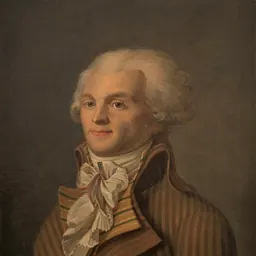
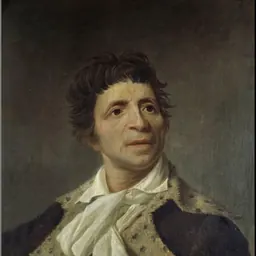
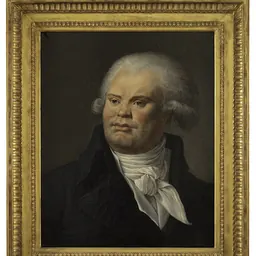
"Phantasmagorie", Paris (December 1792 to July 1793) A "Phantasmagorie" by Paul Filidort in Paris was first advertised on 16 December 1792. It was several years into the French Revolution and the audience were particularly open to the idea of seeing their dead heroes. However, with tensions running high and Philidor's shows increasingly making political references it was not long until he found himself in trouble with the authorities. Philidor made references to well-known revolutionaries of the day, making Maximilien Robespierre, Georges Danton, and Jean-Paul Marat appear as if they were the devil.
According to the memoirs of Madame Tussaud, a "Monsieur Phillipstal" was arrested after the audience of a phantasmagoria show protested at what they interpreted as a depiction of the rise of Louis XVI to heaven, caused by a mistake by an assistant who was removing the slide during projection. Phillipsthal's wife would have bribed authorities so he was released from prison. However, this may be only legend as also Robertson is associated with trouble after showing a slide of Louis XVI, which Tussaud might have read in Robertson's Mémoirs (1831-1833) and mixed-up with Philipsthal.
Batavian Republic (1798-1800) In 1798 "Phycisist" Phylidor exhibited his "Large Cabinet of Mechanical and Optical Arts" including ghostly apparitions and life-size mechanical figures in several cities of the Batavian Republic (now a large part of the Netherlands). In Rotterdam during the summer of 1799 Phylidor advertised his cabinet to have considerably increased since the year before and especially mentions his peacock automaton, which ate and drank as if it were real. The performance took place in a tent in the Gebakken Pauwesteeg ("Baked Peacock Alley"). Returning to Groningen in 1800 "Physici Phylidor & Compn." advertised their totally new wondrous mechanical and optical pieces of art, by candlelight and accompanied by music.
Great Britain (1801-1829) In October 1801 M. Philipsthal set up an exhibition of Phantasmagoria at the Lyceum Theatre, London. It was a huge success and soon other showmen presented their versions of phantasmagoria.
After a short break Philidor reopened his show with the wax museum of Marie Tussaud alongside. Tussaud had left France to join up with Philidor, who agreed to allow her to associate with his fame for half of her profits. She would go on to travel Great Britain and Ireland until settling down for a permanent exhibition on Baker Street in 1835.
Philipsthal gave his last shows with his Royal Mechanical and Optical Museum in February 1829 in Leeds, a few weeks before his death.
Travels
Phylidor traveled across parts of Europe, mainly visiting the capitals and larger cities: Middelburg (Dutch Republic) in December 1785 - January 1786 Groningen (Dutch Republic) in March - April 1786 Saint Petersburg (Russia), January 1787 München (Bavaria), July 1792 Paris (France), December 1792 to July 1793 Solothurn (Old Swiss Confederacy), December 1793 Winterthur (Old Swiss Confederacy), 1794. Haarlem (Batavian Republic), June 1798 Utrecht (Batavian Republic), July 1798 Rotterdam (Batavian Republic), August 1798 Amsterdam (Batavian Republic), between August and November 1798 The Hague (Batavian Republic), November 1798 return to Utrecht (Batavian Republic), July 1799 return to Rotterdam (Batavian Republic), August 1799 return to Groningen (Batavian Republic), April to May 1800 Bremen (Free Imperial City), 1800. Geneva (Léman), 1801.
Don’t just read it —
keep it.
Full-length biographies made to live with: read them, listen on the way to work, watch them tonight.
- E-book
- Audio
- Video
Instant download · yours to keep · every purchase keeps this site free
Important facts
People in Paul Philidor's life
Named in this biography and alive at the same time



Related people
Same field, nearest in time


Contemporaries
People whose lives overlapped Paul Philidor's



Frequently asked questions
Who was Paul Philidor?
magician and showman
When was Paul Philidor born?
Paul Philidor was born in 1701.
When did Paul Philidor die?
Paul Philidor died on 7 March 1829.
What was Paul Philidor's occupation?
Paul Philidor was a magician and magic (illusion).
What was Paul Philidor known for?
Paul Philidor was known for Phantasmagoria.
Sources & further reading
Cite this page
APA: Biography.guide. (2026). Paul Philidor. https://biography.guide/paul-philidor/
MLA: "Paul Philidor." Biography.guide, https://biography.guide/paul-philidor/.
Chicago: "Paul Philidor." Biography.guide. https://biography.guide/paul-philidor/.
Data last updated: 2026-09-22 · Spot an error? Report a correction.
Page generated 2026-09-27 04:59 UTC