
Paul Maas
German classical philologist
About Paul Maas
Lived 1880 – 1964 (aged 83). Paul Maas was a German classical philologist, university teacher, byzantinist, hellenist, palaeographer and metricist.
Paul Maas (18 November 1880, in Frankfurt am Main15 July 1964, in Oxford) was a German classical scholar, paleographer and Byzantinist.
Among other things, he developed principles of textual criticism inherited from Karl Lachmann.
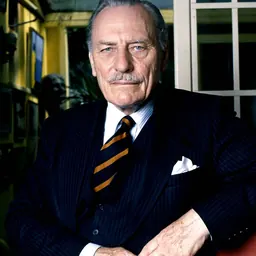
Biography He studied classical philology at the Friedrich Wilhelm University of Berlin and the Ludwig-Maximilians-Universität München, receiving his doctorate in 1903 under Ulrich von Wilamowitz. In 1910, he obtained his habilitation and in 1920 became professor at the Friedrich Wilhelm University of Berlin. In 1930, he was appointed chair of classical philology at the University of Königsberg. In 1934, he was forced into retirement by the Nazi government due to his Jewish ancestry. Maas’s close friends Enoch Powell and Bruno Snell helped secure him a visa to Great Britain after the University of Brussels refused to give him a job because they said he was a “extremist nationalist”, which was ready in January 1939. Maas left in August 1939 to England During his first Oxford years, he lodged with jurist Fritz Schulz and his wife.
After his death, he was buried at Wolvercote Cemetery's Jewish section in Oxford.
Research activity His research interests lied mainly in textual criticism of Greek literature—poetry in particular—and on the theory of textual criticism. He also wrote on Greek paleography and on the transmission and the reception of the classics through the Middle Ages and the Byzantine millennium.
Unlike most of his colleagues, he produced a relatively small number of critical editions: of a collection of Byzantine liturgical poetry; of Apollonius Dyscolus's treatise "On pronouns"; and of Romanos the Melodist's poems, with Greek scholar C. A. Trypanis.
He wrote extensively on Nonnus of Panopolis, although most of his conjectures and observations he never published and only wrote on the margins of the editions by Arthur Ludwich and Rudolf Keydell he owned. He produced similar works on Apollonius of Rhodes, Athenaeus, and Herodotus. Classical scholar Willy Theiler once observed that Maas's printed contributions to classical philology must be multiplied by ten, because most of Maas's reflections and thoughts were not published by him and still are not.
His most famous work is the "Textkritik" (1927), a concise theoretical handbook of textual criticism. It has been translated into many languages. He also wrote a handbook of "Greek metre" (1923) and the handwritten notes for his unpublished "Byzantinische Metrik" have recently been discovered at Copenhagen.
His articles were collected by Wolfgang Buchwald in 1973.
Maas's law Maas formulated Maas's law, an observation of the layout of bookrolls.
Works by Maas (selection)
Books
Greek metre (1962), translation of Griechische Metrik, 1923.
Don’t just read it —
keep it.
Full-length biographies made to live with: read them, listen on the way to work, watch them tonight.
- E-book
- Audio
- Video
Instant download · yours to keep · every purchase keeps this site free
Important facts
People in Paul Maas's life
Named in this biography and alive at the same time





Related people
Same field, nearest in time


Contemporaries
People whose lives overlapped Paul Maas's


Frequently asked questions
Who was Paul Maas?
German classical philologist (1880–1964)
When was Paul Maas born?
Paul Maas was born on 18 November 1880 in Frankfurt.
When did Paul Maas die?
Paul Maas died on 15 July 1964 in Oxford.
What was Paul Maas's occupation?
Paul Maas was a classical philologist, university teacher, byzantinist, hellenist, palaeographer and metricist.
What nationality was Paul Maas?
Paul Maas was German.
Sources & further reading
· DBpedia: Paul Maas (classical scholar)
Cite this page
APA: Biography.guide. (2026). Paul Maas. https://biography.guide/paul-maas/
MLA: "Paul Maas." Biography.guide, https://biography.guide/paul-maas/.
Chicago: "Paul Maas." Biography.guide. https://biography.guide/paul-maas/.
Data last updated: 2026-09-26 · Spot an error? Report a correction.
Page generated 2026-09-27 05:16 UTC