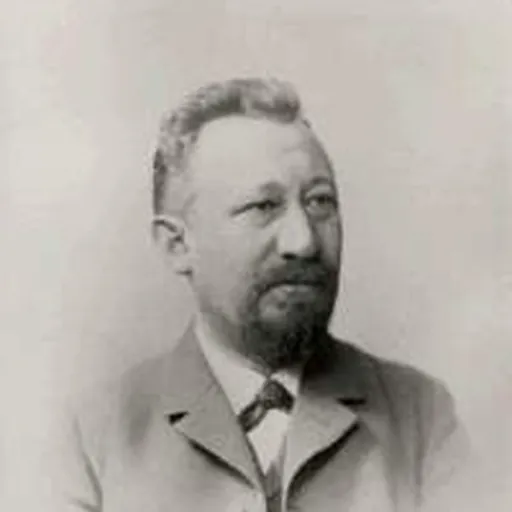
About Georg Wissowa
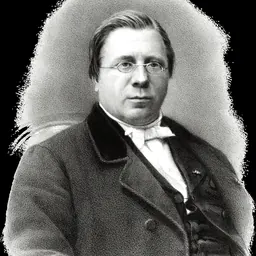
Lived 1859 – 1931 (aged 71). Georg Wissowa was a German classical philologist and university teacher.
Georg Otto August Wissowa (17 June 1859 – 11 May 1931) was a German classical philologist born in Neudorf, near Breslau.
Education and career Wissowa studied classical philology under August Reifferscheid at the University of Breslau from 1876 to 1880, then furthered his studies at the Ludwig-Maximilians-Universität München under Heinrich Brunn, a leading authority on Roman antiquities. Having obtained his habilitation at the University of Breslau in 1882, he received a travel scholarship from the German Archaeological Institute and went to Italy for a year. After that he taught as Privatdozent at the University of Breslau from 1883 to 1886, when he accepted a chair at Marburg University (as professor extraordinarius) where he was awarded a full professorship in 1890. In 1895, he relocated to Halle as a successor to Heinrich Keil. After suffering two severe strokes in 1923, he was retired in 1924.
Works Georg Wissowa is remembered today for re-edition of Realencyclopädie der Classischen Altertumswissenschaft, an encyclopedia of classical studies initially started by August Friedrich Pauly (1796–1845) in 1837. Around 1890, Wissowa began the new edition, an ambitious project that he anticipated would take ten years to finish. However, it wouldn't be until the 1970s that the last of its 83 volumes was published.
He was the author of a significant work on ancient Roman religion, titled Religion und Kultus der Römer (1902), which appeared also in a second revised edition (1912), a book in which he explored the development of Roman religion, and in the process, provided a comprehensive description of its deities and religious practices. Wissowa also published a revision of Ludwig Friedländer's moral history of Rome called Darstellungen aus der Sittengeschichte Roms, worked on Wilhelm Heinrich Roscher's encyclopedia of Greek and Roman mythology, Ausführliches Lexikon der griechischen und römischen Mythologie" and edited the second edition of Joachim Marquardt's "Römische Staatsverwaltung, vol. III. (1885).
Don’t just read it —
keep it.
Full-length biographies made to live with: read them, listen on the way to work, watch them tonight.
- E-book
- Audio
- Video
Instant download · yours to keep · every purchase keeps this site free
Important facts
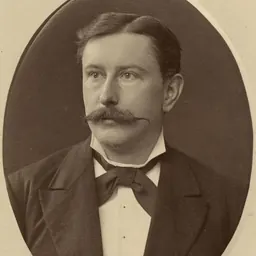
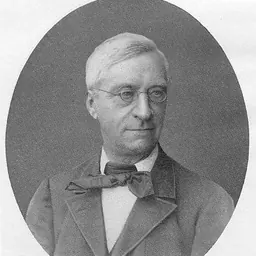
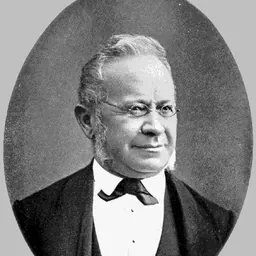
People in Georg Wissowa's life
Named in this biography and alive at the same time



Related people
Same field, nearest in time


Contemporaries
People whose lives overlapped Georg Wissowa's


Frequently asked questions
Who was Georg Wissowa?
German classical philologist (1859–1931)
When was Georg Wissowa born?
Georg Wissowa was born on 17 June 1859 in Nowa Wieś Wrocławska.
When did Georg Wissowa die?
Georg Wissowa died on 11 May 1931 in Halle (Saale).
What was Georg Wissowa's occupation?
Georg Wissowa was a classical philologist and university teacher.
What nationality was Georg Wissowa?
Georg Wissowa was German.
Sources & further reading
Cite this page
APA: Biography.guide. (2026). Georg Wissowa. https://biography.guide/georg-wissowa/
MLA: "Georg Wissowa." Biography.guide, https://biography.guide/georg-wissowa/.
Chicago: "Georg Wissowa." Biography.guide. https://biography.guide/georg-wissowa/.
Data last updated: 2026-09-20 · Spot an error? Report a correction.
Page generated 2026-09-27 05:10 UTC