
About Paul Jahnke
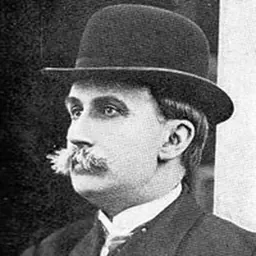
Lived 1893 – 1951 (aged 58). Paul Jahnke was a German politician and resistance fighter.
Paul Jahnke (13 August 1893 – 27 October 1951) was a German leftwing political activist who became a resistance activist against the Nazis.
Life Paul Jahnke was born in Pasewalk, a small town supported by food and tobacco manufacturing, with an important junction on the railway network, a short distance to the west of Stettin in Pomerania. He trained in mechanical engineering but then, in 1916, was conscripted into the army. However, he was released from military services with "50% war injuries".
At the end of 1932 the Party Central Committee appointed him regional policy head for the Munich region, though it is not clear if there was time for him to move to Munich before the Nazi power seizure in January 1933. The new government lost no time in transforming Germany from a multi-party democracy to a one-party dictatorship. After the Reichstag fire in February 1933 political parties (apart from the Nazi party) were banned, and work for them became illegal. In practical terms not all parties were deemed equally anti-Nazi, however, and the authorities targeted the Communist Party for suppression and its activists for persecution. By May 1933 Jahnke was already working "underground" not in Munich but in Bremen as regional policy head ("politischer Leiter des Bezirks"). in the so-called "Richardstrasse-Prozess" ("Richard Street Trial"). In November 1936 he was one of those who moved to Spain in order to fight against the Francoist nationalist forces during the Spanish Civil War. Jahnke remained in Spain till February 1939, fighting as a member of the International Brigades. He also served as a political commissar in Albacete which became the national headquarters of the International Brigades during the Civil War. After that he became "technical head" of a [Communist] party academy. In the event Norway, too, was overrun by the German army, and in 1940 the two of them fled to Sweden, supported by the Nansen Hjelp humanitarian organisation.
In April 1946, one month after their arrival in the Soviet zone, a new political party, the Socialist Unity Party ("Sozialistische Einheitspartei Deutschlands" / SED), was launched under contentious circumstances. There was a widespread belief that the Nazi Party had been able to come to power only because of divisions on the political left, and the new party was presented as a way to prevent a recurrence of that. By 1949 the SED would itself have evolved, within the zone under Soviet administration, to become the ruling party in a new kind of German one-party dictatorship. Jahnke evidently was one of the thousands of Communist Party members who lost no time in signing their party membership across to the new party. He became a party official in East Berlin's Prenzlauer Berg quarter. Next he took a position as Human Resources chief with the Berliner Verlag newspaper publishing business. However, following differences with the managing editor of the Berliner Zeitung, Rudolf Herrnstadt, Jahnke resigned from the publishers and joined the country's quasi-military police service. With the police service he rose to become a chief inspector in Prenzlauer Berg before transferring to a job in charge of the East Berlin Police press department for the East Berlin police presidency. However, during a period of rising economic, political and social tension the East German leadership under Walter Ulbricht, almost all of whom had spent the war years in Moscow drawing up plans for what became the German Democratic Republic, became increasingly suspicious of party comrades who had been exposed to "the west" during the war. A particularly high-profile (and well documented) victim of this development was Paul Merker. Paul Jahnke was one of a number of less well documented highly placed members of the political establishment whose political careers came to an abrupt halt at around the same time. In 1951 Jahnke was relieved of all his politically connected posts and demoted to a positions as works manager at VEB Berliner Aufzugbau, a Berlin-based manufacturer of lifts/elevators.
Under circumstances described by at least one source as "mysterious", on 27 October 1951 Paul Jahnke died in the Police Hospital in East Berlin.
Don’t just read it —
keep it.
Full-length biographies made to live with: read them, listen on the way to work, watch them tonight.
- E-book
- Audio
- Video
Instant download · yours to keep · every purchase keeps this site free
Important facts
People in Paul Jahnke's life
Named in this biography and alive at the same time
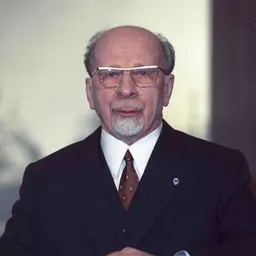


Related people
Same field, nearest in time





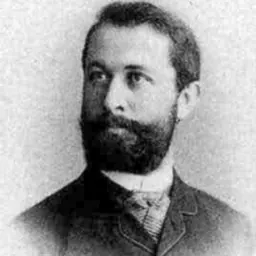
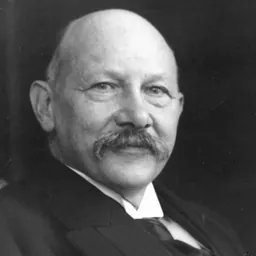
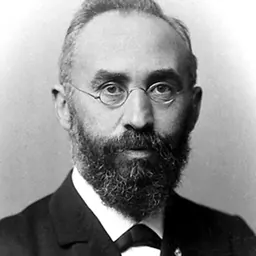
Contemporaries
People whose lives overlapped Paul Jahnke's


Frequently asked questions
Who was Paul Jahnke?
political activist (1893–1951)
When was Paul Jahnke born?
Paul Jahnke was born on 13 August 1893 in Pasewalk.
When did Paul Jahnke die?
Paul Jahnke died on 27 October 1951 in Berlin.
What was Paul Jahnke's occupation?
Paul Jahnke was a politician and resistance fighter.
What nationality was Paul Jahnke?
Paul Jahnke was German.
Sources & further reading
Cite this page
APA: Biography.guide. (2026). Paul Jahnke. https://biography.guide/paul-jahnke/
MLA: "Paul Jahnke." Biography.guide, https://biography.guide/paul-jahnke/.
Chicago: "Paul Jahnke." Biography.guide. https://biography.guide/paul-jahnke/.
Data last updated: 2026-09-20 · Spot an error? Report a correction.
Page generated 2026-09-27 05:33 UTC