
About Paul Hirsch
Lived 1881 – 1951 (aged 70). Paul Hirsch was a German entrepreneur.
Paul Adolf Hirsch (24 February 1881, Frankfurt am Main25 November 1951, Cambridge, England) was a German industrialist. He was also a musician, bibliophile and musicologist who assembled the largest private music library in Europe. The Hirsch Collection is now housed at the British Library. Ferdinand Hirsch founded Hirsch and Company, an iron works, in 1867. After completing school, Paul Hirsch entered the family business, training in England and France, which also broadened his acquaintance with musicians and collectors. They lived first in Beethovenstraße and later at (destroyed in 1944). They had two sons and two daughters.
From 1930 to 1933 Hirsch was vice president of the Frankfurt Chamber of Industry and Commerce. He was also served on the advisory board for export trade, the foreign trade committee of the German Industry and Commerce Association, and chaired the foreign trade office.
Building the collection Hirsch, an accomplished violinist who had studied with Adolf Rebner, In 1922 Hirsch hired musicologist Kathi Meyer (later Meyer-Baer) as a research assistant and opened the library to the public two days a week. Hirsch and Meyer began compiling a catalog of the library contents.
In 1928 and 1929 Hirsch purchased the library of Berlin music critic at auction. With this addition of approximately 15,000 items to the 5,000 he already possessed, he now owned the largest and best-kept private music library in Europe. Housed in a wing of the house on Neue Mainzer Straße, the library had its own concert hall. Hirsch organized over four hundred chamber music evenings, during which he often played first violin in his "house quartet", which on occasion would include his friend Ludwig Rottenberg and Rottenberg's son-in-law Paul Hindemith.
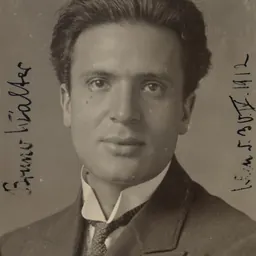
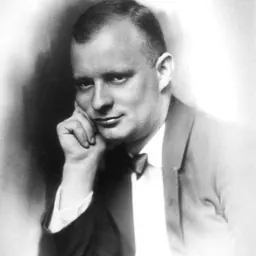
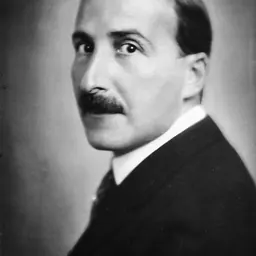
The library was a valuable resource for musicians, musicologists and students. The visitor register for the years 1923 to 1935 lists many people well known in Frankfurt's musical circles, including Licco Amar, Theodor Wiesengrund Adorno, conductor and music critic Artur Holde, Erich Itor Kahn, pianist Emma Lübbecke-Job, singer Carl Rehfuss, Ludwig Rottenberg, Hermann Scherchen, Mátyás Seiber and Helmut Walcha. The list also records visitors who came from as far away as Tokyo. Other friends in Hirsch's musical circle included Wilhelm Furtwängler, Bruno Walter and Stefan Zweig. The only known copy of Francesco Caza's Tractato vulgare de canto figurato (Milan, 1492) The Glückwünschende Kirchen Motetto, also known as Gott ist mein König, Johann Sebastian Bach's earliest published work, printed in nineteen parts at Mühlhausen in 1708. One of only three known copies. Bach's own copy of Clavier-Übung I with corrections in his hand. One of two known copies of the first edition of La Marseillaise, printed in 1792. Edward Elgar's May-Song, with decorations by Walter Crane, one of five or ten copies on vellum, 1901.
Opera is particularly well represented, as noted by King:
Between 1922 and 1934 Hirsch issued facsimile editions of some library items, edited by Johannes Wolf and published by Martin Breslauer. The German National Library has cataloged eleven of these facsimiles and reprints.
Emigration When the National Socialists seized power in 1933, Hirsch's situation became difficult because of his Jewish heritage. The Bibliophile Societies came under the control of the Reich Chamber of Culture, where Jews could no longer hold board positions. In 1934 Hirsch resigned as chair of the Frankfurt Society and joined the Kulturbundes Deutscher Juden.
Early in 1936, Hirsch wrote to his friend Edward J. Dent, Professor of Music at the University of Cambridge, proposing a contractual loan of the music library to the university. Dent helped arrange the loan and facilitated the emigration of Hirsch's family to Cambridge later that year. Despite efforts by Frankfurt mayor Friedrich Krebs to prevent export or to confiscate the music library, Despite his expatriation from Germany in 1938, Hirsch was briefly interned as an enemy alien in 1940, which worsened his already fragile health. This, in combination with his strained finances, led to his decision to sell the music library. created the British Library, which took ownership of the British Museum library.
Selected bibliography Hirsch wrote a number of papers about items in his library. A 75-page catalog of works by W. A. Mozart was published in 1906 in honor of the composer's 150th birthday. In 1928 he published the first volume of the Katalog der Musikbibliothek Paul Hirsch. He also published several articles about the iron business.
In German
The first three volumes were originally published by Martin Breslauer, Berlin, and were reprinted by Morsum/Sylt:Cicero Presse of Hamburg in 1993. The fourth volume, which includes addenda to the first three, was completed in Cambridge with the help of Edith Schnapper and Hirsch's daughters, Irene Hartogs-Hirsch and Renate Schuster. Vol. 1: Theoretische Drucke bis 1800. (1928) Vol. 2: Opern-Partituren. (1930) Vol. 3: Instrumental- und Vokalmusik bis etwa 1830. (1936) Vol. 4: Erstausgaben, Chorwerke in Partitur, Gesamtausgaben, Nachschlagewerke etc. Ergänzungen zu Bd. 1–3. Cambridge University Press (1947)
In English
Don’t just read it —
keep it.
Full-length biographies made to live with: read them, listen on the way to work, watch them tonight.
- E-book
- Audio
- Video
Instant download · yours to keep · every purchase keeps this site free
Important facts
People in Paul Hirsch's life
Named in this biography and alive at the same time




Related people
Same field, nearest in time


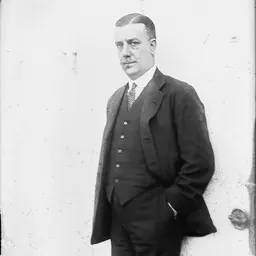

Contemporaries
People whose lives overlapped Paul Hirsch's




Frequently asked questions
Who was Paul Hirsch?
German entrepreneur (1881–1951)
When was Paul Hirsch born?
Paul Hirsch was born on 24 February 1881 in Frankfurt.
When did Paul Hirsch die?
Paul Hirsch died on 25 November 1951 in Cambridge.
What was Paul Hirsch's occupation?
Paul Hirsch was an entrepreneur.
What nationality was Paul Hirsch?
Paul Hirsch was German.
Sources & further reading
· DBpedia: Paul Hirsch (bibliophile)
Cite this page
APA: Biography.guide. (2026). Paul Hirsch. https://biography.guide/paul-hirsch/
MLA: "Paul Hirsch." Biography.guide, https://biography.guide/paul-hirsch/.
Chicago: "Paul Hirsch." Biography.guide. https://biography.guide/paul-hirsch/.
Data last updated: 2026-09-20 · Spot an error? Report a correction.
Page generated 2026-09-27 05:24 UTC