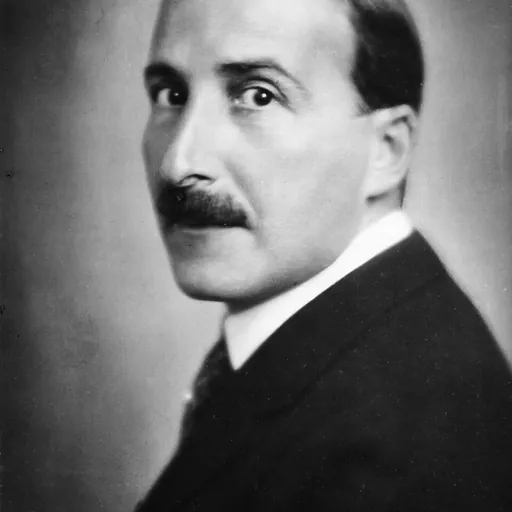
About Stefan Zweig
Lived 1881 – 1942 (aged 60). Stefan Zweig was an Austrian writer, translator, journalist, playwright, poet and literary critic.
Stefan Zweig ( ; ; 28 November 1881 – 22 February 1942) was an Austrian writer. At the height of his literary career in the 1920s and 1930s, he was one of the most widely translated and popular writers in the world.
Born into a Jewish family, Zweig was raised in Vienna, Austria-Hungary. He wrote studies of famous literary figures, such as Honoré de Balzac, Charles Dickens, and Fyodor Dostoevsky in Drei Meister (1920; Three Masters), and of historical events in Decisive Moments in History (1927). He wrote biographies of Joseph Fouché (1929), Mary Stuart (1935) and Marie Antoinette (Marie Antoinette: The Portrait of an Average Woman, 1932), among others. Zweig's best-known fiction includes Letter from an Unknown Woman (1922), Amok (1922), Fear (1925), Confusion of Feelings (1927), Twenty-Four Hours in the Life of a Woman (1927), the psychological novel Ungeduld des Herzens (Beware of Pity, 1939), and The Royal Game (1941).
In 1934, as a result of the Nazi Party's rise in Germany and the establishment of the Ständestaat regime in Austria, Zweig emigrated to England and then, in 1940, moved briefly to New York and then to Brazil, where he settled. In his final years, he would declare himself in love with the country, writing about it in the book Brazil, Land of the Future. Nonetheless, as the years passed Zweig became increasingly disillusioned and despairing at the future of Europe, and he and his wife Lotte were found dead of a barbiturate overdose in their house in Petrópolis on 23 February 1942; they had died the previous day. His work has been the basis for several film adaptations. Zweig's memoir, (The World of Yesterday, 1942), is noted for its description of life during the waning years of the Austro-Hungarian Empire under Franz Joseph I and has been called the most famous book on the Habsburg Empire.
Biography
Zweig was born in Vienna, the son of Ida Brettauer (1854–1938), a daughter of a Jewish banking family, and Moritz Zweig (1845–1926), a wealthy Jewish textile manufacturer. He was related to the Czech writer Egon Hostovský, who described him as "a very distant relative".
Zweig studied philosophy at the University of Vienna, and in 1904 earned a doctoral degree with a thesis on "The Philosophy of Hippolyte Taine". Religion did not play a central role in his education. "My mother and father were Jewish only through accident of birth", Zweig said in an interview. Yet he did not renounce his Jewish faith and wrote repeatedly on Jews and Jewish themes, as in his story Buchmendel. Zweig had a warm relationship with Theodor Herzl, the founder of Zionism, whom he met when Herzl was still literary editor of the Neue Freie Presse, then Vienna's main newspaper; Herzl accepted for publication some of Zweig's early essays. Zweig, a committed cosmopolitan, believed in internationalism and in Europeanism, as The World of Yesterday, his autobiography, makes clear: "I was sure in my heart from the first of my identity as a citizen of the world."
Zweig served in the Archives of the Ministry of War and supported Austria's war efforts through his writings in the Neue Freie Presse and frequently celebrated in his Diaries the capture and massacre of opposing soldiers (for instance, writing about the innumerable citizens killed at gunpoint under the suspicion of espionage that "what filth has made ooze must be cauterized with scalding iron".) Zweig viewed Serbian soldiers as "hordes" and stated that "one feels proud to talk German" when thousands of French soldiers were captured in Metz. Conversely, in his memoirs, The World of Yesterday, Zweig portrays himself in the role of pacifist at the time of the First World War, states that he refused "to participate in those rabid calumnies against the enemy" (although, through his work in the official Neue Freie Presse, Zweig promoted the war propaganda issued from the Austrian crown) and affirms that among his intellectual friends he was "alone" in his stance against the war.
Zweig married Friderike Maria von Winternitz (born Burger) in 1920; they divorced in 1938. As Friderike Zweig she published a book on her former husband after his death. She later also published a picture book on Zweig. They lived in Salzburg in a large but famously inaccessible home later bought by Wolfgang Porsche named "Paschinger Schlössl" which had previously been occupied by Wolfgang Amadeus Mozart’s sister, Nannerl. In September 1939, Zweig married his secretary Elisabet Charlotte "Lotte" Altmann in Bath, England. Zweig's secretary in Salzburg from November 1919 to March 1938 was Anna Meingast (13 May 1881, Vienna – 17 November 1953, Salzburg).
Leaving Europe after the rise of Hitler Penultimate page from the Gestapo's 'Black Book' (Sonderfahndungsliste G.B., page 231 Z) listing Zweig along with his full London address.
Zweig's high profile did not shield him from the threat of persecution as a Jew. In 1934, after Hitler's rise to power in Germany, and following the establishment of the Austrofascist political regime known as the Ständestaat, Zweig left Austria for England, living first in London, and later in Bath, where he remarried. But England was not far enough away from the Nazi threat for Zweig; in 1940 he and his second wife crossed the Atlantic to the United States, settling in New York City. It turned out that Zweig was correct to fear being targeted by the Nazis, even in England: as part of the preparations for their invasion of England – known as Operation Sealion – the SS had prepared a list of persons in the UK who were to be detained immediately. This so-called Black Book came to light after the war; Zweig was listed on page 231, including his London address.
The Zweigs lived only briefly in the US: for two months as guests of Yale University in New Haven, Connecticut, then renting a house in Ossining, New York. On 22 August 1941, they moved again to Petrópolis, 68 kilometres north of Rio de Janeiro. There, he wrote the book Brazil, Land of the Future and developed a close friendship with Chilean poet Gabriela Mistral. Zweig, feeling increasingly depressed about the situation in Europe and the future for humanity, wrote in a letter to author Jules Romains, "My inner crisis consists in that I am not able to identify myself with the me of passport, the self of exile". He had been despairing at the future of Europe and its culture. He wrote: "I think it better to conclude in good time and in erect bearing a life in which intellectual labour meant the purest joy and personal freedom the highest good on Earth". On 23 February 1942, the Zweigs were found dead of a barbiturate overdose in their house in the city of Petrópolis, having taken their own lives. Their bodies were found holding hands. thumb Barbiturates from Bayer in glass tubes with cork caps - 10 tablets probably produced around 1940The Zweigs' house in Brazil was later turned into a cultural centre and is now known as Casa Stefan Zweig.
Work Zweig was a prominent writer in the 1920s and 1930s and a friend of Arthur Schnitzler and Sigmund Freud. He was extremely popular in the United States, South America, and Europe, and remains so in continental Europe, His fame in America had diminished until the 1990s, when an effort began on the part of several publishers (notably Pushkin Press, Hesperus Press, and The New York Review of Books) to get Zweig back into print in English. Plunkett Lake Press has reissued electronic versions of his non-fiction works. Since that time there has been a marked resurgence, and many of Zweig's books are back in print.
Critical opinion of his oeuvre is strongly divided between those who praise his humanism, simplicity, and effective style, and those who criticize his writing as poor, lightweight, and superficial.
Zweig is best known for his novellas (notably Schachnovelle (tr. The Royal Game and Chess Story, 1941), Amok (1921), and Letter from an Unknown Woman (Der Brief einer Unbekannten, 1922), which was filmed in 1948 by Max Ophüls), novels (Ungeduld des Herzens 1939, tr. Beware of Pity), Confusion of Feelings, and the posthumously published The Post Office Girl) and biographies (notably of Erasmus of Rotterdam, Ferdinand Magellan, and Mary, Queen of Scots, and also the posthumously published Balzac). He was introduced to American readers in 1919 by a pirated edition of The Burning Secret attributed to "Steven Branch", a literal translation of his name and apparently a concession to lingering anti-German sentiment. His 1932 biography of Queen Marie Antoinette was adapted by Metro-Goldwyn-Mayer as a 1938 film starring Norma Shearer.
Zweig's memoir, The World of Yesterday, was completed in 1942 one day before he died by suicide. It has been widely discussed as a record of "what it meant to be alive between 1881 and 1942" in central Europe; the book has attracted both critical praise
Zweig enjoyed a close association with Richard Strauss and provided the libretto for Die schweigsame Frau (The Silent Woman). Strauss famously defied the Nazi regime by refusing to sanction the removal of Zweig's name from the programme for the work's première on 24 June 1935 in Dresden. As a result, Goebbels refused to attend as planned, and the opera was banned after three performances. Zweig later collaborated with Joseph Gregor to provide Strauss with the libretto for one other opera, Friedenstag, in 1938. At least one other work by Zweig received a musical setting: the pianist and composer Henry Jolles, who like Zweig had fled to Brazil to escape the Nazis, composed a song, "Último poema de Stefan Zweig", based on "Letztes Gedicht", which Zweig wrote on the occasion of his 60th birthday in November 1941. During his stay in Brazil, Zweig wrote Brasilien, Ein Land der Zukunft (Brazil, A Land of the Future) which consisted in a collection of essays on the history and culture of his newly adopted country.
Zweig was a passionate collector of manuscripts. He corresponded at length with Hungarian musicologist Gisela Selden-Goth, often discussing their shared interest in collecting original music scores. One particularly precious item is Mozart's "Verzeichnüß aller meiner Werke" – that is, the composer's own handwritten thematic catalogue of his works.
The 1993–1994 academic year at the College of Europe was named in his honour.
Zweig has been credited with being one of the novelists who contributed to the emergence of what would later be called the Habsburg myth.
Don’t just read it —
keep it.
Full-length biographies made to live with: read them, listen on the way to work, watch them tonight.
- E-book
- Audio
- Video
Instant download · yours to keep · every purchase keeps this site free
Important facts
People in Stefan Zweig's life
Named in this biography and alive at the same time





Related people
Same field, nearest in time
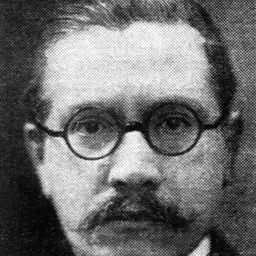



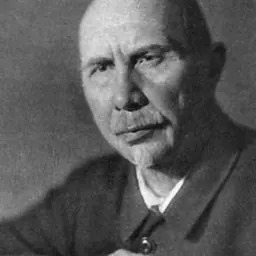

Contemporaries
People whose lives overlapped Stefan Zweig's
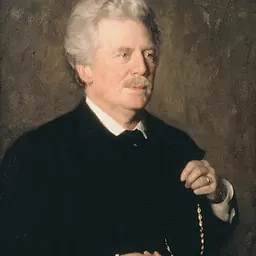
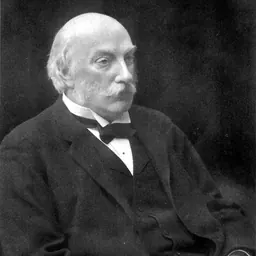

Frequently asked questions
Who was Stefan Zweig?
Austrian writer (1881–1942)
When was Stefan Zweig born?
Stefan Zweig was born on 28 November 1881 in Vienna.
When did Stefan Zweig die?
Stefan Zweig died on 23 February 1942 in Petrópolis.
What was Stefan Zweig's occupation?
Stefan Zweig was a writer, translator, journalist, playwright, poet and literary critic.
What nationality was Stefan Zweig?
Stefan Zweig was Austrian.
Sources & further reading
Cite this page
APA: Biography.guide. (2026). Stefan Zweig. https://biography.guide/stefan-zweig/
MLA: "Stefan Zweig." Biography.guide, https://biography.guide/stefan-zweig/.
Chicago: "Stefan Zweig." Biography.guide. https://biography.guide/stefan-zweig/.
Data last updated: 2026-09-20 · Spot an error? Report a correction.
Page generated 2026-09-27 05:09 UTC