
Paul Hindemith
German composer
About Paul Hindemith
Lived 1895 – 1963 (aged 68). Paul Hindemith was a German and American classical composer, conductor, professor of music composition, musicologist, music educator and music theorist.
Paul Hindemith ( ; ; 16 November 189528 December 1963) was a German and American composer, music theorist, teacher, violist, and conductor. He founded the Amar Quartet in 1921, touring extensively in Europe. As a composer, he became a major advocate of the Neue Sachlichkeit (New Objectivity) style of music in the 1920s, with compositions such as Kammermusik, including works with viola and viola d'amore as solo instruments in a neo-Bachian spirit. His other notable compositions include the song cycle Das Marienleben, Der Schwanendreher for viola and orchestra (1935), the opera Mathis der Maler (1938) and the symphony Mathis der Maler (1934), the Symphonic Metamorphosis of Themes by Carl Maria von Weber (1943), and the oratorio When Lilacs Last in the Dooryard Bloom'd (1946), a requiem based on Walt Whitman's poem. Hindemith and his wife emigrated to Switzerland and the United States ahead of World War II, after worsening difficulties with the Nazi German regime. In his later years, he conducted and recorded much of his own music.
Most of Hindemith's compositions are anchored by a foundational tone, and use musical forms and counterpoint and cadences typical of the Baroque and Classical traditions. His harmonic language is more modern, freely using all 12 notes of the chromatic scale within his tonal framework, as detailed in his three-volume treatise, The Craft of Musical Composition.
Life and career
Paul Hindemith was born in Hanau, near Frankfurt, the eldest child of the painter and decorator Robert Hindemith from Lower Silesia and his wife Marie (née Warnecke). He played second violin in the Rebner String Quartet from 1914.
After his father's 1915 death in World War I, Hindemith was conscripted into the Imperial German Army in September 1917 and sent to a regiment in Alsace in January 1918. There he was assigned to play bass drum in the regiment band, and also formed a string quartet. In May 1918 he was deployed to the front in Flanders, where he served as a sentry; his diary has him "surviving grenade attacks only by good luck", according to New Grove Dictionary.
As a composer, he became a major advocate of the Neue Sachlichkeit (New Objectivity) style of music in the 1920s, with compositions such as Kammermusik. Reminiscent of Bach's Brandenburg Concertos, they include works with viola and viola d'amore as solo instruments in a neo-Bachian spirit. In 1922, some of his pieces were played in the International Society for Contemporary Music festival at Salzburg, which first brought him to the attention of an international audience. The next year, he composed the song cycle Das Marienleben (The Life of Mary) and began to work as an organizer of the Donaueschingen Festival, where he programmed works by several avant-garde composers, including Anton Webern and Arnold Schoenberg. In 1927 he was appointed Professor at the Berliner Hochschule für Musik in Berlin. Hindemith wrote the music for Hans Richter's 1928 avant-garde film Ghosts Before Breakfast (Vormittagsspuk) and also acted in the film; the score and original film were later burned by the Nazis. In 1929, Hindemith played the solo part in the premiere of William Walton's viola concerto, after Lionel Tertis, for whom it was written, turned it down.
On 15 May 1924, Hindemith married the actress and singer Gertrud (Johanna Gertrude) Rottenberg (1900–1967). The marriage was childless.
The Nazis' relationship to Hindemith's music was complicated. Some condemned his music as "degenerate" (largely based on his early, sexually charged operas such as Sancta Susanna). In December 1934, during a speech at the Berlin Sports Palace, Germany's Minister of Propaganda Joseph Goebbels publicly denounced Hindemith as an "atonal noisemaker". Other officials working in Nazi Germany, though, thought that he might provide Germany with an example of a modern German composer, as, by this time, he was writing music based in tonality, with frequent references to folk music. The conductor Wilhelm Furtwängler's defence of Hindemith, published in 1934, takes this line. The controversy around his work continued throughout the thirties, with Hindemith falling in and out of favour with the Nazis.
During the 1930s, Hindemith visited Cairo and also Ankara several times. He accepted an invitation from the Turkish government to oversee the creation of a music school in Ankara in 1935, after Goebbels had pressured him to request an indefinite leave of absence from the Berlin Academy.
Toward the end of the 1930s, Hindemith made several tours of America as a viola and viola d'amore soloist. In 1937 he was one of the founding faculty at Berkshire Music Center at Tanglewood, established by Serge Koussevitzky as an institute for advanced music study and the summer home of the Boston Symphony Orchestra. While there one of his students was Walter Franklin Anderson.
He emigrated to Switzerland in 1938, partly because his wife was of part-Jewish ancestry; "it was primarily Hindemith's conflict with the artistic policies of the Third Reich, however, that determined his decision to leave."
At the same time that he was codifying his musical language, Hindemith's teaching and compositions began to be affected by his theories, according to critics such as Ernest Ansermet. Arriving in the U.S. in 1940, he taught primarily at Yale University, where he founded the Yale Collegium Musicum. He had such notable students as Lukas Foss, Graham George, Andrew Hill, Norman Dello Joio, Mel Powell, Yehudi Wyner, Harold Shapero, Hans Otte, Ruth Schönthal, Samuel Adler, Frank Lewin, Leonard Sarason, Fenno Heath, Mitch Leigh, and George Roy Hill. Hindemith also taught at the University at Buffalo, Cornell University, and Wells College. During this time he gave the Charles Eliot Norton Lectures at Harvard, from which the book A Composer's World (1952) was extracted. Hindemith had a long friendship with Erich Katz, whose compositions were influenced by him. Also among Hindemith's students were the future rocket scientist Wernher von Braun and the composers Franz Reizenstein, Harald Genzmer, Oskar Sala, Arnold Cooke, Robert Strassburg, and dozens of other notables.
Hindemith (left) received the Wihuri Sibelius Prize in 1955 from Antti Wihuri. Hindemith became a U.S. citizen in 1946, but returned to Europe in 1953, living in Zürich and teaching at the university there until he retired from teaching in 1957.
Hindemith received the Wihuri Sibelius Prize in 1955.
Despite a prolonged decline in his physical health, Hindemith composed almost until his death. He died in Frankfurt of pancreatitis, aged 68. He and his wife were buried in the cemetery in La Chiésaz, Vaud, Switzerland. but is quite different from the works by Igor Stravinsky labeled with that term, owing more to the contrapuntal language of Johann Sebastian Bach and Max Reger than the Classical clarity of Mozart.
The new style can be heard in the series of works called Kammermusik (Chamber Music) from 1922 to 1927. Each of these pieces is written for a different small instrumental ensemble, many of them very unusual. Kammermusik No. 6, for example, is a concerto for the viola d'amore, an instrument that has not been in wide use since the baroque period, but which Hindemith himself played. He continued to write for unusual groups of instruments throughout his life, producing (for example) a trio for viola, heckelphone and piano (1928), seven trios for three trautoniums (1930), a sonata for double bass, and a concerto for trumpet, bassoon, and strings (both in 1949).
In the 1930s Hindemith began to write less for chamber music groups, and more for large orchestral forces. He wrote his opera Mathis der Maler, based on the life of the painter Matthias Grünewald, in 1933–1935. This opera is rarely staged, though the New York City Opera did so in 1995. In 2021, Naxos released a 2012 Theater an der Wien production on DVD. The opera combines the neoclassicism of Hindemith's earlier works with folk song. As a preliminary stage of composing the opera, Hindemith wrote a purely instrumental symphony also called Mathis der Maler, which is one of his most frequently performed works. In the opera, some portions of the symphony appear as instrumental interludes; others are elaborated in vocal scenes.
Hindemith wrote Gebrauchsmusik (Music for Use)—compositions intended to have a social or political purpose and sometimes written to be played by amateurs. The concept was inspired by Bertolt Brecht. An example of this is Hindemith's Trauermusik (Funeral Music), written in January 1936. He was preparing the London premiere of his viola concerto Der Schwanendreher when he heard news of the death of George V. He quickly wrote Trauermusik for solo viola and string orchestra in tribute to the late king, and the premiere was given the day after the king's death. Other examples of Hindemith's Gebrauchsmusik include: the Plöner Musiktage (1932), a series of pieces written for a day of community music-making in the city of Plön, culminating in an evening concert by grammar-school students and teachers. a Scherzo for viola and cello (1934), written in several hours during a series of recording sessions as a "filler" for an unexpected blank side of a 78 rpm album and recorded immediately upon its completion. Wir bauen eine Stadt (We're Building a City), an opera for eight-year-olds (1930).
Hindemith's most popular work, both on record and in the concert hall, is probably the Symphonic Metamorphosis of Themes by Carl Maria von Weber, written in 1943. It takes melodies from various works by Carl Maria von Weber, mainly piano duets, but also one from the overture to his incidental music for Turandot (Op. 37/J. 75), and transforms and adapts them so that each movement of the piece is based on one theme.
In 1951, Hindemith completed his Symphony in B-flat for Band. Scored for concert band, it was written for the U.S. Army Band "Pershing's Own". Hindemith premiered it with that band on 5 April that year. Its second performance was given by the Boulder Symphonic Band at the University of Colorado, conducted by Hugh McMillan. The piece is representative of Hindemith's late works, exhibiting strong contrapuntal lines throughout, and is a cornerstone of the band repertoire. He recorded it in stereo with members of the Philharmonia Orchestra for EMI in 1956.
Musical system
Most of Hindemith's music employs a unique system that is tonal but non-diatonic, often notated without a traditional key signature. Like most tonal music, it is centred on a tonic and modulates from one tonal centre to another, but it "attempts ... the free use of all the twelve tones of the chromatic scale", rather than relying on a diatonic scale as a restricted subset of these notes. He even rewrote some of his music after developing this system. One of the core features of Hindemith's system is a ranking of all musical intervals of the 12-tone equally tempered scale, from the most consonant to the most dissonant. He classifies chords in six categories, on the basis of dissonance, whether they contain a tritone, and whether they clearly suggest a root or tonal centre. His philosophy also encompassed melody—he strove for melodies that do not clearly outline major or minor triads.
In the late 1930s Hindemith wrote an instructional treatise in three volumes, The Craft of Musical Composition, which lays out this system in great detail. He also advocated this system as a means of understanding and analyzing the harmonic structure of other music, claiming that it has a broader reach than the traditional Roman numeral approach to chords (an approach strongly tied to diatonic scales). In the final chapter of Book 1, Hindemith seeks to illustrate the wide-ranging relevance and applicability of his system, analyzing musical examples from the medieval to the contemporary. These analyses include the early Gregorian melody Dies irae, compositions by Guillaume de Machaut, J. S. Bach, Richard Wagner, Igor Stravinsky, Arnold Schoenberg, and a composition of his own.
Hindemith's 1942 piano work Ludus Tonalis contains twelve fugues, in the manner of Johann Sebastian Bach, using traditional devices like inversion, diminution, augmentation, retrogradation, stretto, etc. Each fugue is connected by an interlude to the next, during which the music moves from the key of the last to its successor. The order of the keys follows Hindemith's ranking of musical intervals around the tonal center of C.
Another traditional aspect of classical music that Hindemith retains is the idea of dissonance resolving to consonance. Much of Hindemith's music begins in consonant territory, progresses into dissonant tension, and resolves in full, consonant chords and cadences. This is especially apparent in his Concert Music for Strings and Brass (1930).
Reputation Theodor W. Adorno's criticisms of Hindemith at times "verged on the apoplectic". While critics during his lifetime were divided, Hindemith was generally characterized in the mainstream as a "modern master" of the likes of Bartók, Stravinsky, and Shostakovich, and his theoretical contributions were appraised highly. Leonard Bernstein called Hindemith "a worthy successor to the long line of great German composers that included Bach, Beethoven, Brahms, and Wagner" and perhaps even "the last of that traditional line". Hindemith's reputation as a composer and theorist declined in his later years, Adorno was not the first or only critic to affiliate Hindemith's perceived conservatism with fascist ideology: as early as 1939, the modernist Ernst Krenek said there was "an unbroken line" leading from Hindemith's works to the fanfares of the Hitler Youth.
Denunciation of Hindemith's perceived departure from (if not betrayal of) radicalism and experimentation in the 1930s continued in contemporary criticism. In 2009, Richard Taruskin fiercely criticized Hindemith's work in Switzerland and the U.S., particularly his "disingenuous" reflections on and modifications of his earlier works after he entered exile. In 1988, Lionel Salter wrote that Hindemith's reputation was "recovering", but critics still generally agree that Hindemith lost his canonical status.
Awards and honors
Howland Memorial Prize (1940), awarded by Yale University Elected to American Academy of Arts and Sciences (1940) Bach Prize of the Free and Hanseatic City of Hamburg (1951) Order Pour le Mérite (1952) Wihuri Sibelius Prize (1955) Elected to the American Philosophical Society (1962) Balzan Prize (1963)
Honorary doctorates Philadelphia Academy of Music (1945) He conducted some of his own music in a series of recordings for EMI with the Philharmonia Orchestra and for Deutsche Grammophon with the Berlin Philharmonic Orchestra, which have been digitally remastered and released on CD. The Violin Concerto was also recorded by Decca/London, with the composer conducting the London Symphony Orchestra and David Oistrakh as soloist. Everest Records issued a recording of Hindemith's postwar When Lilacs Last in the Dooryard Bloom'd ("A Requiem for Those We Love") on LP, conducted by Hindemith. A stereo recording of Hindemith conducting the requiem with the New York Philharmonic Orchestra, with Louise Parker and George London as soloists, was made for Columbia Records in 1963 and later issued on CD. He also appeared on television as a guest conductor of the Chicago Symphony Orchestra's nationally syndicated "Music from Chicago" series; the performances have been released by VAI on home video. A complete collection of Hindemith's orchestral music was recorded by German and Australian orchestras, all conducted by Werner Andreas Albert and released on the CPO label.
Hindemith and George Balanchine George Balanchine commissioned a piece for piano and strings from Hindemith, apparently at least in part for Balanchine (a skilled pianist) to play during musical get-togethers with friends. Hindemith may have based some of the material on music he wrote for an abandoned project with the choreographer Léonid Massine. The music received its public premiere in Boston in 1944, with Lukas Foss as soloist. In 1946, Balanchine's ballet to the score premiered as part of the inaugural program of Ballet Society; the ballet was initially presented in elaborate costumes, but since 1951 has been performed in practice clothes.
In 1978, the New York City Ballet premiered Kammermusik No. 2, a ballet by Balanchine to the second of Hindemith's 1920s Kammermusik series.
Hindemithon Festival An annual festival of Hindemith's music has been held at William Paterson University in Wayne, New Jersey, from 2003 through at least 2017. It features student, staff, and professional musicians performing a range of Hindemith's works.
Don’t just read it —
keep it.
Full-length biographies made to live with: read them, listen on the way to work, watch them tonight.
- E-book
- Audio
- Video
Instant download · yours to keep · every purchase keeps this site free
Important facts
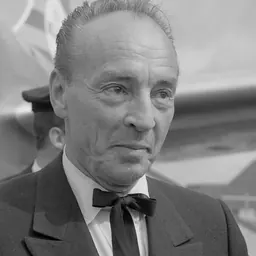
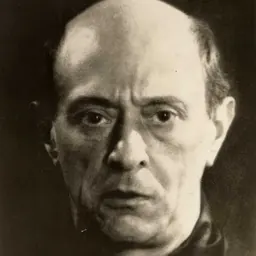
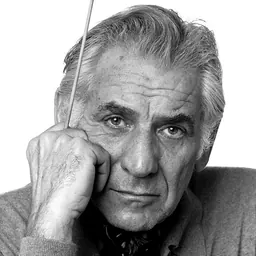
People in Paul Hindemith's life
Named in this biography and alive at the same time



Related people
Same field, nearest in time



Contemporaries
People whose lives overlapped Paul Hindemith's
Frequently asked questions
Who was Paul Hindemith?
German composer (1895–1963)
When was Paul Hindemith born?
Paul Hindemith was born on 16 November 1895 in Hanau.
When did Paul Hindemith die?
Paul Hindemith died on 28 December 1963 in Frankfurt.
What was Paul Hindemith's occupation?
Paul Hindemith was a classical composer, conductor, professor of music composition, musicologist, music educator and music theorist.
What nationality was Paul Hindemith?
Paul Hindemith was German and American.
Sources & further reading
Cite this page
APA: Biography.guide. (2026). Paul Hindemith. https://biography.guide/paul-hindemith/
MLA: "Paul Hindemith." Biography.guide, https://biography.guide/paul-hindemith/.
Chicago: "Paul Hindemith." Biography.guide. https://biography.guide/paul-hindemith/.
Data last updated: 2026-09-25 · Spot an error? Report a correction.
Page generated 2026-09-27 05:13 UTC