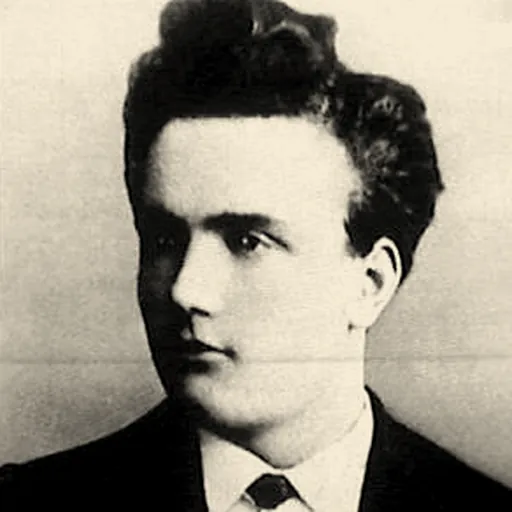
About Paul Gottlieb Nipkow
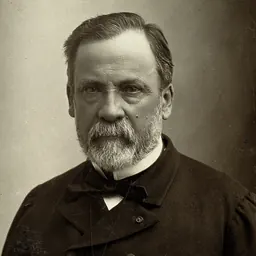
Lived 1860 – 1940 (aged 80). Paul Gottlieb Nipkow was a German inventor and physicist.
Paul Julius Gottlieb Nipkow (; 22 August 1860 – 24 August 1940) was a German electrical engineer and inventor. He invented the Nipkow disk, which laid the foundation of television, since his disk was a fundamental component in the first televisions. Hundreds of stations experimented with television broadcasting using his disk in the 1920s and 1930s, until it was superseded by all-electronic systems in the 1940s.
Nipkow has been called the "father of television", together with other early figures of television history like Karl Ferdinand Braun.
The first regular television service in the world, Fernsehsender Paul Nipkow, was named in his honour.
Beginnings Nipkow was born in Lauenburg (now Lębork) in the Prussian province of Pomerania, now part of Poland. While at school in neighbouring Neustadt (now Wejherowo), in the province of West Prussia, Nipkow experimented in telephony and the transmission of moving pictures. After graduation, he went to Berlin in order to study science. He studied physiological optics with Hermann von Helmholtz, and electro-physics with Adolf Slaby.
Nipkow disk
While still a student he conceived an "electric telescope", mainly known for the idea of using a spiral-perforated disk (Nipkow disk), to divide a picture into a linear sequence of points. Accounts of its invention state that the idea came to him while sitting alone at home with an oil lamp on Christmas Eve, 1883. Alexander Bain had transmitted images telegraphically in the 1840s but the Nipkow disk improved the encoding process.
He applied to the imperial patent office in Berlin for a patent covering an "electric telescope" for the "electric reproduction of illuminating objects", in the category "electric apparatuses". This was granted on 15 January 1885, retroactive to 6 January 1884. It is not known whether Nipkow ever attempted a practical realization of this disk, but one may assume that he himself never constructed one. The patent lapsed after 15 years owing to lack of interest. Nipkow took up a position as a construction engineer at an railway signal factory in Berlin-Borsigwalde and did not continue work on the broadcasting of pictures.
First TV systems The first television broadcasts used an optical-mechanical picture scanning method, the method that Nipkow had helped create with his disk; he could claim credit for the invention. Nipkow recounted his first sight of television at a Berlin radio show in 1928: "The televisions stood in dark cells. Hundreds stood and waited patiently for the moment at which they would see television for the first time. I waited among them, growing ever more nervous. Now for the first time, I would see what I had devised 45 years ago. Finally, I reached the front row; a dark cloth was pushed to the side, and I saw before me a flickering image, not easy to discern." The system demonstrated was from the company Telefunken.
From the early 1930s, total electronic picture scanning, based on the work of Manfred von Ardenne, became increasingly prevalent, and Nipkow's invention was no longer essential to the further development of television.
"Paul Nipkow" Transmitter The world's first regular television service, started in Berlin in 1935, was named Fernsehsender "Paul Nipkow" after Nipkow – the "spiritual father" of the core element of first-generation television technology. He became honorary president of the "television council" of the "Imperial Broadcasting Chamber". Nipkow's glory was used by Hitler and the Nazi government as a tool of National Socialist scientific propaganda. Nipkow died in Berlin in 1940 two days after his 80th birthday and had an official ceremony organised by the Nazi government.
Don’t just read it —
keep it.
Full-length biographies made to live with: read them, listen on the way to work, watch them tonight.
- E-book
- Audio
- Video
Instant download · yours to keep · every purchase keeps this site free
Important facts
People in Paul Gottlieb Nipkow's life
Named in this biography and alive at the same time



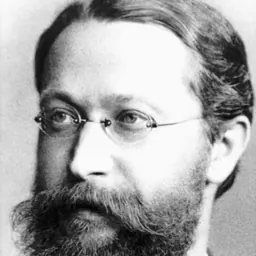
Related people
Same field, nearest in time


Contemporaries
People whose lives overlapped Paul Gottlieb Nipkow's

Frequently asked questions
Who was Paul Gottlieb Nipkow?
German technician and inventor (1860–1940)
When was Paul Gottlieb Nipkow born?
Paul Gottlieb Nipkow was born on 22 August 1860 in Lębork.
When did Paul Gottlieb Nipkow die?
Paul Gottlieb Nipkow died on 24 August 1940 in Berlin.
What was Paul Gottlieb Nipkow's occupation?
Paul Gottlieb Nipkow was an inventor and physicist.
What nationality was Paul Gottlieb Nipkow?
Paul Gottlieb Nipkow was German.
Sources & further reading
· Wikipedia: Paul Gottlieb Nipkow
· DBpedia: Paul Gottlieb Nipkow
Cite this page
APA: Biography.guide. (2026). Paul Gottlieb Nipkow. https://biography.guide/paul-gottlieb-nipkow/
MLA: "Paul Gottlieb Nipkow." Biography.guide, https://biography.guide/paul-gottlieb-nipkow/.
Chicago: "Paul Gottlieb Nipkow." Biography.guide. https://biography.guide/paul-gottlieb-nipkow/.
Data last updated: 2026-09-21 · Spot an error? Report a correction.
Portrait: Wikimedia Commons · author & licence
Page generated 2026-09-27 04:58 UTC