
About Paul Désiré Trouillebert
Lived 1829 – 1900 (aged 70–71). Paul Désiré Trouillebert was a French painter.
Paul Désiré Trouillebert (1829 in Paris, France – 28 June 1900 in Paris, France) was a prominent French Barbizon School painter of the mid to late nineteenth century, with works in a wide range of museums and public collections, including the Musée d'Orsay, the Hermitage Museum, and The Metropolitan Museum of Art. Trouillebert was a prolific artist, with over 1200 works included in the authoritative Marumo-Maier-Müllerschön Catalogue Raisonné of painted works (published in 2004), with more having been identified and added to the Maier-Müllerschön online supplement to the catalogue since 2004. While the majority of the catalogued works are landscapes, many portraits and orientalist genre pictures are included as well.
Life and career
Trouillebert is considered a portrait, and a genre and landscape painter from the French Barbizon School. He was a student of Ernest Hébert (1817–1908) and Charles Jalabert (1819–1901). He made his debut at the Salon of 1865, at the age of 36, and between 1865 and 1872, he exhibited at least one portrait at the Salon.
By the 1860s, his interests were shifting towards landscape painting. thumb A Pond Near Nangis, 1880-95 Metropolitan Museum of ArtAt the Salon of 1869, he exhibited Au Bois Rossignolet, a landscape painting that was more aligned with his interest in landscapes and received critical acclaim for it. He went on to execute many landscapes that are very close to Corot's late manner of painting. Indeed, the artist received added attention when one of his landscapes was sold to Alexandre Dumas’s son as a work by Corot in a celebrated forgery incident. In order to increase the sale value of the work, Trouillebert's signature had been erased and replaced with Corot's signature. In reality, while Trouillebert's landscapes are very similar to Corot, they exhibit their own distinct style.
Trouillebert never confined himself to any single genre. He was a skilled at portraits, landscapes, still-lifes and other subject matter. He was also interested in Orientalist themes and produced paintings of Eastern nudes. He painted a portrait of a half-nude young woman in an ancient Egyptian style of the Greco-Roman Dynasty. He called it Servante du harem (The Harem Servant Girl), now in the collection of the Musée des Beaux-Arts de Nice. In 1884, his painting of nudes, The Bathers was well received by the Paris Salon.
Artistic legacy
The French art historian René Édouard-Joseph, in his Dictionnaire Biographique des Artistes Contemporains: 1910-1930, summed up Trouillebert's legacy:
Calling card pictures
At some point in his mature career, Trouillebert had a habit of creating small still-life pictures featuring a bouquet of violets (a common symbol for faithfulness or love, which enjoyed a faddish popularity in the mid to late-19th century), and one of his own calling cards, or "cartes de visite", as gifts for patrons or friends. thumb Bouquet of Violets With a Calling Card, c. 1880, Musée Fesch, Ajaccio, FranceOf the 22 currently-known examples, 14 are documented in the Marumo-Maier-Müllerschön Catalogue Raisonné, one of which is in the collection of the Musée Fesch in Ajaccio, France. Three more are documented in the Maier-Müllerschön online supplement to the catalogue raisonné (one of which was formerly in the collection of the Baudet family of Amiens, patrons of Trouillebert ); one was sold at auction in 2025 by Schuler Auktionen, Zurich (to be added to the online catalogue); one was seen in 2026 in the Provençe antiques trade; and one more is in the private Ucciani collection. thumb Bouquet de Violettes Aves Une Carte de Visite, c. 1880, Private collection There was likely a Victorian-era convention at work in the way that all the calling cards in the pictures are intentionally folded, which corner having been folded conveying a coded social message. The conventions at the time could vary by region or over time, but were generally:
Top Right Corner Folded: A personal visit made in person (not by a servant).
Top Left Corner Folded: Congratulations or felicitations.
Bottom Left Corner Folded: Condolences or sympathy.
Bottom Right Corner Folded: Taking leave, often for a long journey (P.P.C. - pour prendre congé).
No Fold: Delivered by a servant, indicating the sender did not call personally.
Based on this code, 18 of the extant versions of the pictures depict bottom right folds (taking leave), and four depict bottom right folds (condolences), including the Musée Fesch version and the picture in the Ucciani collection.
Posthumous exhibition Prior to his death, Trouillebert pre-arranged a posthumous exhibition and sale of a collection of his works that were still in his possession, which took place in 1901 at the Galerie des Artistes Modernes, Paris, from March 18–30. The artist's friend Charles Chincholle wrote a forward to the catalogue, in which he noted the artist's habit of retaining some works for his own collection and sometimes making additional, personal versions of pictures to keep for himself:
block indent|1='"What should matter to a painter," he often said, "is to paint." And, when he had painted more than the canvas intended for his friend, he would hasten to back, like an old collector, to hide in a drawer where he had no access, the second painting of which he was particularly fond.'
Selected works
Still Life With Plums, Norton Simon Museum, Pasadena Cleopatra & the Dying Messenger, Lightner Museum, St. Augustine, Florida, 1873. Bord De Rivière, Musée Fabre, Montpellier Femme en robe bleue rêvant. Private collection Chemin au bord du lac de Nantua, Galerie Gary-Roche Deux lavanderies sous les bouleaux, Van Ham Fine Art Auctions (Van Ham Kunstauktionen) La Gardienne de Troupeau, Frances Aronson Fine Art, LLC Le Loir et la Flêche, Stoppenbach & Delestre Le Pêcheur et le Bateau, Daphne Alazraki Mme. Trouillebert, The Darvish Collection, Inc. Au Bord de La Loire à Montsoreau Diana Chasseresse (Diana the Huntress), private collection.
Don’t just read it —
keep it.
Full-length biographies made to live with: read them, listen on the way to work, watch them tonight.
- E-book
- Audio
- Video
Instant download · yours to keep · every purchase keeps this site free
Important facts
People in Paul Désiré Trouillebert's life
Named in this biography and alive at the same time



Related people
Same field, nearest in time
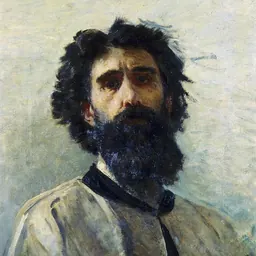
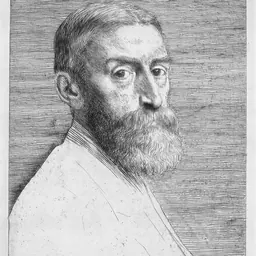



Contemporaries
People whose lives overlapped Paul Désiré Trouillebert's



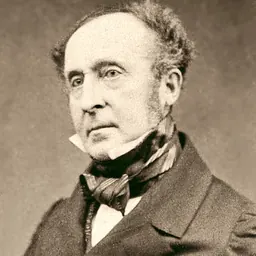
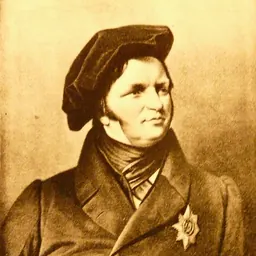
Frequently asked questions
Who was Paul Désiré Trouillebert?
French painter (1831-1900)
When was Paul Désiré Trouillebert born?
Paul Désiré Trouillebert was born in 1829 in Paris.
When did Paul Désiré Trouillebert die?
Paul Désiré Trouillebert died on 28 June 1900 in Paris.
What was Paul Désiré Trouillebert's occupation?
Paul Désiré Trouillebert was a painter.
What nationality was Paul Désiré Trouillebert?
Paul Désiré Trouillebert was French.
Sources & further reading
· Wikipedia: Paul Désiré Trouillebert
Cite this page
APA: Biography.guide. (2026). Paul Désiré Trouillebert. https://biography.guide/paul-desire-trouillebert/
MLA: "Paul Désiré Trouillebert." Biography.guide, https://biography.guide/paul-desire-trouillebert/.
Chicago: "Paul Désiré Trouillebert." Biography.guide. https://biography.guide/paul-desire-trouillebert/.
Data last updated: 2026-09-20 · Spot an error? Report a correction.
Page generated 2026-09-27 05:19 UTC