
About Paul Bloom
Born 1963. Paul Bloom is a Canadian and American psychologist.
Paul Bloom (born December 24, 1963) is a Canadian-American psychologist. He is the Brooks and Suzanne Ragen Professor Emeritus of psychology and cognitive science at Yale University and Professor of Psychology at the University of Toronto. His research explores how children and adults understand the physical and social world, with special focus on language, morality, religion, fiction, and art.
Early life, family and education Bloom was born into a Jewish family in Montreal, Quebec.
He attended McGill University and earned his Bachelor of Arts in psychology. He attended graduate school at the Massachusetts Institute of Technology, where he earned a PhD in cognitive psychology under the supervision of Susan Carey.
Bloom has held the Harris Visiting Professorship at the Harris Center for Developmental Studies at the University of Chicago (2002); the Nijmegen Lectureship at the Max Planck Institute at the University of Nijmegen (2006); the Templeton Lectureship at Johns Hopkins University (2007–8); and the Visiting Distinguished SAGE Fellowship at the UCSB SAGE Center for the Study of Mind (2010).
He has had regular appearances on National Public Radio and Bloggingheads.tv.
Author Bloom is the author of seven books and editor or co-editor of three others. His research has appeared in Nature and Science, and his popular writing has appeared in The New York Times, The Guardian, The American Scientist, Slate and The Atlantic.
Bloom's views are based in rationalism. A self-declared atheist, his writings often challenge and attempt to dispel notions of the existence of deities and the afterlife. and in 2005–06, he served as the society's president. In 2006, he was made a fellow of the American Psychological Society in recognition of his "sustained outstanding contributions to the science of psychology".
In 2004, he received the Lex Hixon Prize for teaching excellence in the social sciences at Yale. In 2007, his Introduction to Psychology class was selected as an outstanding Yale course to be made available worldwide through the Open Yale Courses initiative.
In 2017, he received the $1 million Klaus J. Jacobs Research Prize for his research on the emergence of a sense of morality in children.
Personal life As a rationalist and a self-declared atheist, he rejects all notions of spirits, deities, and the afterlife.
Works Books Bloom, P. (1994). Language Acquisition: Core Readings. Cambridge, Massachusetts: MIT Press. Bloom, P.; Peterson, M.; Nadel, L.; & Garrett, M. (1996). Language and Space. Cambridge, Massachusetts: MIT Press. Jackendoff, R.; Bloom, P.; & Wynn, K. (1999). Language, Logic, and Concepts: Essays in Honor of John Macnamara. Cambridge, Massachusetts: MIT Press. Bloom, P. (2000). How Children Learn the Meanings of Words. Cambridge, Massachusetts. MIT Press. Bloom, P. (2004). Descartes' Baby: How the Science of Child Development Explains What Makes Us Human. New York: Basic Books. Bloom, P. (2010). How Pleasure Works: The New Science of Why We Like What We Like. New York: W. W. Norton & Co. Bloom, P. (2013). Just Babies: The Origins of Good and Evil. The Crown Publishing Group. Bloom, P. (2016). Against Empathy: The Case for Rational Compassion. Ecco. Bloom, P. (2021). The Sweet Spot: The Pleasures of Suffering and the Search for Meaning. HarperCollins. Bloom, P. (2023). Psych: The Story of the Human Mind. HarperCollins.
Selected popular articles (December 2005). "Is God an accident?" The Atlantic Monthly. (June 2006). "Seduced by the flickering lights of the brain". Seed Magazine. (November 2008). "First-person Plural". Atlantic Monthly. (November 2008). "Does religion make you nice?". Slate. (June 2009). "No Smiting". (Book Review: The Evolution of God by Robert Wright). The New York Times. (August 2009). "What's Inside a Big Baby Head?" (Book Review: The Philosophical Baby by Alison Gopnik). Slate. (September 2009). "The long and short of it". The New York Times. (March 2010). "How do morals change?". Nature. (May 2010). "The Moral Life of Babies". The New York Times Magazine. (January 2012). "Religion, Morality, Evolution". Annual Review of Psychology, vol. 63. Religion, Morality, Evolution. (November 2013). "Politicians Really Are Big Babies", Time. (March 2014). "The War on Reason", The Atlantic.
Don’t just read it —
keep it.
Full-length biographies made to live with: read them, listen on the way to work, watch them tonight.
- E-book
- Audio
- Video
Instant download · yours to keep · every purchase keeps this site free
Important facts
People in Paul Bloom's life
Named in this biography and alive at the same time
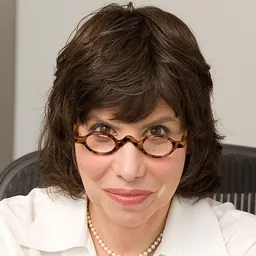


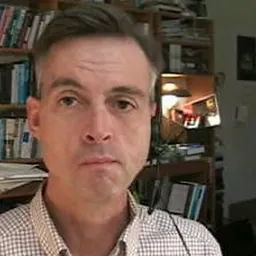


Related people
Same field, nearest in time
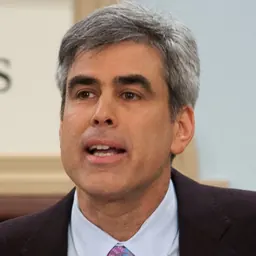
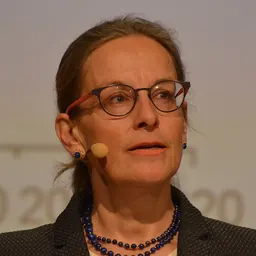



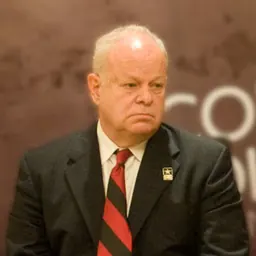
Contemporaries
People whose lives overlapped Paul Bloom's


Frequently asked questions
Who is Paul Bloom?
Canadian/American psychologist
When was Paul Bloom born?
Paul Bloom was born on 24 December 1963 in Montreal.
What is Paul Bloom's occupation?
Paul Bloom is a psychologist.
What nationality is Paul Bloom?
Paul Bloom is Canadian and American.
Sources & further reading
· DBpedia: Paul Bloom (psychologist)
Cite this page
APA: Biography.guide. (2026). Paul Bloom. https://biography.guide/paul-bloom/
MLA: "Paul Bloom." Biography.guide, https://biography.guide/paul-bloom/.
Chicago: "Paul Bloom." Biography.guide. https://biography.guide/paul-bloom/.
Data last updated: 2026-09-20 · Spot an error? Report a correction.
Page generated 2026-09-27 05:21 UTC