
About Martin Seligman
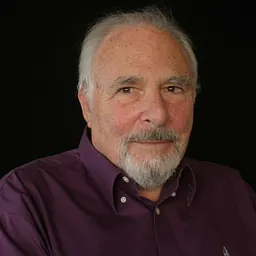
Born 1942. Martin Seligman is an American psychologist, bridge player, writer and university teacher, known for Learned helplessness and Positive psychology.
Martin Elias Peter Seligman (; born August 12, 1942) is an American psychologist, educator, and author of self-help books. Seligman is a strong promoter within the scientific community of his theories of well-being and positive psychology. A Review of General Psychology survey, published in 2002, ranked Seligman as the 31st most cited psychologist of the 20th century.
Seligman is the Zellerbach Family Professor of Psychology in the University of Pennsylvania's Department of Psychology. He was previously the Director of the Clinical Training Program in the department, and earlier taught at Cornell University. He is the director of the university's Positive Psychology Center. Seligman was elected president of the American Psychological Association for 1998. He is the founding editor-in-chief of Prevention and Treatment (the APA electronic journal) and is on the board of advisers of Parents magazine.
Seligman has written about positive psychology topics in books such as The Optimistic Child, Child's Play, Learned Optimism, Authentic Happiness, and Flourish. His most recent book, Tomorrowmind, co-written with Gabriella Rosen Kellerman, was published in 2023.
Early life and education Seligman was born in Albany, New York, to a Jewish family. He was educated at a public school and at The Albany Academy. He earned a bachelor's degree in philosophy at Princeton University in 1964, graduating summa cum laude. and a Ph.D. in psychology from the University of Pennsylvania in 1967. In June 1989, Seligman received an honorary doctorate from the Faculty of Social Sciences at Uppsala University, Sweden.
Learned helplessness
Seligman's foundational experiments and theory of "learned helplessness" began at University of Pennsylvania in 1967, as an extension of his interest in depression. Seligman and colleagues accidentally discovered that the experimental conditioning protocol they used with dogs led to behaviors which were unexpected, in that under the experimental conditions, the recently conditioned dogs did not respond to opportunities to learn to escape from an unpleasant situation ('electric shocks of moderate intensity'). A fictionalised account of the experiment, and illustration of anti-vivisection arguments about the ethics of shocking dogs in the name of psychological research, occur in clinical psychologist Guy Holmes' novel The Black Dogs of Glaslyn.
At the time, and in subsequent years, very little ethical critique of the experiment was published, although definitional and conceptual issues were critiqued. Ethical critique would later be raised by the academic Alastair Norcross, who argued that the expected human benefits were not large enough for the harm inflicted to the dogs that occurred.
Seligman developed the theory further, finding learned helplessness to be a psychological condition in which a human being or an animal has learned to act or behave helplessly in a particular situation—usually after experiencing some inability to avoid an adverse situation—even when it actually has the power to change its unpleasant or even harmful circumstance. Seligman saw a similarity with severely depressed patients, and argued that clinical depression and related mental illnesses result in part from a perceived absence of control over the outcome of a situation. In later years, alongside Abramson, Seligman reformulated his theory of learned helplessness to include attributional style.
Happiness In his 2002 book Authentic Happiness, Seligman saw happiness as made up of positive emotion, engagement and meaning.
Positive psychology Seligman worked with Christopher Peterson to create what they describe as a "positive" counterpart to the Diagnostic and Statistical Manual of Mental Disorders (DSM). While the DSM focuses on what can go wrong, Character Strengths and Virtues (2004) is designed to look at what can go right. In their research they looked across cultures and across millennia to attempt to distill a manageable list of virtues that have been highly valued from ancient China and India, through Greece and Rome, to contemporary Western cultures.
Their list includes six character strengths: wisdom/knowledge, courage, humanity, justice, temperance, and transcendence. Each of these has three to five sub-entries; for instance, temperance includes forgiveness, humility, prudence, and self-regulation. The authors do not believe that there is a hierarchy for the six virtues; no one is more fundamental than or a precursor to the others.
Well-being In his book Flourish, 2011, Seligman wrote on "Well-Being Theory", and said, with respect to how he measures well-being:
Each element of well-being must itself have three properties to count as an element:
It contributes to well-being. Many people pursue it for its own sake, not merely to get any of the other elements. It is defined and measured independently of the other elements.
Seligman concluded that there are five elements to "well-being", which fall under the mnemonic PERMA: However, it is not considered the scientific consensus definition or model.
In July 2011, Seligman encouraged the British Prime Minister, David Cameron, to look into well-being as well as financial wealth as ways of assessing the prosperity of a nation.
MAPP program The Master of Applied Positive Psychology (MAPP) program at the University of Pennsylvania was established under the leadership of Seligman as the first educational initiative of the Positive Psychology Center in 2003.
Personal life Seligman plays bridge and finished second in the 1998 installment of one of the three major North American pair championships, the Blue Ribbon Pairs, as well as having won over 50 regional championships.
Seligman has seven children, four grandchildren, and two dogs. He and his second wife, Mandy, live in a house that was once occupied by Eugene Ormandy. They have home-schooled five of their seven children.
Seligman was inspired by the work of the psychiatrist Aaron T. Beck at the University of Pennsylvania in refining his own cognitive techniques and exercises.
Publications (Paperback reprint edition, W.H. Freeman, 1992, ) (Paperback reprint edition, Penguin Books, 1998; reissue edition, Free Press, 1998) (Paperback reprint edition, Ballantine Books, 1995, ) (Paperback edition, Harper Paperbacks, 1996, ) (Paperback edition, Free Press, 2004, )
Don’t just read it —
keep it.
Full-length biographies made to live with: read them, listen on the way to work, watch them tonight.
- E-book
- Audio
- Video
Instant download · yours to keep · every purchase keeps this site free
Important facts
more
Seligman, Seligman M, Seligman M., Seligman M. E. P., Seligman MEP, Martin Elias Peter SeligmanPeople in Martin Seligman's life
Named in this biography and alive at the same time






Related people
Same field, nearest in time




Contemporaries
People whose lives overlapped Martin Seligman's


Frequently asked questions
Who is Martin Seligman?
American psychologist and writer
When was Martin Seligman born?
Martin Seligman was born on 12 August 1942 in Albany.
What is Martin Seligman's occupation?
Martin Seligman is a psychologist, bridge player, writer and university teacher.
What is Martin Seligman known for?
Martin Seligman is known for Learned helplessness and Positive psychology.
What nationality is Martin Seligman?
Martin Seligman is American.
Sources & further reading
Cite this page
APA: Biography.guide. (2026). Martin Seligman. https://biography.guide/martin-seligman/
MLA: "Martin Seligman." Biography.guide, https://biography.guide/martin-seligman/.
Chicago: "Martin Seligman." Biography.guide. https://biography.guide/martin-seligman/.
Data last updated: 2026-09-22 · Spot an error? Report a correction.
Portrait: Wikimedia Commons · author & licence
Page generated 2026-09-27 05:01 UTC