
About Susan Carey
Born 1942. Susan Carey is an American psychologist and university teacher, known for Language development.
Susan E. Carey (born 1942 She has conducted experiments on infants, toddlers, adults, and non-human primates. Her books include Conceptual Change in Childhood (1985)
Among the ideas that Carey has developed are fast mapping, whereby children learn the meanings of words after a single exposure; extended mapping, folk theories,
In 2009, Carey was the first woman to receive the David E. Rumelhart Prize for significant contributions to the theoretical foundation of human cognition.
Early life and education Susan Carey was born in 1942 to William N. Carey Jr., a research engineer with the Highway Research Board (HRB), and his first wife, Mary Champine. She attended Ottawa Township High School in Ottawa, Illinois, graduating in 1960.
Susan Carey received her BA from Radcliffe College in 1964. receiving her PhD in experimental psychology in 1971.
In 1996, Carey joined New York University, where she was a professor in the department of psychology from 1996 to 2001. In 2001, she joined the faculty at Harvard University. She became the Henry A. Morss Jr. and Elisabeth W. Morss Professor of Psychology at Harvard as of 2004, the first woman to receive the award. Development Psychology, Memory and Cognition, and Psychological Review.
In 1985, Carey wrote Conceptual Change in Childhood, a book about the cognitive differences between children and adults. It is a case study about children's acquisition of biological knowledge and analyzes the ways the knowledge is restructured during development. The book reconciles Jean Piaget's work on animism with later work on children's knowledge of biological concepts. Carey suggested that children's early understanding of biological concepts like "animal" indicates anthropomorphic thinking or folk theorization in which humans are expected to be prototypical of non-humans. (Subsequent researchers have argued that such anthropomorphic thinking is not universal, emphasizing the effects of culture and experience.) Carey also compared the ways that knowledge is restructured by children and by adults. She argued that similar psychological processes are involved in conceptual development in children and in the development of theories by scientists as shown through the history of science.
In 2001, Carey and Elizabeth Spelke both moved to Harvard, where they started the Laboratory for Developmental Studies. Working with infants, toddlers, adults, and non-human primates, they developed a core knowledge proposal. According to the idea of core cognition, human infants begin life with a set of fundamental processing mechanisms or core knowledge systems, for dealing with object, agent, number, and possibly causality and space. These early representations provide a basis for further inference, reasoning, and the development of larger conceptual structures.
In 2009, Carey published The Origin of Concepts, "an elegant, well-written, and ambitious synthesis" In it Carey coined the term "Quinian bootstrapping" for a theory of how people build complex concepts out of simple ones. The book won the Cognitive Development Society Book Award in 2009 Executive function includes important mental processes like focusing on information in working memory, inhibiting responses to information, and set-switching between contexts. Children's level of executive function predicts their ability to learn an idea that involves conceptual change, such as the biological concept that something is alive. Carey is examining the question of how executive functioning impacts adults' ability to express the knowledge they have previously learned. 2011, Eleanor Maccoby Book Award, American Psychological Association 2009, David E. Rumelhart Prize 2009, Distinguished Scientific Contribution Award, American Psychological Association 2009, Cognitive Development Society Book Award, Cognitive Development Society, for The origin of concepts 2007. Corresponding Fellow (FBA), British Academy 2007, Member, American Philosophical Society, 2002, Member, United States National Academy of Sciences 2002, William James Fellow Award, Association for Psychological Science 2001, Member, American Academy of Arts and Sciences 1999, Guggenheim Fellowship 1998, Jean Nicod Prize for philosophy of mind, Institut Jean Nicod (IJN) 1998, George A Miller Lecture, Society of Cognitive Neuroscience 1995-1996, James McKeen Cattell Fund Fellowship 1984-1985, Fellow, Center for Advanced Study in the Behavioral Sciences 1976-1978, Radcliffe Institute Fellowship
Books
Selected papers Papers written as sole author
Don’t just read it —
keep it.
Full-length biographies made to live with: read them, listen on the way to work, watch them tonight.
- E-book
- Audio
- Video
Instant download · yours to keep · every purchase keeps this site free
Important facts
People in Susan Carey's life
Named in this biography and alive at the same time
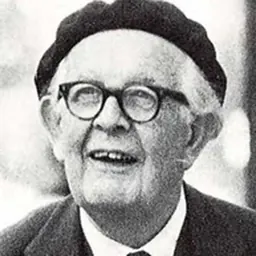
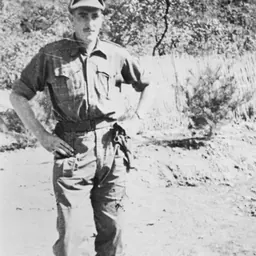


Related people
Same field, nearest in time

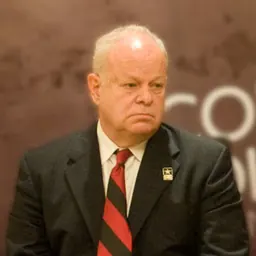
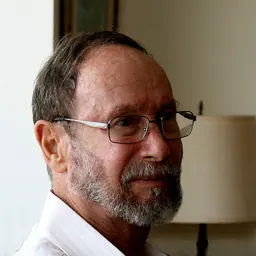


Contemporaries
People whose lives overlapped Susan Carey's



Frequently asked questions
Who is Susan Carey?
American psychologist
When was Susan Carey born?
Susan Carey was born in 1942.
What is Susan Carey's occupation?
Susan Carey is a psychologist and university teacher.
What is Susan Carey known for?
Susan Carey is known for Language development.
What nationality is Susan Carey?
Susan Carey is American.
Sources & further reading
Cite this page
APA: Biography.guide. (2026). Susan Carey. https://biography.guide/susan-carey/
MLA: "Susan Carey." Biography.guide, https://biography.guide/susan-carey/.
Chicago: "Susan Carey." Biography.guide. https://biography.guide/susan-carey/.
Data last updated: 2026-09-20 · Spot an error? Report a correction.
Page generated 2026-09-27 05:21 UTC