
Patrick William Riordan
Roman Catholic Archbishop of San Francisco, California
About Patrick William Riordan
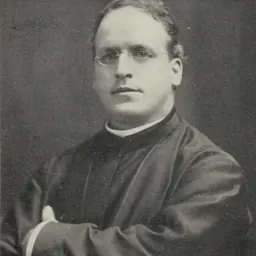
Lived 1841 – 1914 (aged 73). Patrick William Riordan was a Canadian catholic priest, catholic bishop, canon law jurist, theologian, church historian and archbishop.
Patrick William Riordan (August 27, 1841 – December 27, 1914) was a Canadian-born American prelate of the Catholic Church who served as archbishop of San Francisco in California from 1884 until his death in 1914. He served during the 1906 San Francisco earthquake, and he was a prominent figure in the first case submitted to the Permanent Court of Arbitration.
Early life Patrick Riordan was born on August 27, 1841, in Chatham in the British Province of New Brunswick in present-day Canada to Matthew and Mary (née Dunne) Riordan. His parents were both natives of Ireland, his father from Kinsale, County Cork, and his mother from Stradbally, County Laois. Soon after the birth of his sister Catherine in 1844, his parents returned to Ireland with their children; his brother Dennis was born there in 1846. However, the privations of the Great Famine soon forced the family to leave Ireland again. After a brief return to New Brunswick, they settled in Chicago, Illinois, in 1848.
As a boy in Chicago, Riordan established a lifelong friendship with John Ireland, the future Archbishop of Saint Paul. The Riordan family were parishioners at St. Patrick's Parish in Chicago. Patrick's uncle, Reverend Dennis Dunne, served as pastor there as well as vicar general of the Archdiocese of Chicago.
Education The inaugural class of the Pontifical North American College, Rome (1859). Riordan is second from left, front row. Riordan received his early education at the University of Saint Mary of the Lake in Chicago, which functioned as a parochial school and seminary. While at Notre Dame, Riordan decided to become a priest.
In 1858, the Archdiocese of Chicago sent Riordan to Rome to study at the Pontificio Collegio Urbano de Propaganda Fide. That group included the future prelates Michael Corrigan and Robert Seton, along with the author Reuben Parsons. Edward McGlynn, later a social reformer, served as their prefect. After finishing his studies of philosophy in Paris in 1861, Riordan enrolled at the American College of Louvain in Belgium to complete his theological studies.
Priesthood While in Belgium, Riordan was ordained a priest for the Archdiocese of Chicago on June 10, 1865, by Cardinal Engelbert Sterckx. He received a licentiate in theology from Louvain in 1866.
When the university was closed in 1868, Riordan was assigned to pastoral work, serving at St. Patrick's Parish in Woodstock and later at St. Mary's Church in Joliet. In retaliation, the bishop suspended Dunne from his duties as the diocese's vicar general and pastor of St. Patrick's Church. Following Dunne's death in December 1868, Duggan's refusal to attend the funeral drew sharp criticism from Catholics across the city and he appointed Riordan as pastor of St. Patrick's "in order to make some reparation." However, only four days later, the bishop rescinded Riordan's appointment after receiving reports that the priest "had spoken badly of him." This would unwittingly prepare Riordan for dealing with another disaster 35 years later in San Francisco.
As pastor of St. James, Riordan erected a new church building on Wabash Avenue to accommodate his growing congregation, laying the cornerstone in 1876 and dedicating the building in 1880. Riordan's construction of the new church caught the attention of several bishops, and in 1882 his name was included on a list of three candidates for Bishop of Charleston, South Carolina, being the preferred choice of Archbishop James Gibbons of Baltimore. Although the Charleston appointment ultimately went to Henry P. Northrop, Riordan would receive his own appointment as a bishop the following year.
Coadjutor Archbishop and Archbishop of San Francisco
Coadjutor Archbishop
On July 17, 1883, Pope Leo XIII appointed Riordan to be coadjutor archbishop with the right of succession to Joseph Sadoc Alemany, the Archbishop of San Francisco, California. Following his death in December 1914, there were 367 priests, 182 churches, 94 chapels and stations, and 94 parochial schools for 280,000 Catholics. Many of the new parishes under his administration were established for immigrant communities. In 1890, the conservative Archbishop Michael Corrigan, Riordan's classmate in Rome, included Riordan's name on a list of liberal bishops. In writing to Cardinal Camillo Mazzella in Rome, Corrigan said: "In the ultra-Americanism of these prelates, I foresee dangers and sound the alarm." Even after the Vatican excommunicated the Irish theologian Reverend George Tyrrell in 1907 for his Modernist beliefs, Riordan wrote of Tyrrell: "There is a place for him and plenty of work for him to do in this great Church of Christ."
New cathedral and seminary
Two of the largest projects during Riordan's tenure were the erection of a new cathedral and seminary for the Archdiocese. Old St. Mary's Cathedral on California Street had been used since 1854, but in May 1883 Archbishop Alemany purchased land on Van Ness Avenue for a larger cathedral to serve the city's growing Catholic population. The construction fell to Riordan, who laid the cornerstone in May 1887 and dedicated the new Cathedral of St. Mary of the Assumption in January 1891. This cathedral would serve the Archdiocese for the next 50 years, until it was destroyed by a fire in 1962.
A seminary had been established under Alemany near Mission San José (now Fremont) in 1883, but the seminary never had more than five students and collapsed within two years after the Marist professors left their posts. Riordan received a plot of land in Menlo Park from the sister of the archdiocese's lawyer, and opened St. Patrick's Seminary as a minor seminary in September 1898. Staffed by the Sulpician Fathers, the school became a major seminary with the additions of a philosophy department in 1902 and a theology department in 1904. Riordan claimed that the textbook was anti-Catholic and called it "utterly unfit for use in a school patronized by children of various creeds." In April 1894 the San Francisco Board of Education ruled that its schools could still use the textbook. However, teachers could omit any passages that might "appear in any way to favor or to reflect on the particular doctrines or tenets of any religious sect." Some Protestant leaders in San Francisco denounced the school board decision. The Congregationalist minister Charles Oliver Brown described the decision as "a complete surrender to Rome."
The textbook controversy and the growing presence of the anti-Catholic American Protective Association in San Francisco led Riordan to appoint his chancellor, Reverend Peter Yorke, as editor of the archdiocesan newspaper The Monitor to respond to Protestant attacks. The archdiocese also established a local chapter of the Catholic Truth Society in 1897.
While Yorke proved popular among local Catholics, Riordan soon lost patience with him. A labor activist and a supporter of Irish republicanism, Yorke was a strident critic of local elected officials, including San Francisco Mayor James D. Phelan and U.S. Representative James G. Maguire. Riordan removed Yorke from The Monitor in October 1898. Riordan later elaborated: "he right must be accorded to [Yorke] as to every other citizen to make public his views on the rostrum or in the newspapers of the country...The Catholic Church does not dictate to its priests or its people the policy which they should adopt in political matters."
Pious Fund Riordan played a significant role in the first case that came before the Permanent Court of Arbitration at The Hague, which centered on the Pious Fund of the Californias. Established in 1697, the fund was an endowment paid annually by the Mexican government to sponsor missions in California. Mexico had stopped making payments to the fund in 1848 after it ceded California to the United States in the Treaty of Guadalupe Hidalgo. The State Department filed a claim for the unpaid interest in 1891, but there was no progress on the case for the next eight years. In 1899, Secretary of State John Hay directed Powell Clayton, the American ambassador to Mexico, to reopen negotiations on the interest payments. Mexico. In May 1902, the two governments signed a protocol that submitted the dispute to the newly established Permanent Court of Arbitration The case opened on September 15, 1902, and concluded on October 14, when the court announced its unanimous verdict in favor of the United States. there were rumors that Leo would name him as a cardinal.
1906 San Francisco earthquake Riordan was in Omaha, Nebraska, on his way to an event in Baltimore, when a major earthquake struck San Francisco on April 18, 1906. Among the Catholic Church's losses were more than a dozen churches and a number of other institutions, the damages totaling between $2 million and $6 million. As he left for San Francisco on April 21, Riordan also telegraphed an appeal to every bishop in the country: "The work of fifty years is blotted out. Help us to begin again."
Upon his arrival back in the city, Riordan celebrated open-air Masses for his displaced parishioners, who were living amidst the ruins in temporary shelters, and assured them, "We shall rebuild." he addressed a committee at San Francisco's temporary city hall and quoted Paul the Apostle (Acts 21:39):
Riordan temporarily lived in San Mateo while providing his official residence to the Presentation Sisters, who had lost their convent on Powell Street. Every church that had been destroyed had a temporary structure within two years and was rebuilt within another eight years. However, Montgomery died a few years later in 1907. To replace Montgomery, Riordan's preferred candidate was Edward Joseph Hanna, a theology professor at Saint Bernard's Seminary in Rochester, New York. But Hanna's candidacy was derailed after his fellow professor, Andrew Breen, wrote a letter to Cardinal Girolamo Maria Gotti challenging Hanna's orthodoxy and accusing him of Modernism. Riordan instead received Denis J. O'Connell, then rector of the Catholic University of America, as an auxiliary bishop in 1908 but he was later transferred to the Diocese of Richmond in 1912. Riordan again submitted Hanna's name as coadjutor and finally succeeded in October 1912.
In December 1914, Riordan contracted a severe cold which soon developed into pneumonia. He died five days later at 1000 Fulton Street, the Archbishop's Mansion, his residence in San Francisco, aged 73. He is buried in the Archbishops' Crypt at Holy Cross Cemetery, Colma. Archbishop Riordan High School in San Francisco, California, is named for him.
Episcopal succession
Don’t just read it —
keep it.
Full-length biographies made to live with: read them, listen on the way to work, watch them tonight.
- E-book
- Audio
- Video
Instant download · yours to keep · every purchase keeps this site free
Important facts
People in Patrick William Riordan's life
Named in this biography and alive at the same time



Related people
Same field, nearest in time

Contemporaries
People whose lives overlapped Patrick William Riordan's

Frequently asked questions
Who was Patrick William Riordan?
Roman Catholic Archbishop of San Francisco, California (1841–1914)
When was Patrick William Riordan born?
Patrick William Riordan was born on 27 August 1841 in Chatham.
When did Patrick William Riordan die?
Patrick William Riordan died on 27 December 1914 in San Francisco.
What was Patrick William Riordan's occupation?
Patrick William Riordan was a catholic priest, catholic bishop, canon law jurist, theologian, church historian and archbishop.
What nationality was Patrick William Riordan?
Patrick William Riordan was Canadian.
Sources & further reading
· Wikipedia: Patrick William Riordan
· DBpedia: Patrick William Riordan
Cite this page
APA: Biography.guide. (2026). Patrick William Riordan. https://biography.guide/patrick-william-riordan/
MLA: "Patrick William Riordan." Biography.guide, https://biography.guide/patrick-william-riordan/.
Chicago: "Patrick William Riordan." Biography.guide. https://biography.guide/patrick-william-riordan/.
Data last updated: 2026-09-20 · Spot an error? Report a correction.
Page generated 2026-09-27 05:19 UTC