
About Joseph Sadoc Alemany
Lived 1814 – 1888 (aged 73). Joseph Sadoc Alemany was a Spanish and American latin Catholic priest, missionary and catholic bishop.
Joseph Sadoc Alemany, O.P. (Spanish: José Sadoc Alemany y Conill;; July 3, 1814 – April 14, 1888) was a Spanish Catholic prelate who served as archbishop of San Francisco in California from 1853 to 1884. He previously served as the first bishop of Monterey in California from 1850 to 1853. He was a member of the Dominican Order.
Early life Joseph Alemany was born in Vic, Catalonia in Spain on July 3, 1814, to Antoni Alemany i Font and Miquela dels Sants Conill i Saborit.
In 1834, an outburst of deadly anti-clerical rioting in Spain prompted Reverend Tomasso Cipolletti, the Dominican grandmaster, to offer Alemany and other Dominican seminarians refuge in the Dominican convent in Viterbo, Italy. Alemany began studying at the College of St. Thomas, the future Pontifical University of Saint Thomas Aquinas, where in 1840 he was made Lector in Theology.
Priesthood Alemany was ordained a priest for the Dominican Order in Viterbo Cathedral in Viterbo, Italy, on March 11, 1837, by Archbishop Gaspare Bernardo Pianetti. During his studies in Rome, Alemany had an audience with Pope Gregory XVI.
The Dominican superiors sent Alemany to conduct missionary working in the State of Ohio in the United States in 1841. He was transferred to Nashville, Tennessee, in 1842 and then Memphis, Tennessee in 1845. He became a naturalized American citizen that same year. The Dominicans in 1847 appointed him as master of novices in Kentucky in 1847 and then in 1849 as prior provincial for the Dominicans in the American Midwest.
As a result of the expropriations, the new diocese of Monterey lacked both money and personnel. During the summer of 1850, Alemany visited England, France and Ireland, trying to raise money and recruit religious sisters. He did not have any success recruiting sisters until he arrived the Monastery of the Cross in Paris. He found three volunteers at the convent, including Sister Mary Goemaere, a Belgian novice.
Alemany, the sisters, and Reverend Francis Sadoc Vilarassa, another Dominican priest, left Liverpool, England in September 1850 on the SS Columbus for New York City. Alemany made stops in Baltimore, Maryland, Philadelphia, Pennsylvania and Washington D.C. to preach and raise money. He originally planned to send all the sisters to a Dominican convent in Ohio, then decided that Goemaere should accompany him to California. The group finally sailed the Caribbean oast of Panama, traveled overland by mule and dugout canoe to the Pacific coast, and took a steam ship to California. In April 1851, Goemaere opened the Santa Catalina School for girls in Monterey. She established a convent that would become the Dominican Sisters of San Rafael.
In 1853, Alemany filed a petition with the Public Land Commission of the State of California for the return of all expropriated mission lands. He eventually received all the missions, their grounds and cemeteries, along with two large ranchos, or estates:
Rando Cañada de los Pinos (College Rancho) in Santa Barbara County, comprising St. Francis of Assisi, erected for Catholic soldiers in 1849 St. Patrick Church, established for Irish immigrants in 1851
As archbishop of San Francisco, Alemany presided over what became a multinational diocese, owing to the influx of people during the California Gold Rush. He established national parishes for San Francisco's Italian, Irish, French, German and Mexican communities.
In 1855, the Jesuits opened St. Ignatius Academy for boys in San Francisco, It later became the University of San Francisco.
After the start of the American Civil War in April 1861, a division of loyalties emerged in San Francisco between supporters of the secessionist Confederate States of America and those of the federal government. In the summer of 1861, federal supporters started pressuring Alemany to fly the American flag from all the San Francisco churches on Independence Day, July 4. While expressing dismay at the start of the war, Alemany refused to fly the flags.
Alemany in 1862 founded Saint Mary's College in Moraga, California, for the education of the children of working people. He turned the operation of the college over to De La Salle Brothers in 1868.
In October 1866, Alemany attended the Second Plenary Council of Baltimore, a meeting of the bishops and archbishops of the United States in Baltimore, Maryland.
The Dominican Sisters of Mission San Jose were established in the archdiocese in 1876.In 1883, at Alemany's request, Pope Leo XIII appointed Reverend Patrick Riordan as coadjutor archbishop to assist Alemany
In 1965, the Archdiocese of San Francisco brought Alemany's remains back to California. Archbishop Joseph T. McGucken celebrated a requiem mass for him at the Old Cathedral of Saint Mary of the Immaculate Conception. His remains were re-interred in the Archbishops' Crypt in the mausoleum in Holy Cross Cemetery in Colma, California.
The following places were named in honor of Alemany:
Alemany Boulevard in San Francisco Alemany Maze, a freeway interchange, in San Francisco Bishop Alemany High School in Mission Hills, California Archbishop Alemany Library at Dominican University of California in San Rafael, California
Publications The Life of St. Dominick And A Sketch Of The Dominican Order.
Don’t just read it —
keep it.
Full-length biographies made to live with: read them, listen on the way to work, watch them tonight.
- E-book
- Audio
- Video
Instant download · yours to keep · every purchase keeps this site free
Important facts
People in Joseph Sadoc Alemany's life
Named in this biography and alive at the same time

Related people
Same field, nearest in time

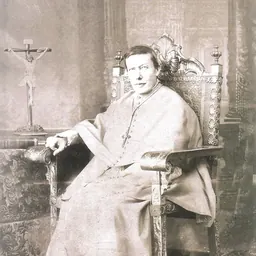

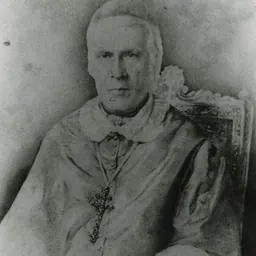

Contemporaries
People whose lives overlapped Joseph Sadoc Alemany's





Frequently asked questions
Who was Joseph Sadoc Alemany?
Spanish archbishop (1814-1888)
When was Joseph Sadoc Alemany born?
Joseph Sadoc Alemany was born on 3 July 1814 in Vic.
When did Joseph Sadoc Alemany die?
Joseph Sadoc Alemany died on 14 April 1888 in Valencia.
What was Joseph Sadoc Alemany's occupation?
Joseph Sadoc Alemany was a latin Catholic priest, missionary and catholic bishop.
What nationality was Joseph Sadoc Alemany?
Joseph Sadoc Alemany was Spanish and American.
Sources & further reading
· Wikipedia: Joseph Sadoc Alemany
· DBpedia: Joseph Sadoc Alemany
Cite this page
APA: Biography.guide. (2026). Joseph Sadoc Alemany. https://biography.guide/joseph-sadoc-alemany/
MLA: "Joseph Sadoc Alemany." Biography.guide, https://biography.guide/joseph-sadoc-alemany/.
Chicago: "Joseph Sadoc Alemany." Biography.guide. https://biography.guide/joseph-sadoc-alemany/.
Data last updated: 2026-09-26 · Spot an error? Report a correction.
Page generated 2026-09-27 05:16 UTC