
About Powell Clayton
Lived 1833 – 1914 (aged 81). Powell Clayton was an American politician, army officer, diplomat, civil engineer, ambassador and brigadegeneral.
Political career
Governor of Arkansas: 1868–1871 In 1867, Clayton participated in the formation of the Arkansas Republican party. He entered Arkansas politics due his belief that Unionists needed additional protection after several confrontations with ex-Rebels on his plantation.
On April 1, 1868, the state board of election commissioners announced ratification of the constitution and Clayton's election as Governor of Arkansas. Congress accepted the Arkansas constitution of 1868 as legal. Democratic President Andrew Johnson (who had succeeded to office following Lincoln's assassination) vetoed it, but the Republican-dominated Congress overrode his veto. The state was readmitted to representation in Congress when Clayton was inaugurated as Governor on July 2, 1868. The new legislature unanimously accepted the Fourteenth Amendment, and Congress declared Arkansas reconstructed.
As governor, Clayton faced fierce opposition from the state's conservative political leaders and violence against blacks and members of the Republican party led by the Ku Klux Klan. During this time Arkansas Republican Congressman James Hinds was attacked and killed while on his way to a political event, and Clayton survived an attempt on his life. An agent of Clayton was killed by a group of men led by Dandridge McRae and Jacob Frolich, the leaders of the White County, Arkansas chapter of the Ku Klux Klan. Clayton responded aggressively to the emergence of the Klan in Arkansas by declaring martial law in fourteen counties for four months in late 1868 and early 1869.
During his three-year term as governor, Clayton and the Republicans in the legislature passed many laws. Money was borrowed to fund the construction of several railroads throughout the state. The first ever free public school system in Arkansas was initiated during Clayton's governorship. The Clayton administration also established Arkansas Industrial University, the Arkansas School for the Deaf, and relocated the Arkansas School for the Blind. Clayton and his supporters were known locally as "Minstrels", they dominated the Republican party and were able to secure recognition from the National Republican organization and control the federal patronage in the state. This position garnered Clayton few friends at the state Republican party level and he faced repeated challenges to his leadership.
In 1868, Joseph Brooks who had been a partner with Clayton in the formation of the Arkansas Republican party, broke with Clayton and formed a faction known as the "Brindletails". Brooks' opposition to Clayton developed partly due to Clayton's increasingly moderate stance toward ex-Confederates but also due to Clayton's displacement of Brooks as leader of the Arkansas Republican party.
In January 1872, the U.S. Senate Joint Select Committee to Inquire into the Condition of the Late Insurrectionary States heard testimony raising questions about Clayton's behavior and integrity as governor. A United States district attorney testified that in April 1871, after Clayton became U.S. Senator, a grand jury had indicted him on charges that as governor Clayton issued fraudulent election credentials for the U.S. House of Representatives election to John Edwards.
In 1877, Clayton lost his Senate seat since the legislature, now dominated by Democrats elected one of their own to the Senate. Clayton moved back to Little Rock, Arkansas where he resumed his law practice and supported economic development. As president of the Eureka Springs Improvement Company (ESIC), Clayton worked to develop commercial and residential structures, many which still exist. ESIC sponsored the development of the Eureka Springs Railroad which was key to making the resort accessible to tourists. The ESIC also built the Crescent Hotel, now one of Eureka Springs' most notable landmarks. A poem on the fireplace in the lobby of the Crescent Hotel is attributed to Clayton. In 1883, Clayton became the president of the Eureka Springs Railway, which provided service to the resort community until 1889, when it was merged into what became the Missouri and North Arkansas Railroad.
Clayton remained active in the Republican Party. He became a member of the Republican National Committee in 1872 and was still consulted to fill federal patronage positions through 1912. In 1896 and 1897, as a member of the Republican National Committee, he was instrumental in delivering votes from the entire Arkansas delegation for William McKinley's Republican nomination as president. Clayton also led the Republican speakers' bureau for the East Coast. He was appointed as the first ambassador to Mexico by President McKinley when that post was elevated to an embassy post and served until 1905. After resigning as Ambassador of Mexico, he lived in Washington, D.C. but was still able to manage multiple businesses and enterprises in Arkansas. He continued to do this, as well as preserving his status in the Republican party.
Personal life On December 14, 1865, Clayton married Adaline McGraw of Helena, Arkansas. Together they had three daughters and two sons although one son died in early infancy. Their son, Powell Clayton Jr., became a major in the 16th United States Cavalry and is also buried in Arlington National Cemetery. Two of Clayton's daughters married diplomats from Belgium and England. On September 9, 1868, Clayton lost his left hand while hunting outside Little Rock when his rifle discharged.
Clayton had two twin brothers, W. H. H. Clayton and John M. Clayton. These three men made their careers in Arkansas. William was appointed as the U.S. Attorney for the Western District of Arkansas and served as the chief prosecutor in the court of "hanging judge" Isaac C. Parker for 14 years. John was elected as an Arkansas Congressman, Arkansas State Senator and U.S. Congressman-elect. John was assassinated in 1889 in Plumerville, Arkansas. He had disputed the election results of a Congressional race with Democrat Clifton R. Breckinridge and was shot through the window of the boarding-house where he was staying. Clayton's brother Thomas J. Clayton, became a prominent Philadelphia lawyer and a Judge of the Court of Common Pleas of Pennsylvania for Delaware County, serving for 25 years.
Don’t just read it —
keep it.
Full-length biographies made to live with: read them, listen on the way to work, watch them tonight.
- E-book
- Audio
- Video
Instant download · yours to keep · every purchase keeps this site free
Important facts
People in Powell Clayton's life
Named in this biography and alive at the same time



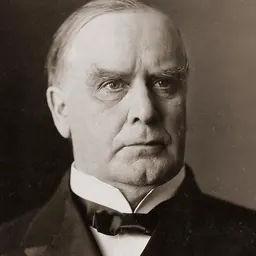

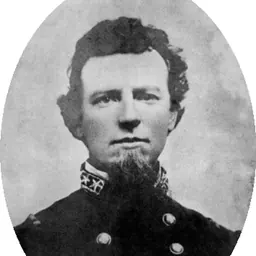
Related people
Same field, nearest in time






Contemporaries
People whose lives overlapped Powell Clayton's
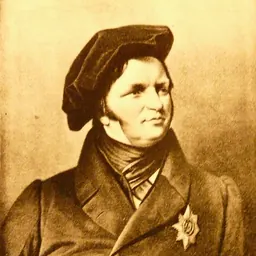
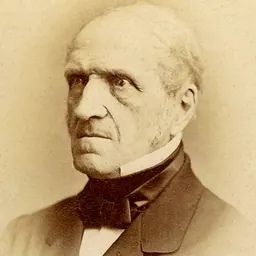

Frequently asked questions
Who was Powell Clayton?
American politician (1833-1914)
When was Powell Clayton born?
Powell Clayton was born on 7 August 1833 in Bethel Township.
When did Powell Clayton die?
Powell Clayton died on 25 August 1914 in Washington, D.C..
What was Powell Clayton's occupation?
Powell Clayton was a politician, army officer, diplomat, civil engineer, ambassador and brigadegeneral.
What nationality was Powell Clayton?
Powell Clayton was American.
Sources & further reading
Cite this page
APA: Biography.guide. (2026). Powell Clayton. https://biography.guide/powell-clayton/
MLA: "Powell Clayton." Biography.guide, https://biography.guide/powell-clayton/.
Chicago: "Powell Clayton." Biography.guide. https://biography.guide/powell-clayton/.
Data last updated: 2026-09-26 · Spot an error? Report a correction.
Page generated 2026-09-27 05:16 UTC