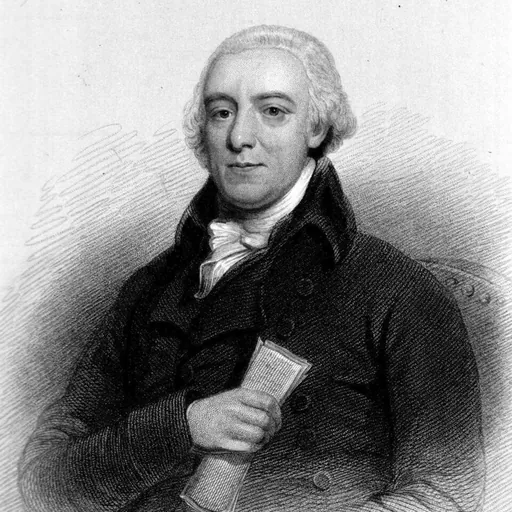
Patrick Colquhoun
Merchant, statistician, magistrate, river police
About Patrick Colquhoun
Lived 1745 – 1820 (aged 75). Patrick Colquhoun was a British police officer, politician, diplomat and statistician.
Patrick Colquhoun ( ; 14 March 1745 – 25 April 1820) was a Scottish merchant, statistician, magistrate, and founder of the first regular preventive police force in England, the Thames River Police. He also served as Lord Provost of Glasgow 1782 to 1784.
Early life
Colquhoun, a descendant of the Scottish Clan Colquhoun of Luss, was born in Dumbarton in 1745. Orphaned at the age of 16, his relatives sent him to America, setting him up in the lucrative commercial trade in Virginia. In 1766, the 21-year-old Colquhoun returned to Scotland, settling in Glasgow and going into business on his own in the linen trade. Ten years later, with the outbreak of the American Revolution, Colquhoun sided against the rebels and, along with 13 other local businessmen, funded a Glasgow regiment to contribute to the government's war effort.
In 1782 he purchased an estate in the West End (now part of Kelvingrove Park; and built the mansion house, Kelvingrove House (which became the first Kelvingrove Museum in 1875). On 22 July 1775, he married his cousin Janet, the daughter of James Colquhoun, the Provost of Dumbarton. Between 1782 and 1784, Patrick Colquhoun himself served as the Lord Provost of Glasgow. He also founded the Glasgow Chamber of Commerce and Manufacturing during that time, and made himself the first chairman.
In 1787 he is listed on the Committee for the Management of Forth and Clyde Navigation and in the West India Club. He was also Chairman of the Glasgow Tontine.
He was awarded an honorary LL.D. by the University of Glasgow in 1797. In Glasgow he lived in a second floor flat in an ancient tenement on Argyle Street.
Colquhoun was an avid statistician, and collected economic data. He used this information to lobby the government on behalf of the country's industries, particularly cotton and muslin. His findings formed the basis of numerous pamphlets and treatises that he wrote promoting legal reform and business generally. On one occasion, he travelled to Manchester and compiled statistics on the cotton trade. He presented his findings to Prime Minister William Pitt in 1789, but they were not acted upon because of the war with France. These activities brought Colquhoun increasingly into contact with the political sphere and to the attention of government and in 1785 he moved to London to seek a government position, and was appointed Magistrate in the East End. In 1796 Colquhoun's published A treatise on the police of metropolis and two years later, in collaboration with Justice of the Peace and master mariner John Harriott and utilitarian philosopher Jeremy Bentham, he wrote a letter to the London Society of West India Planters and Merchants proposing "the Establishment of a marine Police Office for the prevention of River Plunder". The West India Planters Committees and the West India Merchants agreed to fund a one-year trial and on 2 July 1798, after receiving government permission, the Thames River Police began operating with Colquhoun as Superintending Magistrate and Harriott the Resident Magistrate.
The idea of a police, as it existed in France, was considered an affront to the liberal English, particularly during this period of upheaval. For the government then, it was not only a matter of saving money, but that there was significant opposition and little support from political constituencies. In building the case for the police in the face of England's firm anti-police sentiment, Colquhoun framed the political rationale on economic indicators to show that a police dedicated to crime prevention was "perfectly congenial to the principle of the British constitution". Moreover, he went so far as to praise the French system, which had reached "the greatest degree of perfection" in his estimation.
As impressive as Colquhoun's salesmanship of the public police idea was, his main contribution is recognized as the introduction of crime prevention, or preventive policing, as a fundamental principle to the English police system. His police were to be a deterrent to crime by their permanent presence on the Thames. He came to this conclusion through viewing policing as a science, and in utilitarian fashion, attempted to press that science into the service of the national political economy. He published two dozen treatises on a variety of social problems, but the most significant is his 1796 A treatise on the police of the metropolis. especially in 1808, when the three cities considered their membership in the Confederation of the Rhine. His son James Colquhoun was his successor as Consul of the Hanseatic cities in London.
Criticism
Marxist historian Peter Linebaugh posits another persona of Colquhoun, i.e., the agent of often violent oppression wholly in the service of an industrialist and property-holding class in the earliest incarnation of socio-economic warfare in the Atlantic economy. The capitalist, investor regime needed a laboring under-class in thrall to subsistence wages to maximize profits. And, as farming the Commons had been denied them, the increasingly desperate worker was feared by those keepers of the status quo. In 1806, in his A treatise on indigence (pp. 7–8), Colquhoun had written:
Colquhoun was not immune to criticism from his contemporaries. Observations on a late Publication: intituled, A treatise on the police of the metropolis, for instance, published in 1800, criticised Colquhoun for fearmongering about the extent of crime in London, suggesting that doing so was "dangerous" because it tended "to produce innovations that were not merely useless, but that which may prove prenicious to the public body, and be paritularly grevious to individuals"; and that some of Colquhoun's "remedies ... are of a suspicious character, and ought to be treated with rigid scrutiny, lest in the adoption of them, real evils may be experienced while attempting to get rid of imaginary or trivial ones."
Selected works Observations and facts relative to public houses (1764). 1st edition (1764); 2nd edition (no date). Heads of a plan for establishing a chamber of commerce and manufactures in the city of Glasgow and the places adjacent (1782). Case of the British merchants who traded to America previous to the late war (1787). Considerations relative to a plan of relief for the cotton manufactory (1788). A representation of facts relative to the rise and progress of cotton manufacture in Great Britain (1789). Useful suggestions favourable to the comfort of the labouring people (1795). A treatise on the police of the metropolis (1796). 1st edition (1796); 2nd edition (1796); 3rd edition (1796); 4th edition (1797); 6th edition (1800); 7th edition (1806). An Account of a meat and soup charity (1797). A general view of the causes and existence of frauds, embezzlements, peculation and plunder, of His Majesty's stores in the dock yards, and other public repositories (1799). A general view of the depredations committed on West-India and other property in the port of London (1799). A general view of the national police system (1799). A treatise on the commerce and police of the River Thames (1800). Suggestions offered to the consideration of the public for the purpose of reducing the consumption of bread corn (1800). 2nd edition (no date). A treatise on the functions and duties of a constable (1803). A treatise on Indigence (1806). A new and appropriate system of education for the labouring people (1806). The National Jubilee (1809). A treatise on the population, wealth, power and resources of the British Empire (1814). 1st edition (1814); 2nd edition (1815). Epitome of a scheme of finance (1816).
Don’t just read it —
keep it.
Full-length biographies made to live with: read them, listen on the way to work, watch them tonight.
- E-book
- Audio
- Video
Instant download · yours to keep · every purchase keeps this site free
Important facts
People in Patrick Colquhoun's life
Named in this biography and alive at the same time

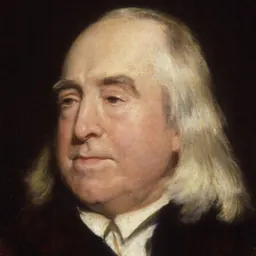

Related people
Same field, nearest in time
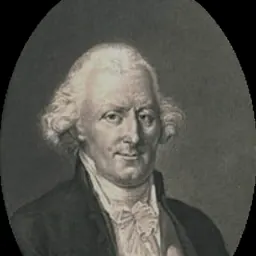

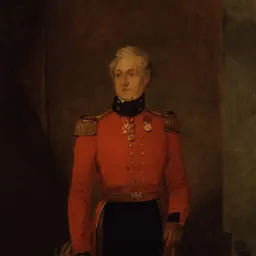
Contemporaries
People whose lives overlapped Patrick Colquhoun's





Frequently asked questions
Who was Patrick Colquhoun?
merchant, statistician, magistrate, river police (1745-1820)
When was Patrick Colquhoun born?
Patrick Colquhoun was born on 14 March 1745 in Dumbarton.
When did Patrick Colquhoun die?
Patrick Colquhoun died on 25 April 1820 in London.
What was Patrick Colquhoun's occupation?
Patrick Colquhoun was a police officer, politician, diplomat and statistician.
What nationality was Patrick Colquhoun?
Patrick Colquhoun was British.
Sources & further reading
· Wikipedia: Patrick Colquhoun
Cite this page
APA: Biography.guide. (2026). Patrick Colquhoun. https://biography.guide/patrick-colquhoun-police-officer/
MLA: "Patrick Colquhoun." Biography.guide, https://biography.guide/patrick-colquhoun-police-officer/.
Chicago: "Patrick Colquhoun." Biography.guide. https://biography.guide/patrick-colquhoun-police-officer/.
Data last updated: 2026-09-20 · Spot an error? Report a correction.
Portrait: Wikimedia Commons · author & licence
Page generated 2026-09-27 04:57 UTC