
About Papken Siuni
Lived 1873 – 1896 (aged 22–23). Papken Siuni was a Turkish activist and revolutionary.
Bedros Parian (; 1873 – 26 August 1896), better known by his nom de guerre Papken Siuni , was an Armenian revolutionary and a leading figure in the late 19th-century Armenian national movement. A member of the Armenian Revolutionary Federation (ARF), he co-led the 1896 Ottoman Bank takeover, a seminal event aimed at internationalizing the Armenian Question amid the Hamidian massacres. His death during the operation cemented his status as a martyr in Armenian history.
Early life and education Bedros Parian was born in 1873 in the village of Pingian (modern-day Adatepe), near Akn in the Harput Vilayet of the Ottoman Empire. His family belonged to the Armenian peasantry, though they traced their lineage to the medieval Artsakh nobility. The region's Armenian population faced systemic discrimination under Ottoman rule, including heavy taxation and periodic violence.
In 1887, Parian moved to Constantinople to attend the Getronagan Armenian High School, a hub for Armenian intellectual and nationalist thought. There, he joined clandestine student circles influenced by the Armenian Enlightenment and the writings of Mkrtich Khrimian. His teachers included prominent intellectuals like Reteos Berberian, who emphasized Armenian cultural revival.
Revolutionary career Early activism Parian adopted the pseudonym "Siuni" in homage to Syunik, a historic Armenian region known for resistance against foreign rule. By 1890, he co-founded the underground group Syunik, which merged with the ARF in 1893. The ARF, founded in 1890, sought to unify Armenian resistance through armed struggle and diplomatic appeals to European powers.
Hamidian massacres and radicalization The Hamidian massacres (1894–1896) devastated Armenian communities, claiming over 100,000 lives. Parian's parents were killed during massacres in Harput, a trauma that radicalized him. In 1895, he relocated to Constantinople, where he organized ARF cells and distributed anti-Ottoman literature. Disguised as a porter, he evaded Ottoman authorities while smuggling weapons.
Ottoman Bank takeover Planning and objectives In early 1896, ARF leaders, including Christapor Mikaelian, approved Siuni's proposal to seize the Ottoman Bank, a financial hub for European investors. The operation aimed to force European intervention by threatening economic interests. Siuni and Karekin Pastermadjian (Armen Garo) recruited 28 militants, including students and artisans, and stockpiled grenades and Mauser pistols.
The attack On 26 August 1896, the group stormed the bank, taking 150 hostages. Siuni carried explosives under a traditional Armenian vest (arkhalig). During the initial assault, a stray bullet detonated a grenade, killing him instantly. Despite his death, the militants held the bank for 14 hours, demanding European oversight for Armenian reforms.
Aftermath French and Russian diplomats negotiated the militants' safe passage to Marseille. While the takeover drew global headlines, European powers took no concrete action, emboldening Ottoman reprisals. Over 6,000 Armenians in Constantinople were massacred in retaliation.
Legacy Papken Siuni became a symbol of Armenian resistance. The ARF eulogized him as a "martyr of the nation," and his portrait circulated widely in Armenian diaspora communities. In 2016, a memorial plaque was installed near the Ottoman Bank building (now the Istanbul Museum of the History of Science and Technology in Islam).
Historians debate the takeover's efficacy. While some argue it raised international awareness, others criticize it for provoking further violence. Nevertheless, Siuni's tactics influenced later ARF operations, including the 1904 Sasun uprising.
Don’t just read it —
keep it.
Full-length biographies made to live with: read them, listen on the way to work, watch them tonight.
- E-book
- Audio
- Video
Instant download · yours to keep · every purchase keeps this site free
Important facts
People in Papken Siuni's life
Named in this biography and alive at the same time
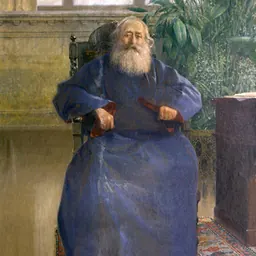
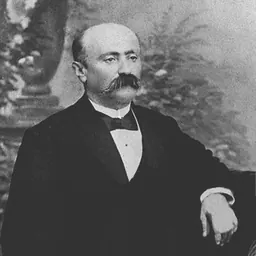
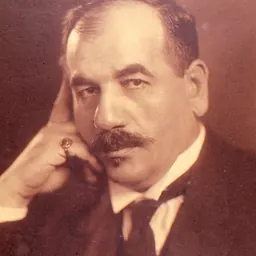

Related people
Same field, nearest in time

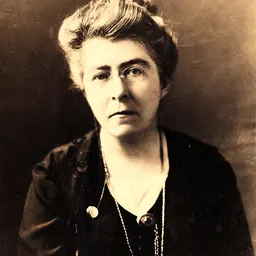
Contemporaries
People whose lives overlapped Papken Siuni's

Frequently asked questions
Who was Papken Siuni?
Armenian revolutionary
When was Papken Siuni born?
Papken Siuni was born in 1873 in Kemaliye.
When did Papken Siuni die?
Papken Siuni died on 26 August 1896 in Istanbul.
What was Papken Siuni's occupation?
Papken Siuni was an activist and revolutionary.
What nationality was Papken Siuni?
Papken Siuni was Turkish.
Sources & further reading
Cite this page
APA: Biography.guide. (2026). Papken Siuni. https://biography.guide/papken-siuni/
MLA: "Papken Siuni." Biography.guide, https://biography.guide/papken-siuni/.
Chicago: "Papken Siuni." Biography.guide. https://biography.guide/papken-siuni/.
Data last updated: 2026-09-24 · Spot an error? Report a correction.
Page generated 2026-09-27 05:02 UTC