
About Oskar Heinroth
Lived 1871 – 1945 (aged 74). Oskar Heinroth was a German ornithologist, zoologist, taxonomist, zoological collector, scientific collector and ethologist.
Oskar Heinroth (1 March 1871 – 31 May 1945) was a German biologist who was one of the first to apply the methods of comparative morphology to animal behavior, and was thus one of the founders of ethology. He worked, largely isolated from most other scientists of the period, at the Berlin Aquarium where he took care of fishes, reptiles and birds, especially waterfowl. He died under Soviet interrogation in Berlin on 31 May 1945.
Biography Heinroth was born in Mainz-Kastel. He studied medicine and graduated in 1895, but later studied zoology at Berlin while working at the Zoological Garden and at the Natural History Museum. He joined an expedition to the Bismarck Archipelago in 1900-1901 serving as a zoologist to Bruno Mencke, the South Seas expedition leader who was attacked and killed in an encounter with indigenous peoples while Heinroth himself escaped with a spear wound. In 1904, Heinroth became an assistant at the Berlin Zoological Garden. He began his studies of duck and goose behavior while working as a scientific assistant from 1898 to 1913. In 1911, he became the director of the Berlin Aquarium, a post he held for more than 30 years. He married Magdalena Wiebe (1883–1932) who was also interested in animals and was a skilled taxidermist and aviculturist. After her death, Heinroth married Katharina Berger in 1933, a herpetologist who headed the Berlin Zoo after World War II. He died under Soviet interrogation in Berlin on 31 May 1945. Heinroth was largely self taught and was not affiliated to any academic institution but his second wife Katharina had received a doctorate in 1925 under Otto Koehler (1889–1974) and together they published numerous pioneering works on animal behaviour.
Contributions to zoology Heinroth made extensive studies of behavior in the Anatidae (ducks and geese) and made bold hypotheses that many of their instinctive behavior patterns and morphological features correlated with their life histories. He suggested for instance that the conspicuous wing patterns of ducks might serve to guide flocks in flight. He also recognized that ducks with sexual dimorphism tended to have polygamous males with large testes. Heinroth noted behaviours of ducks and those of hybrids and suggested that their behavioural cues could be used to deduce taxonomic relationships. Heinroth had noted that chickens were alarmed by long-tailed and short-necked birds suggesting that these were the key characteristics of birds of prey. The idea that this response was instinctive was examined in greater detail by Konrad Lorenz and Niko Tinbergen. He also rediscovered the phenomenon of imprinting, reported in the 19th century by Douglas Spalding but not followed up at the time. His results were popularized by Konrad Lorenz, his pupil. Heinroth introduced the word "ethologie", as it is currently understood, in his 1910 Beitrage zur Biologie, namentlich Ethologie und Psychologie der Anatiden. Lorenz regarded Heinroth as the true founder of the study of animal behavior seen as a branch of zoology. Lorenz also credited Heinroth with creating an important method for understanding instincts in birds.
Don’t just read it —
keep it.
Full-length biographies made to live with: read them, listen on the way to work, watch them tonight.
- E-book
- Audio
- Video
Instant download · yours to keep · every purchase keeps this site free
Important facts
People in Oskar Heinroth's life
Named in this biography and alive at the same time
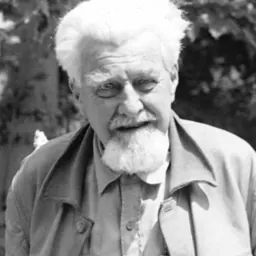


Related people
Same field, nearest in time
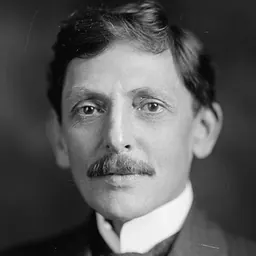


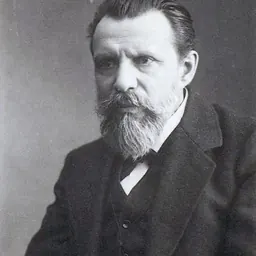

Contemporaries
People whose lives overlapped Oskar Heinroth's
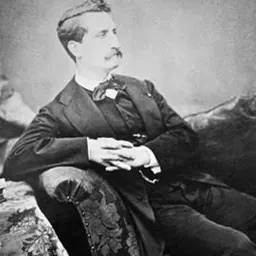

Frequently asked questions
Who was Oskar Heinroth?
German zoologist (1871-1945)
When was Oskar Heinroth born?
Oskar Heinroth was born on 1 March 1871 in Mainz.
When did Oskar Heinroth die?
Oskar Heinroth died on 31 May 1945 in Berlin.
What was Oskar Heinroth's occupation?
Oskar Heinroth was an ornithologist, zoologist, taxonomist, zoological collector, scientific collector and ethologist.
What nationality was Oskar Heinroth?
Oskar Heinroth was German.
Sources & further reading
Cite this page
APA: Biography.guide. (2026). Oskar Heinroth. https://biography.guide/oskar-heinroth/
MLA: "Oskar Heinroth." Biography.guide, https://biography.guide/oskar-heinroth/.
Chicago: "Oskar Heinroth." Biography.guide. https://biography.guide/oskar-heinroth/.
Data last updated: 2026-09-20 · Spot an error? Report a correction.
Page generated 2026-09-27 05:30 UTC