
About Douglas Spalding
Lived 1841 – 1877 (aged 35–36). Douglas Spalding was a British ethologist and ornithologist.
Douglas Alexander Spalding (14 July 1841 – 1877) was a British biologist who studied animal behaviour and worked in the home of Viscount Amberley.
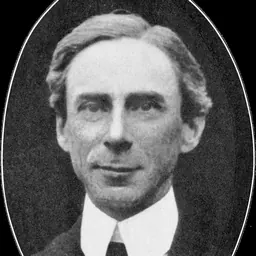
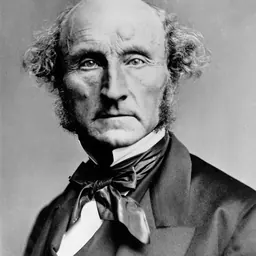
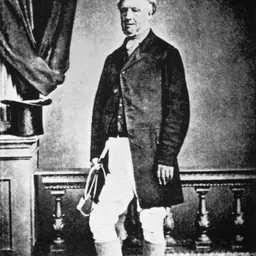
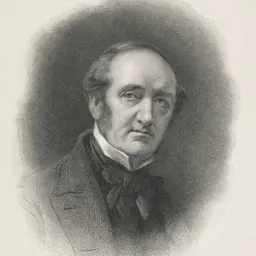
Biography Spalding was born in Islington in London in 1841, the only son of Jessey Fraser and Alexander Mitchell Spalding, office clerk. Not long after his birth, his parents moved to Aberdeenshire, Scotland where they had previously lived. While he was working as a slater in Aberdeen, the philosopher Alexander Bain persuaded the University of Aberdeen to allow Spalding to attend courses without charge. He studied philosophy and literature, and after a year left for London. He trained as a lawyer. But when he contracted tuberculosis, he travelled in Europe in hopes of finding a cure, and in Avignon met John Stuart Mill and through him Viscount Amberley (son of the former British prime minister Lord John Russell, by then 1st Earl Russell). He became tutor to Viscount Amberley's children at Cleddon Hall, Monmouthshire, including perhaps the young Bertrand Russell, and also carried on an intermittent affair with Viscountess Amberley. After the Lord Amberley's death in 1876, Spalding returned to the continent and died on 31 October 1877 at Dunkirk, on his way to the Mediterranean coast for the sake of his health.
Spalding carried out some experiments on animal behaviour, and discovered the phenomenon now known as imprinting, later rediscovered by Oskar Heinroth, then studied at length and popularised by Konrad Lorenz. He was greatly ahead of his time in his recognition of the importance of the interaction between learning and instinct in determining behaviour, and in his use of the experimental method in studying behaviour. Although his work is little known nowadays, its importance is recognised by historians of psychology; the biologist J. B. S. Haldane reprinted Spalding's essay "On Instinct" in 1954 to clarify the history of the subject.
More recently, lack of familiarity with Darwin's exposition of transitional habits in On the Origin of Species has led some scientists to claim that, in 1873, Spalding was first to identify the process which is now known as the Baldwin effect, not Baldwin in 1896.
Don’t just read it —
keep it.
Full-length biographies made to live with: read them, listen on the way to work, watch them tonight.
- E-book
- Audio
- Video
Instant download · yours to keep · every purchase keeps this site free
Important facts
People in Douglas Spalding's life
Named in this biography and alive at the same time


Related people
Same field, nearest in time



Contemporaries
People whose lives overlapped Douglas Spalding's

Frequently asked questions
Who was Douglas Spalding?
British biologist
When was Douglas Spalding born?
Douglas Spalding was born on 14 July 1841 in London.
When did Douglas Spalding die?
Douglas Spalding died in 1877.
What was Douglas Spalding's occupation?
Douglas Spalding was an ethologist and ornithologist.
What nationality was Douglas Spalding?
Douglas Spalding was British.
Sources & further reading
Cite this page
APA: Biography.guide. (2026). Douglas Spalding. https://biography.guide/douglas-spalding/
MLA: "Douglas Spalding." Biography.guide, https://biography.guide/douglas-spalding/.
Chicago: "Douglas Spalding." Biography.guide. https://biography.guide/douglas-spalding/.
Data last updated: 2026-09-20 · Spot an error? Report a correction.
Page generated 2026-09-27 05:17 UTC