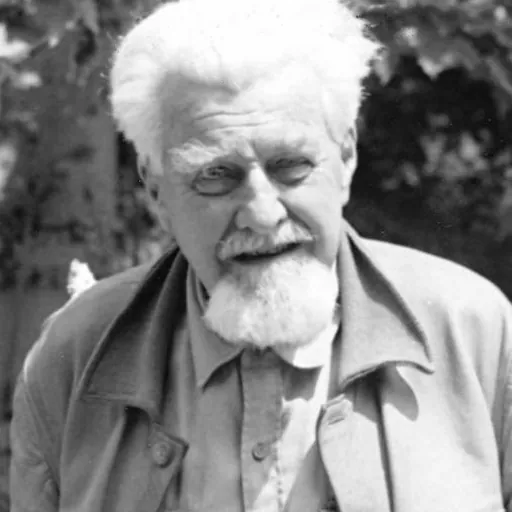
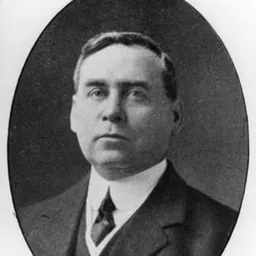
Konrad Lorenz
Austrian zoologist, winner of the Nobel Prize in Physiology or Medicine in 1973
About Konrad Lorenz
Lived 1903 – 1989 (aged 85). Konrad Lorenz was an Austrian ethologist, zoologist, university teacher, writer, physician and philosopher.
Konrad Zacharias Lorenz (; 7 November 1903 27 February 1989) was an Austrian zoologist, ethologist, and ornithologist. He shared the 1973 Nobel Prize in Physiology or Medicine with Nikolaas Tinbergen and Karl von Frisch. He is often regarded as one of the founders of modern ethology, the study of animal behavior. He developed an approach that began with an earlier generation, including his teacher Oskar Heinroth.
Lorenz studied instinctive behavior in animals, especially in greylag geese and jackdaws. Working with geese, he investigated the principle of imprinting, the process by which some nidifugous birds (i.e. birds that leave their nest early) bond instinctively with the first moving object that they see within the first hours of hatching. Although Lorenz did not discover the topic, he became widely known for his descriptions of imprinting as an instinctive bond. In 1936, he met Tinbergen, and the two collaborated in developing ethology as a separate sub-discipline of biology. A Review of General Psychology survey, published in 2002, ranked Lorenz the 65th most cited scholar of the 20th century in the technical psychology journals, introductory psychology textbooks, and survey responses.
Lorenz's work was interrupted by the onset of World War II, and in 1941 he was recruited into the German Army as a medic. In 1944, he was sent to the Eastern Front, where he was captured by the Soviet Red Army and spent four years as a German prisoner of war in Soviet Armenia. After the war, he regretted his membership in the Nazi Party.
Lorenz wrote numerous books, some of which, such as King Solomon's Ring, On Aggression, and Man Meets Dog, became popular reading. His last work Here I Am Where Are You? is a summary of his life's work and focuses on his famous studies of greylag geese.
Biography Lorenz was the son of Adolf Lorenz, a wealthy and distinguished surgeon, and his wife Emma (née Lecher), a physician who had been her husband's assistant. The family lived on a large estate at Altenberg and had a city apartment in Vienna. He was educated at the Public Schottengymnasium of the Benedictine monks in Vienna.
In his autobiographical essay, published in 1973 in (winners of the prizes are requested to provide such essays), Lorenz credits his career to his parents, who "were supremely tolerant of my inordinate love for animals", and to his childhood encounter with Selma Lagerlöf's The Wonderful Adventures of Nils, which filled him with a great enthusiasm about wild geese.
At the request of his father, he began a premedical curriculum in 1922 at Columbia University, but returned to Vienna in 1923 to continue his studies at the University of Vienna. He graduated as Doctor of Medicine (MD) in 1928 and became an assistant professor at the Institute of Anatomy until 1935. He finished his zoological studies in 1933 and received his second doctorate (PhD).
While still a student, Lorenz began developing what would become a large menagerie, ranging from domestic to exotic animals. In his popular book King Solomon's Ring, Lorenz recounts that while studying at the University of Vienna, he kept a variety of animals at his parents' apartment, ranging from fish to a capuchin monkey named Gloria.
In 1940 he became a professor of psychology at the University of Königsberg. He was drafted into the Wehrmacht in 1941. He sought to be a motorcycle mechanic, but instead he was assigned as a military psychologist, conducting racial studies on humans in occupied Poznań under Rudolf Hippius. The objective was to study the biological characteristics of "German–Polish half-breeds" to determine whether they "benefited" from the same work ethics as "pure" Germans. The degree to which Lorenz participated in the project is unknown, but the project director Hippius referred a couple of times to Lorenz as an "examining psychologist".
He was sent to the Russian front in 1944, where he quickly became a prisoner of war in the Soviet Union from 1944 to 1948. In captivity in Soviet Armenia, he continued to work as a medic and "became tolerably fluent in Russian and got quite friendly with some Russians, mostly doctors". When he was repatriated, he was allowed to keep the manuscript of a book he had been writing and his pet starling. He arrived back in Altenberg (his family home, near Vienna) both "with manuscript and bird intact". The manuscript became his 1973 book Behind the Mirror.
He retired from the Max Planck Institute in 1973 but continued to research and publish from Altenberg and Grünau im Almtal in Austria. He died on 27 February 1989 in Altenberg.
Personal life Lorenz wed his childhood companion Margarethe Gebhardt, a gynaecologist and the daughter of a local market gardener. The couple had three children one son and two daughters. He resided on the Lorenz family estate, notable for its "fantastical neo-baroque mansion", formally belonging to his father.
Ethology
Lorenz is recognized as one of the founding fathers of the field of ethology, the study of animal behavior. He is best known for his research of the principle of attachment, or imprinting, through which in some species a bond is formed between a newborn animal and its caregiver. This principle had been discovered by Douglas Spalding in the 19th century, and Lorenz's mentor Oskar Heinroth had also worked on the topic, but Lorenz's description of , imprinting, in nidifugous birds such as greylag geese in his 1935 book ("The Companion in the Environment of Birds") became the foundational description of the phenomenon.
Here, Lorenz used Jakob von Uexküll's concept of to understand how the limited perception of animals filtered out certain phenomena with which they interacted instinctively. For example, a young goose instinctively bonds with the first moving stimulus it perceives, whether it be its mother, or a person. Lorenz showed that this behavior of imprinting is what allows the goose to learn to recognize members of its own species, enabling them to be the object of subsequent behavior patterns such as mating.
Lorenz's approach to ethology derived from a skepticism towards the studies of animal behavior done in laboratory settings. He considered that in order to understand the mechanisms of animal behavior, it was necessary to observe their full range of behaviors in their natural context. Lorenz did not carry out much traditional fieldwork but observed animals near his home. His method involved empathizing with animals, often using anthropomorphization to imagine their mental states. He believed that animals were capable of experiencing many of the same emotions as humans.
Tinbergen, Lorenz's friend with whom he conjointly received the Nobel Prize, summarized Lorenz's major contribution to ethology as making behavior a topic of biological inquiry, considering behavior a part of an animal's evolutionary equipment. Tinbergen and Lorenz contributed to making ethology a recognized sub-discipline within biology and founded the first specialized journal of the field "Ethology" (originally ).
Involvement with Nazism Nazism Lorenz joined the Nazi Party in 1938 and accepted a university chair under the Nazi regime. In his application for party membership he wrote: "I'm able to say that my whole scientific work is devoted to the ideas of the National Socialists." His publications during that time led in later years to allegations that his scientific work had been contaminated by Nazi sympathies. His published writing during the Nazi period included support for Nazi ideas of "racial hygiene" couched in pseudoscientific metaphors.
In his autobiography, Lorenz wrote: and he denied having known the extent of the genocide, despite his position as a psychologist in the Office of Racial Policy. He was shown to have made anti-Semitic jokes on "Jewish characteristics" in letters to his mentor Heinroth. In 2015, the University of Salzburg posthumously rescinded an honorary doctorate awarded to Lorenz in 1983, citing his party membership and his assertions in his application that he was "always a National Socialist", and that his work "stands to serve National Socialist thought". The university also accused him of using his work to spread "basic elements of the racist ideology of National Socialism".
Ecology During the final years of his life, Lorenz supported the fledgling Austrian Green Party and in 1984 became the figurehead of the Konrad Lorenz , a grass-roots movement that was formed to prevent the building of a power plant at the Danube near Hainburg an der Donau and thus the destruction of the surrounding woodland.
Contributions and legacy
Lorenz has been called "The father of ethology" by Niko Tinbergen. Perhaps Lorenz's most important contribution to ethology was his idea that behavior patterns can be studied as anatomical organs. This concept forms the foundation of ethological research. However, Richard Dawkins called Lorenz a "'good of the species' man", stating that the idea of group selection was "so deeply ingrained" He wrote that in comparative behavioral research, "it is necessary to describe various patterns of movement, record them, and above all, render them unmistakably recognizable".
There are three research institutions named after Lorenz in Austria: the Konrad Lorenz Institute for Evolution and Cognition Research (KLI) was housed in Lorenz' family mansion at Altenberg before moving to Klosterneuburg in 2013; the Konrad Lorenz Forschungsstelle (KLF) at his former field station in Grünau; and the Konrad Lorenz Institute of Ethology, an external research facility of the University of Veterinary Medicine Vienna.
Vision of the challenges facing humanity
Lorenz predicted the relationship between market economics and the threat of ecological catastrophe. In his 1973 book Civilized Man's Eight Deadly Sins, Lorenz addresses the following paradox: All the advantages that man has gained from his ever-deepening understanding of the natural world that surrounds him, his technological, chemical and medical progress, all of which should seem to alleviate human suffering ... tends instead to favor humanity's destruction.
Lorenz adopts an ecological model to attempt to grasp the mechanisms behind this contradiction. Thus "all species ... are adapted to their environment ... including not only inorganic components ... but all the other living beings that inhabit the locality". Let us imagine that an absolutely unbiased investigator on another planet, perhaps on Mars, is examining human behavior on Earth, with the aid of a telescope whose magnification is too small to enable him to discern individuals and follow their separate behavior, but large enough for him to observe occurrences such as migrations of peoples, wars, and similar great historical events. He would never gain the impression that human behavior was dictated by intelligence, still less by responsible morality. If we suppose our extraneous observer to be a being of pure reason, devoid of instincts himself and unaware of the way in which all instincts in general and aggression in particular can miscarry, he would be at a complete loss how to explain history at all. The ever-recurrent phenomena of history do not have reasonable causes. It is a mere commonplace to say that they are caused by what common parlance so aptly terms "human nature". Unreasoning and unreasonable human nature causes two nations to compete, though no economic necessity compels them to do so; it induces two political parties or religions with amazingly similar programs of salvation to fight each other bitterly, and it impels an Alexander or a Napoleon to sacrifice millions of lives in his attempt to unite the world under his scepter. We have been taught to regard some of the persons who have committed these and similar absurdities with respect, even as "great" men, we are wont to yield to the political wisdom of those in charge, and we are all so accustomed to these phenomena that most of us fail to realize how abjectly stupid and undesirable the historical mass behavior of humanity actually is.
Lorenz does not see human independence from natural ecological processes as necessarily bad. He states that: Austrian Decoration for Science and Art in 1964 Elected a Foreign Member of the Royal Society (ForMemRS) in 1964 Kalinga Prize for the Popularization of Science in 1969 Gold Medal of the Humboldt Society in 1972 Nobel Prize in Physiology or Medicine in 1973 Honorary Doctorate, University of Salzburg, 1983, revoked in 2015 Grand Cross with Star and Sash of the Order of Merit of the Federal Republic of Germany (Großes Verdienstkreuz mit Stern und Schulterband) in 1984 Bavarian Maximilian Order for Science and Art in 1984
Works Lorenz's best-known books are King Solomon's Ring and On Aggression, both written for a popular audience. His scientific work appeared mainly in journal articles, written in German; it became widely known to English-speaking scientists through its description in Tinbergen's 1951 book The Study of Instinct, though many of his papers were later published in English translation in the two volumes titled Studies in Animal and Human Behavior. King Solomon's Ring (1949) (, 1949) Man Meets Dog (1950) (, 1950) Evolution and Modification of Behaviour (1965) On Aggression (1966) (, 1963) Studies in Animal and Human Behavior, Volume I (1970) Studies in Animal and Human Behavior, Volume II (1971) Motivation of Human and Animal Behavior: An Ethological View. With Paul Leyhausen (1973). New York: D. Van Nostrand Co. Behind the Mirror: A Search for a Natural History of Human Knowledge (1973) (, 1973) Civilized Man's Eight Deadly Sins (1974) (, 1973) The Year of the Greylag Goose (1979) (, 1979) The Foundations of Ethology (1982) The Waning of Humaneness (1987) (, 1983) Here I Am Where Are You? A Lifetime's Study of the Uncannily Human Behaviour of the Greylag Goose. (1988). Translated by Robert D. Martin from The Natural Science of the Human Species: An Introduction to Comparative Behavioral Research The Russian Manuscript (1944–1948) (1995)
Don’t just read it —
keep it.
Full-length biographies made to live with: read them, listen on the way to work, watch them tonight.
- E-book
- Audio
- Video
Instant download · yours to keep · every purchase keeps this site free
Important facts
People in Konrad Lorenz's life
Named in this biography and alive at the same time



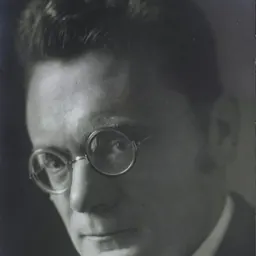

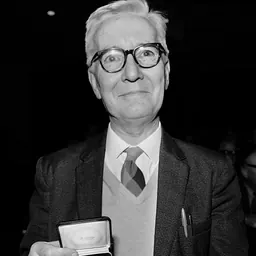


Related people
Same field, nearest in time

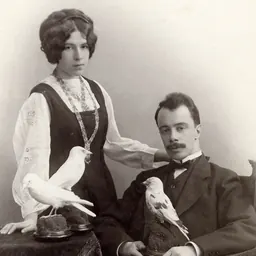


Contemporaries
People whose lives overlapped Konrad Lorenz's

Frequently asked questions
Who was Konrad Lorenz?
Austrian zoologist, winner of the Nobel Prize in Physiology or Medicine in 1973 (1903–1989)
When was Konrad Lorenz born?
Konrad Lorenz was born on 7 November 1903 in Vienna.
When did Konrad Lorenz die?
Konrad Lorenz died on 27 February 1989 in Vienna.
What was Konrad Lorenz's occupation?
Konrad Lorenz was an ethologist, zoologist, university teacher, writer, physician and philosopher.
What nationality was Konrad Lorenz?
Konrad Lorenz was Austrian.
Sources & further reading
Cite this page
APA: Biography.guide. (2026). Konrad Lorenz. https://biography.guide/konrad-lorenz/
MLA: "Konrad Lorenz." Biography.guide, https://biography.guide/konrad-lorenz/.
Chicago: "Konrad Lorenz." Biography.guide. https://biography.guide/konrad-lorenz/.
Data last updated: 2026-09-23 · Spot an error? Report a correction.
Portrait: Wikimedia Commons · author & licence
Page generated 2026-09-27 05:06 UTC