
About Selma Lagerlöf
Lived 1858 – 1940 (aged 81). Selma Lagerlöf was a Swedish novelist, children's writer, biographer, teacher, poet and writer.
Selma Ottilia Lovisa Lagerlöf (, , ; 20 November 1858 – 16 March 1940) was a Swedish writer. She published her first novel, Gösta Berling's Saga, at the age of 33. She was the first woman to win the Nobel Prize in Literature, which she was awarded in 1909. In 1914, she was the first woman to be granted a membership of the Swedish Academy.
Life
Early years
Selma Ottilia Lovisa Lagerlöf was born on 20 November 1858 at Mårbacka, Värmland, Kingdoms of Sweden and Norway. Lagerlöf was the daughter of Erik Gustaf Lagerlöf, a lieutenant in the Royal Värmland Regiment, and Louise Lagerlöf (née Wallroth), whose father was a well-to-do merchant and a foundry owner . Lagerlöf was the couple's fifth child out of six. She was born with a hip injury, which was caused by detachment in the hip joint. At the age of three and a half, a sickness left her lame in both legs, although she later recovered.
She was a quiet, serious child with a deep love of reading. She wrote poetry but did not publish anything until later in life. Her grandmother helped raise her, often telling stories of fairytales and fantasy. Growing up, she was plain and slightly lame, and an account stated that the cross-country wanderings of Margarethe and Elisabet in Gösta Berling's Saga could be the author's compensatory fantasies.
In 1875, Lagerlöf lived in the Karlskoga Church Rectory alongside Erik Tullius Hammargren and his wife, Ottiliana Lagerlöf, who was her aunt, during which time she was one of Hammargren's confirmation students.
The sale of the Lagerlöf family's estate in 1884 had a serious impact on her development. Selma's father is said to have been an alcoholic, something she rarely discussed. Her father did not want Selma to continue her education or be involved with the women's movement. Later in life, she bought back her father's estate with the money she received for her Nobel Prize. Lagerlöf lived there for the rest of her life.
Teaching life
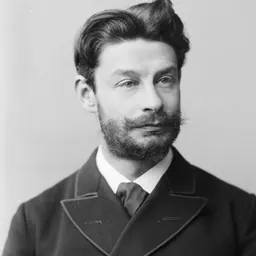
Lagerlöf studied at the Högre lärarinneseminariet in Stockholm from 1882 to 1885. She worked as a country schoolteacher at a high school for girls in Landskrona from 1885 to 1895. Through her studies at the Royal Women's Superior Training Academy in Stockholm, Lagerlöf reacted against the realism of contemporary Swedish-language writers such as August Strindberg. She began her first novel, Gösta Berling's Saga, while working as a teacher in Landskrona. Her first break as a writer came when she submitted the first chapters to a literary contest in the magazine Idun, and won a publishing contract for the whole book. At first, her writing only received mild reviews from critics. Once a popular critic, Georg Brandes, had given her positive reviews of the Danish translation, her popularity soared. She received financial support from Fredrika Limnell, who wished to enable her to concentrate on her writing.
Literary career
A visit in 1900 to the American Colony in Jerusalem became the inspiration for Lagerlöf's book by that name. The royal family and the Swedish Academy gave her substantial financial support to continue her passion. Jerusalem was also acclaimed by critics, who began comparing her to Homer and Shakespeare, so that she became a popular figure both in Sweden and abroad. In Italy, a legend of a Christ Child figure that had been replaced with a false version inspired Lagerlöf's novel (The Miracles of the Antichrist). Set in Sicily, the novel explores the interplay between Christian and socialist moral systems. However, most of Lagerlöf's stories were set in Värmland.
In 1902, Lagerlöf was asked by the National Teachers' Association to write a geography book for children. She wrote (The Wonderful Adventures of Nils), a novel about a boy from the southernmost part of Sweden, who had been shrunk to the size of a thumb and who travelled on the back of a goose across the country. Lagerlöf mixed historical and geographical facts about the provinces of Sweden with the tale of the boy's adventures, detailing how he managed to return home and was restored to his normal size.
Lagerlöf with her friend and literary assistant Valborg Olander. Elkan was jealous of the relationship.
She moved to Falun in 1897 and met Valborg Olander, who became her literary assistant and friend, but Elkan's jealousy of Olander was a complication in the relationship. Olander, a teacher, was also active in the growing women's suffrage movement in Sweden. Selma Lagerlöf herself was active as a speaker for the National Association for Women's Suffrage, which was beneficial for the organisation because of the great respect which surrounded Lagerlöf, and she spoke at the International Suffrage Congress in Stockholm in June 1911, where she gave the opening address, as well as at the victory party of the Swedish suffrage movement after women suffrage had been granted in May 1919.
Selma Lagerlöf was a friend of the German-Jewish writer Nelly Sachs. Shortly before her death in 1940, Lagerlöf intervened with the Swedish royal family to secure the release of Sachs and Sachs' aged mother from Nazi Germany, on the last flight from Germany to Sweden, and their lifelong asylum in Stockholm.
Personal life Relationships
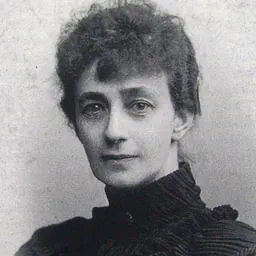
In 1894, she met the Swedish writer Sophie Elkan, who became her friend and companion. Over many years, Elkan and Lagerlöf critiqued each other's work. Lagerlöf wrote that Elkan strongly influenced her work and that she often disagreed sharply with the direction Lagerlöf wanted to take in her books. Lagerlöf's letters to Elkan were published in 1993, titled (You Teach Me to Be Free). There appears to have been a strong rivalry between Elkan and Olander. Both relationships were close, emotional, exclusive and described in terms suggestive of love, the boundary between expressions of friendship and love being somewhat vague at the time. Still, it is primarily the surviving correspondence with Olander that contains passages implying decidedly erotic and physical passion, even though Lagerlöf took care to destroy many of the letters she found too risky. Homosexual relations between women were taboo as well as illegal in Sweden at the time, so none of the women involved ever revealed such a relationship publicly. Sjöström's retelling of Lagerlöf's tales about rural Swedish life, in which his camera recorded the detail of traditional village life and the Swedish landscape, provided the basis of some of the most poetic and memorable products of silent cinema. The 1921 film adaptation of Thy Soul Shall Bear Witness! (Körkarlen) was critically acclaimed and influential within cinema. Jerusalem was adapted in 1996 into the internationally acclaimed film of the same name.
Awards
On 10 December 1909, Selma Lagerlöf won the Nobel Prize "in appreciation of the lofty idealism, vivid imagination, and spiritual perception that characterize her writings", but the decision was preceded by harsh internal power struggle within the Swedish Academy, the body that awards the Nobel Prize in Literature. During her acceptance speech, she told a story of her father, as she 'visited him in heaven'. In the story, she asks her father for help with the debt she owes and her father explains the debt is from all the people who supported her throughout her career.
In 1907, she received the honorary degree of doctor of letters (filosofie hedersdoktor) from Uppsala University. In 1928, she received an honorary doctorate from the University of Greifswald's Faculty of Arts. At the start of World War II , she sent her Nobel Prize medal and gold medal from the Swedish Academy to the government of Finland to help raise money to fight the Soviet Union. The Finnish government was so touched that it raised the necessary money by other means and returned her medal to her.
Legacy In 1983, the Sunne Municipality in Värmland County founded the Selma Lagerlöf Prize, awarded to an author writing in the spirit of Lagerlöf. Recipients receive 100,000 Swedish kronor.
In 1991, she became the first woman to be depicted on a Swedish banknote, when the first 20-kronor note was released.
A flight of steps connecting two streets is named after her in Jerusalem, Israel.
Two hotels are named after her in Östra Ämtervik in Sunne, and her home, Mårbacka, is preserved as a museum.
Works Original Swedish-language publications are listed primarily.
The popularity of Lagerlöf in the United States was due in part to Velma Swanston Howard, or V. S. Howard (1868–1937, a suffragette and Christian scientist) – who was an early believer in her appeal to Americans and who carefully translated many of her books. Olson-Buckner, Elsa. The Epic Tradition in Gösta Berlings Saga. Brooklyn, N.Y.: Theodore Gaus, 1978. Vrieze, Folkerdina Stientje de. Fact and Fiction in the Autobiographical Works of Selma Lagerlof. Assen, Netherlands: Van Gorcum, 1958. Wägner, Elin. Selma Lagerlöf I (1942) and Selma Lagerlöf II. (1943) Watson, Jennifer. Swedish Novelist Selma Lagerlöf, 1858–1940, and Germany at the Turn of the Century: O du Stern ob meinem Garten. Lewiston, New York: Edwin Mellen Press, 2004.
Don’t just read it —
keep it.
Full-length biographies made to live with: read them, listen on the way to work, watch them tonight.
- E-book
- Audio
- Video
Instant download · yours to keep · every purchase keeps this site free
Important facts
People in Selma Lagerlöf's life
Named in this biography and alive at the same time



Related people
Same field, nearest in time




Contemporaries
People whose lives overlapped Selma Lagerlöf's


Frequently asked questions
Who was Selma Lagerlöf?
Swedish writer (1858–1940)
When was Selma Lagerlöf born?
Selma Lagerlöf was born on 20 November 1858 in Östra Ämtervik church parish.
When did Selma Lagerlöf die?
Selma Lagerlöf died on 16 March 1940 in Östra Ämtervik church parish.
What was Selma Lagerlöf's occupation?
Selma Lagerlöf was a novelist, children's writer, biographer, teacher, poet and writer.
What nationality was Selma Lagerlöf?
Selma Lagerlöf was Swedish.
Sources & further reading
Cite this page
APA: Biography.guide. (2026). Selma Lagerlöf. https://biography.guide/selma-lagerlof/
MLA: "Selma Lagerlöf." Biography.guide, https://biography.guide/selma-lagerlof/.
Chicago: "Selma Lagerlöf." Biography.guide. https://biography.guide/selma-lagerlof/.
Data last updated: 2026-09-20 · Spot an error? Report a correction.
Page generated 2026-09-27 05:32 UTC