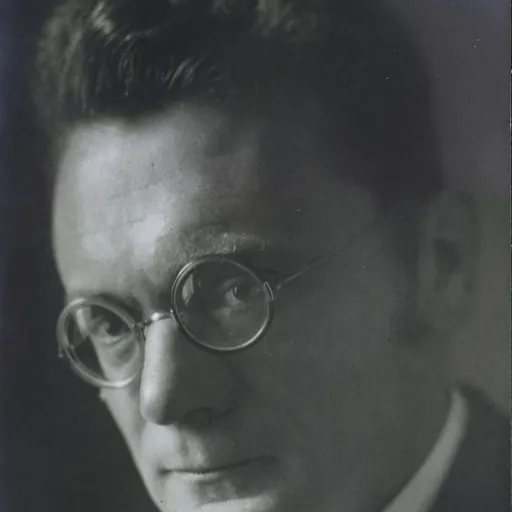
About Karl von Frisch
Lived 1886 – 1982 (aged 95). Karl von Frisch was an Austrian beekeeper, ethologist, university teacher, entomologist, zoologist and biologist, known for Bee.
Karl Ritter von Frisch (20 November 1886 – 12 June 1982) was a German-Austrian ethologist who received the Nobel Prize in Physiology or Medicine in 1973, along with Nikolaas Tinbergen and Konrad Lorenz.
His work centered on investigations of the sensory perceptions of the honey bee and he was one of the first to translate the meaning of the waggle dance. His theory, described in his 1927 book Aus dem Leben der Bienen (translated into English as The Dancing Bees), was disputed by other scientists and greeted with skepticism at the time. Only much later was it shown to be an accurate theoretical analysis.
Early life
Karl Ritter von Frisch was the son of the surgeon and urologist Anton von Frisch, by his marriage to Marie Exner. Karl was the youngest of four sons, all of whom became university professors. Von Frisch was of partial Jewish heritage.
Karl studied at the University of Vienna under Hans Leo Przibram and in Munich under Richard von Hertwig, initially in the field of medicine, but later turned to the natural sciences. He received his doctorate in 1910 and in the same year started work as an assistant in the zoology department of the Ludwig-Maximilians-Universität München.
Career
In 1912, he became a lecturer in zoology and comparative anatomy there; and in 1919 was promoted to a professorship. His research on honeybees was continued by his student Ingeborg Beling. In 1921 he went to Rostock University as a professor of zoology and director of an institute. In 1923 he accepted the offer of a chair at Breslau University, returning in 1925 to the Ludwig-Maximilians-Universität München, where he became the head of the institute of zoology.
Von Frisch attracted negative attention from the Nazi regime, among other things for employing Jewish assistants, including many women. Eventually Frisch was forced into retirement, but the decision was reversed because of his research on nosema infections in bees. In the original edition of his book "Du und das Leben" ("You and Life") he wrote in support of the Nazi Law for the Prevention of Hereditarily Diseased Offspring
The institute of zoology was destroyed in the Second World War, and in 1946, Frisch went to work at the University of Graz, remaining there until 1950, when he returned to the reopened Munich institute. He retired in 1958 but continued his research.
Personal life
Karl Ritter von Frisch married Margarete, née Mohr, who died in 1964. Their son, Otto Ritter von Frisch, was director of the Brunswick natural history museum between 1977 and 1995.
Research
Frisch studied aspects of animal behaviour, including animal navigation, in the Carniolan honey bee (Apis mellifera carnica), a subspecies of the European honey bee.
Bee perception
Frisch discovered that bees can distinguish various blossoming plants by their scent, and that each bee is "flower constant". Surprisingly, their sensitivity to a "sweet" taste is only slightly stronger than in humans. He thought possible that a bee's spatial sense of smell arose from the firm coupling of its olfactory sense with its tactile sense.
Frisch was the second to demonstrate that honey bees had color vision (first was Charles Henry Turner), which he accomplished by using classical conditioning. He trained bees to feed on a dish of sugar water set on a colored card. He then set the colored card in the middle of a set of gray-toned cards. If the bees see the colored card as a shade of gray, then they will confuse the blue card with at least one of the gray-toned cards; bees arriving to feed will visit more than one card in the array. On the other hand, if they have color vision, then the bees visit only the blue card, as it is visually distinct from the other cards.
Frisch's investigation of a bee's powers of orientation were significant. He discovered that bees can recognize the desired compass direction in three different ways: by the Sun, by the polarization pattern of the blue sky, and by the Earth's magnetic field, whereby the Sun is used as the main compass, with the alternatives reserved for the conditions arising under cloudy skies or within a dark beehive.
Light scattered in a blue sky forms a characteristic pattern of partially polarized light which is dependent on the position of the Sun and invisible to human eyes. With a UV receptor in each of the lens units of a compound eye, and a UV filter oriented differently in each of these units, a bee is able to detect this polarization pattern. A small piece of blue sky is enough for a bee to recognize the pattern changes occurring over the course of a day. This provides not only directional but also temporal information.
Frisch proved that variations in the position of the Sun over the course of a day provided bees with an orientation tool. They use this capability to obtain information about the progression of the day deep inside a dark beehive comparable to what is known from the position of the Sun. This makes it possible for the bees to convey always up-to-date directional information during their waggle dance, without having to make a comparison with the Sun during long dance phases. This provides them not only with alternative directional information, but also with additional temporal information.
Bees have an internal clock with three different synchronization or timekeeping mechanisms. If a bee knows the direction to a feeding place found during a morning excursion, it can also find the same location, as well as the precise time at which this source provides food, in the afternoon, based on the position of the sun.
Based on the magnetic field, the alignment of the plane of a honeycomb under construction (e.g., the new honeycomb of a swarm) will be the same as that of the home hive of the swarm, according to Frisch. By experiment, even deformed combs bent into a circle can be produced.
The vertical alignment of the honeycomb is attributed by Frisch to the ability of bees to identify what is vertical with the help of their head used as a pendulum together with a ring of sensory cells in the neck.
Dances as language
Knowledge about feeding places can be relayed from bee to bee. The means of communication is a special dance of which there are two forms:
Round dance
The "round dance" provides the information that there is a feeding place in the vicinity of the beehive at a distance between 50 and 100 meters (yards), without the particular direction being given. By means of close contact among the bees it also supplies information about the type of food (blossom scent).
The foraging bee ... begins to perform a kind of "round dance". On the part of the comb where she is sitting she starts whirling around in a narrow circle, constantly changing her direction, turning now right, now left, dancing clockwise and anti-clockwise, in quick succession, describing between one and two circles in each direction. This dance is performed among the thickest bustle of the hive. What makes it so particularly striking and attractive is the way it infects the surrounding bees; those sitting next to the dancer start tripping after her, always trying to keep their outstretched feelers on close contact with the tip of her abdomen. ... They take part in each of her maneuverings so that the dancer herself, in her mad wheeling movements, appears to carry behind her a perpetual comet's tail of bees.
Waggle dance
Interpretation of the waggle dance: direction relative to the sun is shown by angle to the vertical; distance by the time taken on the central stretch.
The "waggle dance" is used to relay information about more distant food sources. In order to do this, the dancing bee moves forward a certain distance on the vertically hanging honeycomb in the hive, then traces a half circle to return to her starting point, whereupon the dance begins again. On the straight stretch, the bee "waggles" with her posterior. The direction of the straight stretch contains the information about the direction of the food source, the angle between the straight stretch and the vertical being precisely the angle which the direction of flight has to the position of the sun. The distance to the food source is relayed by the time taken to traverse the straight stretch, one second indicating a distance of approximately one kilometer (1000 yards) (so the speed of the dance is inversely related to the actual distance). The other bees take in the information by keeping in close contact with the dancing bee and reconstructing its movements. They also receive information via their sense of smell about what is to be found at the food source (type of food, pollen, propolis, water) as well as its specific characteristics. The orientation functions so well that the bees can find a food source with the help of the waggle dance even if there are hindrances they must detour around like an intervening mountain.
As to a sense of hearing, Frisch could not identify this perceptive faculty, but it was assumed that vibrations could be sensed and used for communication during the waggle dance. Confirmation was later provided by Dr. Jürgen Tautz, a bee researcher at Würzburg University's Biocenter.
"Dialects"
The linguistic findings described above were based on Frisch's work primarily with the Carnica variety of bees. Investigations with other varieties led to the discovery that language elements were variety-specific, so that how distance and direction information is relayed varies greatly.
Other work
Frisch's honey bee work included the study of the pheromones that are emitted by the queen bee and her daughters, which maintain the hive's very complex social order. Outside the hive, the pheromones cause the male bees, or drones, to become attracted to a queen and mate with her. Inside the hive, the drones are not affected by the odor.
Honors and decorations
Lieben Prize (1921) Pour le Mérite for Arts and Sciences (1952) Foreign Honorary Member of the American Academy of Arts and Sciences (1952) Elected a Foreign Member of the Royal Society (ForMemRS) in 1954 Austrian Medal for Science and Art (1960) Balzan Prize for Biology "For having consecrated his entire life to experimenting on thousands of bees, thus discovering a true language of gestures for communication and opening new insights into the knowledge of insect behaviour" (motivation of the Balzan General Prize Committee). (1962) Nobel Prize for Physiology or Medicine, with Konrad Lorenz and Nikolaas Tinbergen for his achievements in comparative behavioral physiology and pioneering work in communication between insects. (1973) Grand Merit Cross with Star and Sash of the Federal Republic of Germany (Großes Verdienstkreuz mit Stern und Schulterband) (1974) Bavarian Maximilian Order for Science and Art (1981) In his honor, the Karl Ritter von Frisch Medal of the German Zoological Society (Deutschen Zoologischen Gesellschaft, DZG), is awarded every two years to scientists whose work is distinguished by extraordinary zoological achievements which represent an integration of insights from several different biological disciplines. It is Germany's most important science prize in zoology and includes prize money of 10,000 euros. Member of the German Academy of Sciences Leopoldina – National Academy of Sciences Honorary doctorates from a number of universities, honorary membership of numerous academies and scientific societies
Publications
In German
Der Farben- und Formensinn der Bienen. In: Zoologische Jahrbücher (Physiologie) 35, 1–188, (1914–15) Über den Geruchssinn der Bienen und seine blütenbiologische Bedeutung. In: Zoologische Jahrbücher (Physiologie) 37, 1–238 (1919) Über die ‚Sprache' der Bienen. Eine tierpsychologische Untersuchung. In: Zoologische Jahrbücher (Physiologie) 40, 1–186 (1923) Aus dem Leben der Bienen. Springer Verlag Berlin (1927) Untersuchung über den Sitz des Gehörsinnes bei der Elritze. In: Zeitschrift für vergleichende Physiologie 17, 686–801 (1932), it R. Stetter Über den Geschmacksinn der Bienen. In: Zeitschrift für vergleichende Physiologie 21, 1–156 (1934) Du und das Leben – Eine moderne Biologie für Jedermann. (1936) [literally, You and Life: A Modern Biology for Everyman] Über einen Schreckstoff der Fischhaut und seine biologische Bedeutung. In: Zeitschrift für vergleichende Physiologie 29, 46–145 (1941) Die Tänze der Bienen. In: Österreichische Zoologische Zeitschrift 1, 1–48 (1946) Die Polarisation des Himmelslichtes als orientierender Faktor bei den Tänzen der Bienen. In: Experientia (Basel) 5, 142–148 (1949) Die Sonne als Kompaß im Leben der Bienen. In: Experientia (Basel) 6, 210–221 (1950) Das kleine Insektenbuch. Insel Verlag (1961) Tanzsprache und Orientierung der Bienen. Springer-Verlag Berlin/Heidelberg/New York (1965) Aus dem Leben der Bienen. Springer-Verlag Berlin/Heidelberg/New York (1927; 9. Auflage 1977), Erinnerungen eines Biologen. Springer-Verlag, Berlin/Göttingen/Heidelberg 1957 (Autobiographie) Die Tanzsprache der Bienen. Originaltonaufnahmen 1953–1962, hrsg. v. Klaus Sander. 2-CD-Set. supposé, Köln 2005. Tiere als Baumeister. Frankfurt a.M., Ullstein, 1974. 309 Seiten. 105 Zeichnungen & 114 Photographien.
In English
The Dancing Bees: An Account of the Life and Senses of the Honey Bee, Harvest Books New York (1953), a translation of Aus dem Leben der Bienen, 5th revised edition, Springer Verlag About Biology, Oliver & Boyd (1962), a translation of Du Und Das Leben Animal Architecture (originally published as Tiere Als Baumeister.) New York, Helen and Kurt Wolff. (1974 1st edition) The Dance Language and Orientation of Bees, Cambridge, Mass., Harvard University Press (1967), a translation of Tanzsprache und Orientierung der Bienen
Don’t just read it —
keep it.
Full-length biographies made to live with: read them, listen on the way to work, watch them tonight.
- E-book
- Audio
- Video
Instant download · yours to keep · every purchase keeps this site free
Important facts
People in Karl von Frisch's life
Named in this biography and alive at the same time
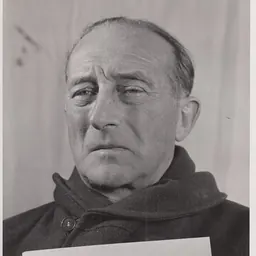
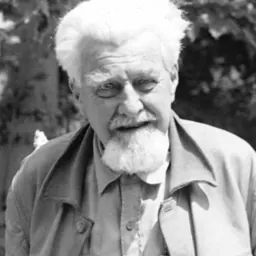
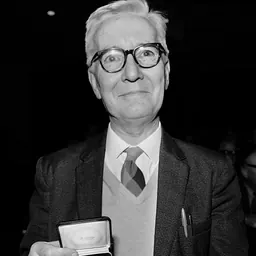


Related people
Same field, nearest in time





Contemporaries
People whose lives overlapped Karl von Frisch's

Frequently asked questions
Who was Karl von Frisch?
German-Austrian ethologist (1886-1982)
When was Karl von Frisch born?
Karl von Frisch was born on 20 November 1886 in Vienna.
When did Karl von Frisch die?
Karl von Frisch died on 12 June 1982 in Munich.
What was Karl von Frisch's occupation?
Karl von Frisch was a beekeeper, ethologist, university teacher, entomologist, zoologist and biologist.
What was Karl von Frisch known for?
Karl von Frisch was known for Bee.
What nationality was Karl von Frisch?
Karl von Frisch was Austrian.
Sources & further reading
Cite this page
APA: Biography.guide. (2026). Karl von Frisch. https://biography.guide/karl-von-frisch/
MLA: "Karl von Frisch." Biography.guide, https://biography.guide/karl-von-frisch/.
Chicago: "Karl von Frisch." Biography.guide. https://biography.guide/karl-von-frisch/.
Data last updated: 2026-09-20 · Spot an error? Report a correction.
Page generated 2026-09-27 05:09 UTC