
About Ōsaka Motokichirō
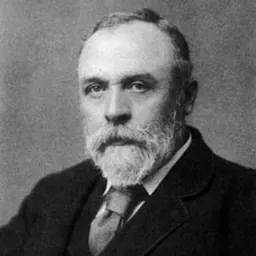
Lived 1880 – 1945 (aged 64). Ōsaka Motokichirō was a Japanese theologian and pastor.
was a Japanese pastor, theologian, and newspaper columnist. He is notable for his public criticism of efforts by the Japanese government to regulate religious bodies and strengthen a national form of Shinto, which culminated in a government-backed attack that left Osaka close to death. During his recovery, a personal awakening transformed his conceptualization of Christianity from an earthly, altruistic social practice to an ascetic practice rooted in Catholic orthodoxy.
Osaka was a student and lifelong friend of philosopher Kitaro Nishida, the founder of the Kyoto School.
Early life and education Osaka was born on June 25, 1880, in Daijoji-cho, Enuma-gun, Ishikawa Prefecture, to Kamayoshi Hiratsuka and his wife Koshiki Momoshi. He was later adopted by the Osaka family.
In 1901, Osaka accompanied his teacher at Ishikawa Prefectural Hirojo Junior High School, Zen philosopher Kitaro Nishida, to a Zen sesshin at a temple in Mikawa.
Nishida inspired Osaka began his studies in the Department of Political Science at Tokyo Imperial University in 1903. He was baptized at the Ichi Bancho Church in Tokyo in 1904 by pastor and theologian Masahisa Uemura and briefly enrolled at Uemura's Tokyo Theological Seminary.
Osaka left Tokyo Imperial University in 1908 over personality conflicts with Uemura to attend Auburn Theological Seminary in New York City. He graduated from Auburn in 1911 and moved to Edinburgh to attend the New College. He returned to Japan in 1912 on a "foreign mission."
Ministry and Turn Toward Progressive Christianity After his return, Osaka became affiliated with the Japanese Christian Church as a minister in 1913. He was subsequently ordained pastor of the Takanawa Church.
The Osaki church began to operate in 1919.
In May 1933, Osaka interviewed his former teacher Nishida to discuss Nazi-sponsored book burnings in Germany. Nishida argued that the "genuine cultural achievements of Germans," which included contributions to "music, theater, and philosophy," could not be destroyed by Nazi cultural politics. Nishida told Osaka that he thought it ironic that both capitalism and communism, the two forces of ideology he considered to be most influential in the epoch, had been birthed by Jewish thinkers David Ricardo and Karl Marx respectively. The interview exemplified Osaka's willingness to publish text critical of the tenets of Japanese ultranationalism.
As Osaka became increasingly vocal in his criticism, the newspaper's conservative management believed that publishing his ideas would "cultivate a feeling of suspicion and animosity toward the politically idealistic and naive" young pastor.
In response to the criticism, leader of the committee Imaizumi Teisuke and his subordinates brought Osaka to the Tokyo Daijingu in the Iidabashi District. Imaizumi's men, who were hired gangsters, forced Osaka to his knees and demanded that he atone for his criticism. When he rejected their demands, they forced him to bow his head while beating him with their fists. Osaka was then taken to the Meiji Shrine in Shibuya, where Imaizumi's men gave him a severe beating. He wrote: "Now came the time when Japanese Christians had to choose between Caesar and God. There was one remarkable Christian minister in Tokyo who chose God. Before him I am ashamed, because I am a coward. Before him the much exalted Kagawa might be ashamed, because it seems that he too is afraid of the Ceasar of Japan. This minister kept on writing and preaching that God was his choice, that God must be recognized by the Japanese nation, that God is still the king of kings, and that Japan shall perish if she does not obey God. In his church and in public places, this man proclaimed all these dangerous things. The Yomiuri Daily News of Tokyo carried some of his messages in its church section.
One day a group of terrorists broke into his study. They beat him until he was unconscious. They forced him to go through a pilgrimage to the shrines of the living and dead deities of the nation as a penitent. They had to drag him along, and they beat him again and again because he refused to bow to any image sacred to Ceasar. I often wonder why he did not give up his ghost. He is crippled for life, but continues to fight his lone battle from his bed. His name, Motokichiro Osaka, should be known to all Christians in the world; yet I have heard no Christian minister mention his name.
If a few influential Christian leaders had supported or joined Osaka, if one Kagawa had spoken one word of approval or sympathy, the majority of the Japanese Christians might have made as brave a showing as the Marxists before them. But not a single man followed in Osaka's steps or openly approved his path. Instead, the whole Christian church in Japan, figuratively speaking, marched to the imperial palace and bowed before the throne!"
Works
The Sacrament (『聖餐論』) (1939) Motokichiro Osaka Collection (逢坂元吉郎著作集) (3 volumes) (1971-1972) Tenrikyo. One of Japan's New Religions. In: Japan Christian Quarterly, V (Oct. 1930), pp. 363–370. An Ascetic Memoir of the Season of Christ's Advent (1938)
Don’t just read it —
keep it.
Full-length biographies made to live with: read them, listen on the way to work, watch them tonight.
- E-book
- Audio
- Video
Instant download · yours to keep · every purchase keeps this site free
Important facts
People in Ōsaka Motokichirō's life
Named in this biography and alive at the same time

Related people
Same field, nearest in time

Contemporaries
People whose lives overlapped Ōsaka Motokichirō's


Frequently asked questions
Who was Ōsaka Motokichirō?
Japanese theologian (1880-1945)
When was Ōsaka Motokichirō born?
Ōsaka Motokichirō was born on 25 June 1880 in Kaga.
When did Ōsaka Motokichirō die?
Ōsaka Motokichirō died on 10 June 1945.
What was Ōsaka Motokichirō's occupation?
Ōsaka Motokichirō was a theologian and pastor.
What nationality was Ōsaka Motokichirō?
Ōsaka Motokichirō was Japanese.
Sources & further reading
· Wikipedia: Ōsaka Motokichirō
Cite this page
APA: Biography.guide. (2026). Ōsaka Motokichirō. https://biography.guide/osaka-motokichiro/
MLA: "Ōsaka Motokichirō." Biography.guide, https://biography.guide/osaka-motokichiro/.
Chicago: "Ōsaka Motokichirō." Biography.guide. https://biography.guide/osaka-motokichiro/.
Data last updated: 2026-09-26 · Spot an error? Report a correction.
Page generated 2026-09-27 05:14 UTC