
About Olga Ladyzhenskaya
Lived 1922 – 2004 (aged 81). Olga Ladyzhenskaya was a Russian mathematician and university teacher, known for Finite difference method, Hilbert's nineteenth problem and Ladyzhenskaya's inequality.
Olga Aleksandrovna Ladyzhenskaya (; 7 March 1922 – 12 January 2004) was a Russian mathematician who worked on partial differential equations, fluid dynamics, and the finite-difference method for the Navier–Stokes equations. She received the Lomonosov Gold Medal in 2002. She authored more than two hundred scientific publications, including six monographs.
Biography Ladyzhenskaya was born and grew up in the small town of Kologriv, the daughter of a mathematics teacher who is credited with her early inspiration and love of mathematics. The artist Gennady Ladyzhensky was her grandfather's brother, also born in this town. In 1937 her father, Aleksandr Ivanovich Ladýzhenski, was arrested by the NKVD and executed as an "enemy of the people".
She began teaching in the Physics department of the university in 1950 and defended her PhD there, in 1951, under Sergei Sobolev and Vladimir Smirnov. She received a second doctorate from the Moscow State University in 1953. In 1954, she joined the mathematical physics laboratory of the Steklov Institute and became its head in 1961. She was once a member of the city council, and engaged in philanthropic activities, repeatedly risking her personal safety and career to aid people opposed to the Soviet regime. Ladyzhenskaya suffered from various eye problems in her later years and relied on special pencils to do her work.
Two days before a trip to Florida, she died in her sleep in Russia on 12 January 2004.
Mathematical accomplishments Ladyzhenskaya is known for her work on partial differential equations (especially Hilbert's nineteenth problem) and fluid dynamics. She provided the first rigorous proofs of the convergence of a finite difference method for the Navier–Stokes equations.
She analyzed the regularity of parabolic equations, with Vsevolod A. Solonnikov and her student Nina Ural'tseva, and the regularity of quasilinear elliptic equations. ultimately awarded to Klaus Roth and René Thom.
Publications . . . (Translated by Jack Lohwater).
Awards and recognitions P. L. Chebyshev Prize (with Nina Nikolayevna Ural'tseva ) (1966) for the work "Linear and quasilinear equations of elliptic type" USSR State Prize (1969) Member of Lincei National Academy in Rome (1989) Member of the Russian Academy of Sciences (1990) Kovalevskaya Prize (1992) for the series of works "Attractors for Semigroups and Evolution Equations" ICM Emmy Noether Lecture (1994) John von Neumann Lecture (1998) Order of Friendship (1999) Lomonosov Gold Medal (2002) for outstanding achievements in the field of the theory of partial differential equations and mathematical physics On 7 March 2019, the 97th anniversary of Ladyzhenskaya's birth, the search engine Google released a Google Doodle commemorating her. The accompanying comment read, "Today's Doodle celebrates Olga Ladyzhenskaya, a Russian mathematician who triumphed over personal tragedy and obstacles to become one of the most influential thinkers of her generation."
Don’t just read it —
keep it.
Full-length biographies made to live with: read them, listen on the way to work, watch them tonight.
- E-book
- Audio
- Video
Instant download · yours to keep · every purchase keeps this site free
Important facts
People in Olga Ladyzhenskaya's life
Named in this biography and alive at the same time
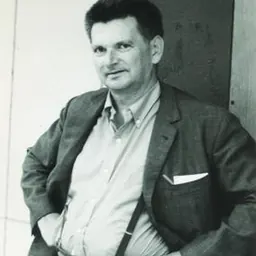

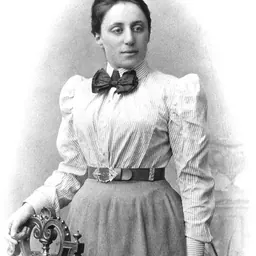
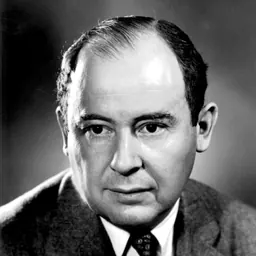




Related people
Same field, nearest in time

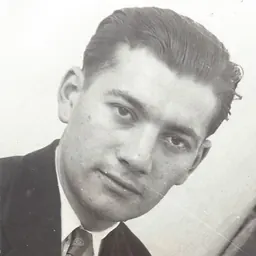
Contemporaries
People whose lives overlapped Olga Ladyzhenskaya's

Frequently asked questions
Who was Olga Ladyzhenskaya?
Russian mathematician (1922–2004)
When was Olga Ladyzhenskaya born?
Olga Ladyzhenskaya was born on 7 March 1922 in Kologriv.
When did Olga Ladyzhenskaya die?
Olga Ladyzhenskaya died on 12 January 2004 in Saint Petersburg.
What was Olga Ladyzhenskaya's occupation?
Olga Ladyzhenskaya was a mathematician and university teacher.
What was Olga Ladyzhenskaya known for?
Olga Ladyzhenskaya was known for Finite difference method, Hilbert's nineteenth problem, Ladyzhenskaya's inequality and Ladyzhenskaya–Babuška–Brezzi condition.
What nationality was Olga Ladyzhenskaya?
Olga Ladyzhenskaya was Russian.
Sources & further reading
· Wikipedia: Olga Ladyzhenskaya
Cite this page
APA: Biography.guide. (2026). Olga Ladyzhenskaya. https://biography.guide/olga-ladyzhenskaya/
MLA: "Olga Ladyzhenskaya." Biography.guide, https://biography.guide/olga-ladyzhenskaya/.
Chicago: "Olga Ladyzhenskaya." Biography.guide. https://biography.guide/olga-ladyzhenskaya/.
Data last updated: 2026-09-25 · Spot an error? Report a correction.
Page generated 2026-09-27 05:11 UTC